Skip to content
Examples:A chair kept on the floor.A tree rooted to the ground.A transmission tower fixed to the ground.
Examples:A moving bus passing by a person standing on the road.A walking camel carrying a load.A bird flying in the sky.A football rolling across a field.
Example 1: Sitting in a moving trainAt Rest: You are at rest with respect to the seats and the roof of the train because there is no relative change in position between you and the train compartment (both move at the exact same speed in the same direction).In Motion: You are in motion with respect to external objects like trees and houses because your position is continuously changing relative to them.Example 2: Sitting on the groundAt Rest: Your body is at rest relative to the Earth’s surface.In Motion: Because the Earth is rotating on its axis and revolving around the Sun, your body is actually in motion relative to the Sun and celestial stars.
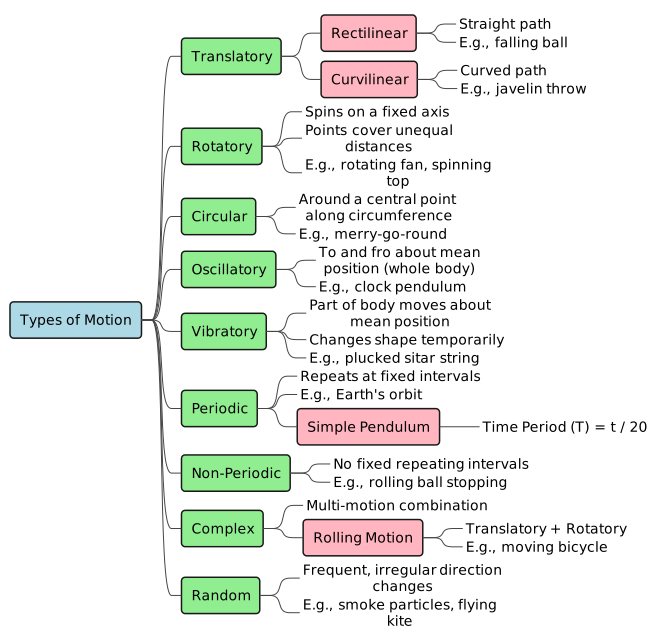
Examples:A car moving along a road.A table being pushed on the floor.A bullet fired from a gun.A fruit falling down from a tree.A boy going down a slide.Rectilinear (Linear) Motion: Motion along a straight line.Examples: A car moving on a straight road, a ball falling down vertically, an athlete running on a straight racing track, a coin sliding straight on a carrom board.

Fig. 2.6 Examples of rectilinear motionCurvilinear Motion: Motion along a curved line.Examples: A car taking a turn, a thrown javelin, a basketball thrown toward a hoop, a train moving along a curved track.
Fig. 2.6 Examples of rectilinear motionCurvilinear Motion: Motion along a curved line.Examples: A car taking a turn, a thrown javelin, a basketball thrown toward a hoop, a train moving along a curved track.

Fig. 2.7 Examples of curvilinear motion
Fig. 2.7 Examples of curvilinear motion
Examples:A girl swinging a ball tied to a string in a circle.Children riding on a merry-go-round.Athletes running on a circular track.
Examples:A spinning top.A rotating ceiling fan.A potter’s wheel.The moving hands of a clock.The Earth spinning on its axis.
The Oscillation Cycle: The body starts at its mean position (O), swings to one maximum limit (A), travels to the opposite maximum limit (B), and returns back to the mean position (O). The maximum distance covered on either side of the rest position is equal.Examples:The motion of a clock pendulum.A child playing on a swing.A mass suspended from a spring bouncing up and down.The piston of an engine.
Mechanism: When external force is applied, the atoms of the body get displaced. Inter-atomic attractive forces pull them back, causing them to overshoot and swing to the other side. This atomic oscillation creates vibrations until the energy dissipates and the atoms regain their original rest positions.Examples:Plucking the strings of a guitar or sitar.Striking a drum or tabla diaphragm.The movement of vocal cords while singing.The body of a car vibrating when the engine starts.
Examples:A wall clock pendulum completing an oscillation every 2 seconds.Clock hands repeating their positions (seconds hand every 60 seconds, minutes hand every 60 minutes, hours hand every 12 hours).The Earth rotating on its axis once every 24 hours.The Earth revolving around the Sun once every 365¼ days.
Construction: Consists of a small, heavy mass (called the bob) suspended from a rigid support by a weightless, inextensible, and flexible string.One Oscillation: The entire movement of the bob from its mean position (O) to extreme point (A), then to extreme point (B), and back to (O).Time Period (T): The time taken by the pendulum to complete one full oscillation. The SI unit of time period is the second (s).Constant Time Period: For a given length at a specific location, the time period of a simple pendulum remains constant and does not depend on the displacement amplitude of the bob.Set up a pendulum with a metallic bob and silk thread on a stand.Displace the bob slightly and let it oscillate freely.Start a stopwatch at the mean position and count 20 complete oscillations.Note the total time (t) in seconds.Calculate the time period using the formula:T = t / 20 seconds
Examples:The swinging of arms and legs while walking.The rotation of car wheels on a congested road where brakes are frequently applied.A rolling ball on the ground that slows down and stops.
Rolling Motion: A specific complex motion combining rotatory motion and translatory motion.Examples:Bicycle: The wheels rotate about their axles (rotatory motion) while the entire bicycle moves forward along the road (translatory motion).Drill Machine: The drill bit rotates (rotatory motion) and simultaneously pierces deeper into the wood (translatory motion).Water Well Pulley: The pulley wheel spins on its axis (rotatory motion) while the bucket and rope move up/down (translatory motion).
Examples:A flying mosquito or insect.A football or hockey player running on a field.The motion of suspended smoke particles.A flying kite in the wind.
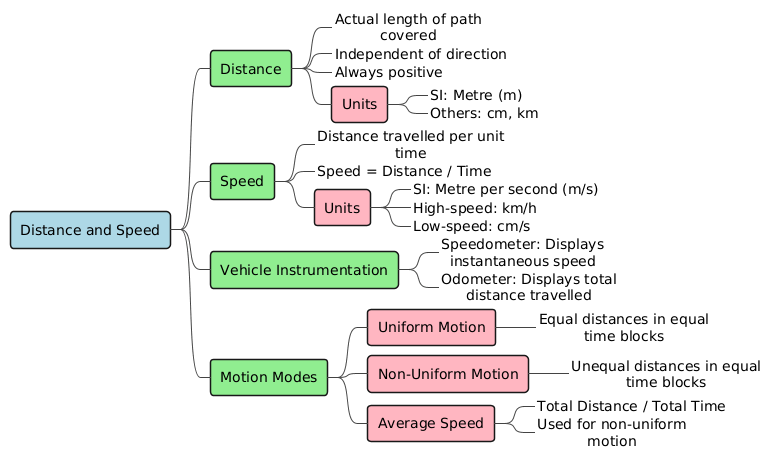
SI Unit: Metre (m).Other Units: Centimetre (cm), Kilometre (km).Visualizing Distance: If a girl walks 12 m from A to B, 5 m from B to C, and 8 m from C to D:Total Distance = AB + BC + CD = 12 m + 5 m + 8 m = 25 m
SI Unit: Metre per second (m/s).Other Units: Kilometre per hour (km/h) for fast vehicles; Centimetre per second (cm/s) for slow organisms like ants.Odometer: A dashboard device that records and displays the total distance travelled by a vehicle in kilometres.Speedometer: A dashboard device that displays the instantaneous speed of a moving vehicle.
Uniform Motion: When an object covers equal distances in equal intervals of time.Example: A car moving on an open highway covering exactly 20 km in every 30-minute block.Non-Uniform Motion: When an object covers unequal distances in equal intervals of time.Example: A car navigating city traffic, covering 15 km in the first 30 minutes, 5 km in the next, and 8 km in the next.
Uniform (Constant) Speed: When an object covers equal distances in equal intervals of time throughout its entire journey.Non-Uniform (Variable) Speed: When an object covers unequal distances in equal intervals of time.
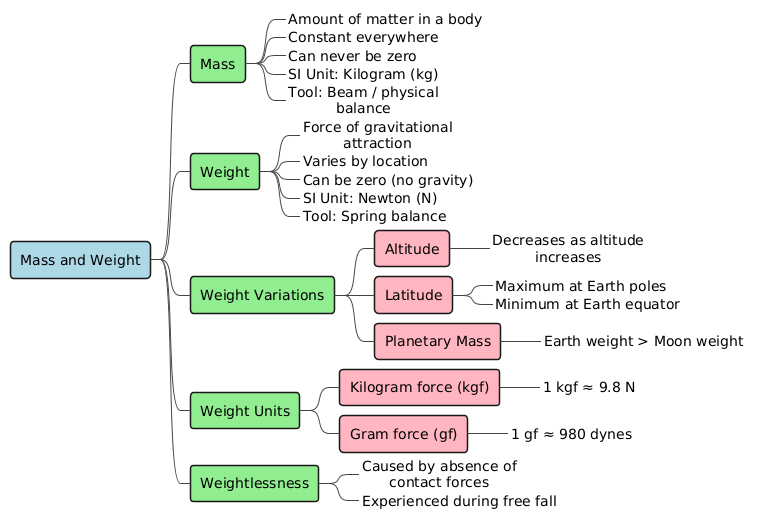
Nature: It is a constant property that never changes from place to place.Zero Value: Mass of a body can never be zero.SI Unit: Kilogram (kg).Measurement Tool: Beam balance or physical balance.
Nature: It is a variable property that changes depending on local gravitational force.Zero Value: Weight can be zero if no gravity acts on the body (e.g., deep space).SI Unit: Newton (N).Measurement Tool: Spring balance.
Local Gravity: Weight depends directly on the gravitational pull. On Earth, weight is maximum at the poles and minimum at the equator because the Earth’s gravitational pull is stronger at the poles.Altitude: Weight decreases as an object goes higher above the Earth’s surface because gravitational force weakens with distance.Mass of the Attracting Body: Larger celestial bodies exert stronger gravity. Because the Earth has a much larger mass than the Moon, a person’s weight on the Earth is significantly higher than their weight on the Moon.
Kilogram force (kgf): The force with which the Earth pulls a mass of 1 kg.Weight of a 1 kg mass = 1 kgf.Gram force (gf): The force with which the Earth pulls a mass of 1 g.Weight of a 1 g mass = 1 gf.Newton (N): The gravitational force acting on a mass of approximately 100 g (0.1 kg) on Earth.Conversion Factors:1 kgf ≈ 9.8 N (or approximately 10 N).1 gf ≈ 980 dynes (or approximately 1000 dynes).
Contact Forces: Weightlessness is heavily determined by the absence of contact forces (supporting normal force).Free Fall: All freely falling bodies are in a state of weightlessness.In Space: Astronauts experience weightlessness as they escape the Earth’s effective gravitational field and experience no supporting contact forces inside their spaceship.

Share
Explore
 Self Study
Prepared by: learnloophq@gmail.com
Chapter: 02. Motion
CHAPTER 2: MOTION
1. REST AND MOTION
Every object in our universe is either at rest or in motion. These states are completely dependent on the object’s surroundings.
Rest
An object is said to be at rest if it does not change its position with time in relation to its surroundings.
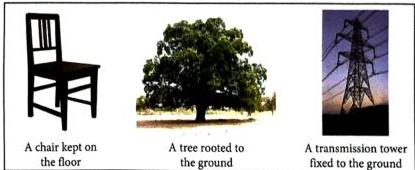
Fig. 2.1 Objects at rest
Fig. 2.1 Objects at rest
Motion
An object is said to be in motion if it changes its position with time with respect to its surroundings.
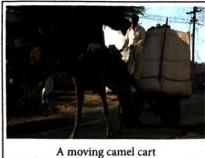

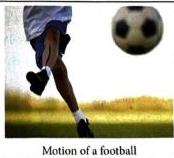
Fig. 2.2 Objects in motion
Fig. 2.2 Objects in motion
Rest and Motion are Relative Terms
A body can be at rest with respect to one object and, at the same time, in motion with respect to another object in its surroundings. The state is determined entirely by the observer and the surroundings.

Fig. 2.3 Sitting in a moving train
Fig. 2.3 Sitting in a moving train
2. TYPES OF MOTION
Different objects move in various ways depending on their path and how their parts move.
Translatory Motion
The motion of an object in which every point of the object moves through the same distance in the same interval of time. All points of the body move uniformly in the exact same direction.

Fig. 2.4 Translatory motion (all parts move identical distances)
Fig. 2.4 Translatory motion (all parts move identical distances)
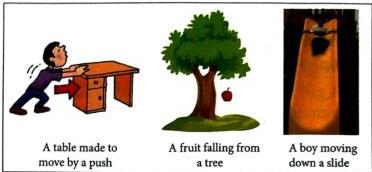
Fig. 2.5 Examples of translatory motion
Fig. 2.5 Examples of translatory motion
Translatory motion is divided into two categories:
Circular / Circulatory Motion
The motion of an object about a fixed central point along the circumference of a circle.
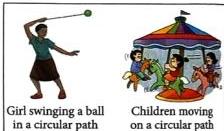
Fig. 2.8 Examples of circular motion
Fig. 2.8 Examples of circular motion
Rotatory Motion
When a body spins or moves about a fixed axis. Unlike translatory motion, different points on the body cover different distances in the same time interval. Points farther from the axis cover greater distances than points closer to the axis.
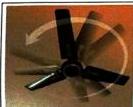
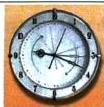


Fig. 2.9 Examples of rotatory motion
Fig. 2.9 Examples of rotatory motion
Oscillatory Motion
The to-and-fro or back-and-forth motion of an object about its mean (rest) position.
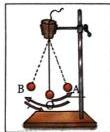
Fig. 2.10 Oscillatory motion of a pendulum
Fig. 2.10 Oscillatory motion of a pendulum
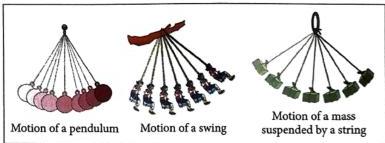
Fig. 2.11 Examples of oscillatory motion
Fig. 2.11 Examples of oscillatory motion
Vibratory Motion
The to-and-fro motion of only parts of a body about its mean position, while the body as a whole remains in place.


Fig. 2.12 Examples of vibratory motion
Fig. 2.12 Examples of vibratory motion
Differences Between Oscillatory and Vibratory Motion
Oscillatory Motion
Vibratory Motion
The whole body moves to and fro about its mean position.
The whole body does not move; only parts of the body vibrate about their mean positions.
There is no physical change in the shape of the body.
There is a temporary physical change in the shape of the body.
The distance traversed on either side of the mean position is always equal.
The distance traversed on either side of the mean position may not be equal.
It always takes place along a straight line path.
It can take place in any direction.
Periodic Motion
Any motion that repeats itself at regular, fixed intervals of time.
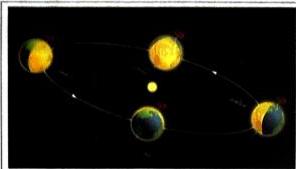
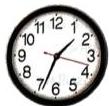
Fig. 2.13 Examples of periodic motion
Fig. 2.13 Examples of periodic motion
The Simple Pendulum
A classical device demonstrating periodic and oscillatory motion.
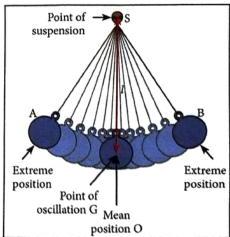
Fig. 2.14 A simple pendulum
Fig. 2.14 A simple pendulum
Determining the Time Period of a Pendulum
To find the time period experimentally:
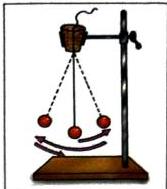
Fig. 2.15 Setup to determine the time period
Fig. 2.15 Setup to determine the time period
Non-Periodic Motion
A motion that does not repeat itself at regular, fixed intervals of time.
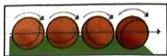
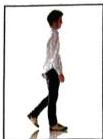
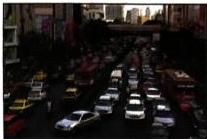
Fig. 2.16 Examples of non-periodic motion
Fig. 2.16 Examples of non-periodic motion
Complex / Multiple Motion
A motion that is a combination of two or more different types of motion occurring simultaneously.
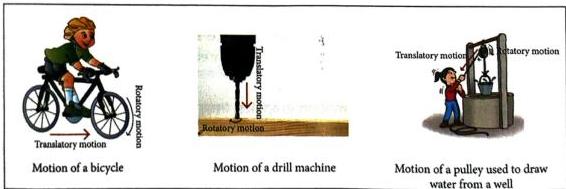
Fig. 2.17 Examples of rolling (complex) motion
Fig. 2.17 Examples of rolling (complex) motion
Random Motion
A motion in which an object changes its direction frequently in an irregular, zig-zag manner.
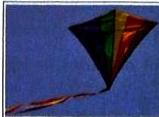
Fig. 2.18 Examples of random motion
Fig. 2.18 Examples of random motion
3. DISTANCE AND SPEED
Distance
The actual length of the path covered by a moving object, regardless of the direction in which it travels.
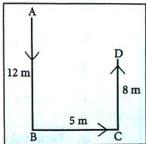
Fig. 2.19 Path for calculating total distance
Fig. 2.19 Path for calculating total distance
Speed
The distance travelled by an object per unit of time. It indicates how fast or slow an object is moving. Speed is always a positive quantity because distance is always positive.

Uniform Motion vs. Non-Uniform Motion

Fig. 2.20 Timeline representation of uniform motion
Fig. 2.20 Timeline representation of uniform motion

Fig. 2.21 Timeline representation of non-uniform motion
Fig. 2.21 Timeline representation of non-uniform motion
Uniform Speed vs. Non-Uniform Speed
Average Speed
For objects traveling at non-uniform speeds, we calculate the average speed to represent the overall pace of the journey.

4. MASS AND WEIGHT
Although commonly used interchangeably in everyday language, mass and weight are distinct concepts in physics.
Mass
The quantity of matter contained within a body.
Weight
The gravitational force with which the Earth (or any celestial body) attracts an object toward its center.
Factors Influencing Weight
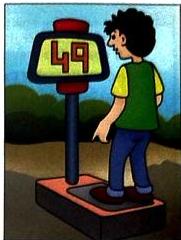
Fig. 2.22 Weight is determined by gravity
Fig. 2.22 Weight is determined by gravity
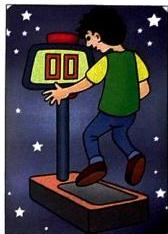
Fig. 2.23 Weight decreases as altitude increases
Fig. 2.23 Weight decreases as altitude increases
Units of Weight
Differences Between Mass and Weight
Mass
Weight
The amount of matter contained in a body.
The gravitational force attracting a body toward the center of a celestial body.
Constant quantity; does not change with location.
Variable quantity; changes from place to place.
Can never be zero.
Can be zero in the absence of gravity.
SI Unit: Kilogram (kg).
SI Unit: Newton (N).
Measured using a beam balance or physical balance.
Measured using a spring balance.
Weightlessness
A unique condition experienced when an individual feels they have lost their weight, even though gravity may still be acting on them.
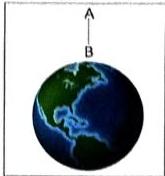
Fig. 2.24 Spaceship traveling within a gravitational field
Fig. 2.24 Spaceship traveling within a gravitational field
Want to print your doc?
This is not the way.
This is not the way.

Try clicking the ··· in the right corner or using a keyboard shortcut (
CtrlP
) instead.