Skip to content
The SI unit of work and energy is _ _ _ _ _ _ _ _ _ _ _ _ _ _ , named in honor of the scientist J P Joule.One calorie is defined as the amount of heat energy needed to raise the temperature of one gram of water by _ _ _ _ _ _ _ _ _ _ _ _ _ _ .In hydroelectric power stations, _ _ _ _ _ _ _ _ _ _ _ _ _ _ energy is generated.The energy possessed by an object by virtue of its motion is called _ _ _ _ _ _ _ _ _ _ _ _ _ _ energy.
When work is done on a body, its energy decreases. [ ]A very strong beam of light is capable of moving tiny particles such as electrons. [ ]Food undergoing chemical changes in our body releases energy, some of which is stored in our muscles as muscular energy. [ ]Plugged-in appliances do not consume any energy once they are turned off. [ ]
Chemical EnergyMechanical Energy
Kinetic Energy and Potential Energy (Include definitions and the factors they depend on)Work and Energy (Include definitions, formulas, or relationship)
At which position(s) (A, B, or C) does the pendulum bob possess maximum potential energy? Explain why.At which position does the bob possess maximum kinetic energy? Explain why.State the law that explains why the total mechanical energy remains constant throughout this movement.
It hurts more when you are hit by a cricket ball than by a tennis ball moving with the same speed. Explain the scientific reason behind this.What is the relation between a joule and a calorie? State the values for both 1 calorie and 1 kilocalorie (kcal) in joules.State three everyday examples of objects that possess potential energy by virtue of their position or height above the ground.How is nuclear energy released, and what are two ways this energy is used?
a) A microphoneb) Photosynthesis in plantsc) Dry cells/batteries while being usedd) Steam enginese) Electric geysers/heaters

Share
Explore
 Question Paper
Prepared by: learnloophq@gmail.com
Chapter: 03. Energy
Chapter 3: Energy — Practice Exam Paper
Class: Middle School (Physics)
Time Allowed: 1 Hour
Max Marks: 50
SECTION A: Multiple Choice Questions (MCQs)
(4 × 1 = 4 Marks)
Q1. Which of the following is the correct mathematical formula for calculating work done?
a) Work = Force + Displacement
b) Work = Force × Displacement
c) Work = Force / Displacement
d) Work = Displacement / Force
Q2. A body is said to have an energy of one joule if:
a) It can raise the temperature of 1 gram of water by 1°C.
b) It has the capacity to do one joule of work.
c) It can attract magnetic substances like iron.
d) It changes its chemical state.
Q3. Which form of energy can attract and move metals such as iron and nickel?
a) Light energy
b) Sound energy
c) Magnetic energy
d) Chemical energy
Q4. What happens to a falling weight’s energy just before it hits the ground?
a) All of its potential energy is converted to kinetic energy.
b) All of its kinetic energy is converted to potential energy.
c) Its total mechanical energy increases.
d) It loses all of its kinetic energy before impact.
SECTION B: Fill in the Blanks
(4 × 1 = 4 Marks)
SECTION C: True or False
(4 × 1 = 4 Marks)
SECTION D: Explanation of Terms
(2 × 2 = 4 Marks)
SECTION E: Differentiate Between
(2 × 3 = 6 Marks)
SECTION F: Diagram-Based Questions
(3 × 2 = 6 Marks)
A simple pendulum swinging between three positions, demonstrating energy conversion.
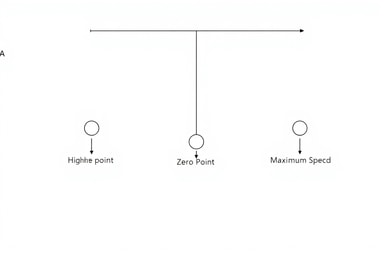
Based on the diagram and your understanding, answer the following questions:
SECTION G: Short Answer Questions
(4 × 3 = 12 Marks)
SECTION H: Long Answer Questions
(2 × 5 = 10 Marks)
Q1. Describe the energy inter-conversions that take place in the following appliances or processes:
Q2. Explain the conversion of potential energy into kinetic energy (and vice-versa) using the example of a ball thrown vertically upwards into the air. What happens to its total energy at different points of its journey, assuming no air friction?
Want to print your doc?
This is not the way.
This is not the way.

Try clicking the ··· in the right corner or using a keyboard shortcut (
CtrlP
) instead.