Skip to content
Cellular Structure: Multicellular eukaryotes whose cells lack a cell wall.Nutrition: Heterotrophic (cannot manufacture their own food; feed on plants, animals, or both).Locomotion: Most animals are motile and move from place to place for food, shelter, and protection.Growth: Show limited growth that halts after reaching maturity.
Key Features:Body is covered in tiny pores to draw water in.Features a single large opening at the top (osculum) to expel water.Mostly marine; a few live in freshwater. Found attached to sea or pond bottoms.Examples: Sycon, Spongilla (freshwater sponge), Euspongia (bath sponge).
Key Features:Aquatic, mostly marine animals. Can be free-floating or attached.Hollow, sac-like body containing only one opening (the mouth).The mouth is surrounded by finger-like structures called tentacles used to capture food.Examples: Hydra (freshwater), Sea anemone, Jellyfish, Corals.
Key Features:Thin, soft, and flattened (ribbon-like) body.No body cavity is present.Body is divided into multiple segments.Mostly live as parasites inside host animals.Examples: Liverfluke, Planaria, Blood fluke, Tapeworm.Note on Tapeworm: Parasite in human intestines; can reach up to 5 meters in length. Absorbs digested food via its body segments.
Key Features:Long, cylindrical, and unsegmented bodies; some are thread-like.Live as parasites inside animal and human bodies, causing diseases.Examples: Ascaris (Roundworm), Hookworms, Threadworms.
Key Features:Soft, segmented, and bilaterally symmetrical body.Possess a true body cavity and a well-developed alimentary canal.Excretion occurs through specialized organs called nephridia.Locomotion occurs via parapodia or setae.Examples: Earthworm, Leech.Why is the Earthworm the “Farmer’s Friend”? Its burrowing and soil-feeding habits make the soil porous, improving aeration and water absorption, thereby increasing soil fertility.
Key Features:The largest phylum; body is divided into three parts: head, thorax, and abdomen.Protected by a tough, chitinous exoskeleton.Equipped with paired and jointed legs.Classification of Arthropods:Crustaceans: Fused head and thorax; many jointed legs. Examples: Prawn, Crab, Shrimp, Lobster.Insects: Body divided into head, thorax, and abdomen; 3 pairs of legs; typically 2 pairs of wings. Examples: Housefly, Butterfly, Mosquito, Cockroach.Arachnids: Fused head and thorax; 6 pairs of appendages (including 4 pairs of walking legs); no wings. Examples: Spider, Scorpion, Tick.Myriapods: Long, multi-segmented body; each segment has 1 pair (Centipedes) or 2 pairs (Millipedes) of legs.
Key Features:Mainly aquatic (mostly marine) animals.Soft, unsegmented bodies typically enclosed in a hard shell.Equipped with a muscular foot used for locomotion.Examples: Octopus, Pond snail, Garden snail, Pearl oyster.
Key Features:Rough, spiny, and usually star-like body.Distinct head and tail are absent.Examples: Starfish, Sea urchin.
Key Features:Strictly aquatic, cold-blooded animals.Streamlined body shapes and fins to assist swimming.Respire through gills.Possess a two-chambered heart.Examples: Catla, Shark, Seahorse, Rohu, Electric ray, Mahasheer.
Key Features:Can live both on land and in water.Cold-blooded with slimy, slippery skin.Possess a three-chambered heart.Breathe through lungs on land and moist skin in water (larvae use gills).Must return to water to lay eggs.Examples: Frog, Salamander, Toad.
Key Features:Mainly terrestrial, cold-blooded vertebrates.Skin is dry and covered with scales.Two pairs of limbs; digits end in claws.Respire through lungs.Possess a three-chambered heart (except crocodiles, which have four chambers).Lay large, leathery, yolky eggs on land.Examples: Snake, Crocodile, Lizard, Tortoise.
Key Features:Warm-blooded (homoiothermic) aerial animals.Body is covered with feathers; forelimbs are modified into wings.Jaws lack teeth and are modified into a horny beak.Possess a four-chambered heart.Lay hard-shelled, yolky eggs.Examples: Pigeon, Sparrow, Peacock, Parrot, Crow, Owl, Ostrich.
Key Features:Warm-blooded animals with bodies covered in hair.Possess external ear structures (pinnae).Females have milk-producing mammary glands to nourish their young.Give birth to live young ones (viviparous).Possess a four-chambered heart.Examples: Elephant, Giraffe, Kangaroo, Bat, Tiger, Cow, Human beings.Crucial Mammalian Facts:Whales and dolphins are marine mammals, not fish.The bat is the only mammal capable of true flight.The Blue Whale is the largest animal on Earth; the Elephant is the largest land animal.Female kangaroos give birth to premature young and carry them in an abdominal pouch called a marsupium.

Share
Explore
 Recap Hub
Prepared by: learnloophq@gmail.com
Chapter: 03. Kingdom Animalia
CHAPTER 3: KINGDOM ANIMALIA - CRASH COURSE NOTES
1. Introduction to Kingdom Animalia
Kingdom Animalia contains multicellular, eukaryotic organisms that do not possess chlorophyll (nongreen).
Characteristic Features:
2. Invertebrates vs. Vertebrates
Based on the absence or presence of a vertebral column (backbone), animals are classified into two broad groups:
Invertebrates
Vertebrates
Backbone is absent.
Backbone is present.
Internal skeleton of bones is absent.
Internal bony skeleton is present.
A true tail is absent.
Tail is usually present.
Limbs are either absent or occur as three, four, or many pairs.
Possess only two pairs of limbs.
Examples: Worms, Cockroach, Butterfly, Snail, Starfish.
Examples: Fishes, Frogs, Lizards, Birds, Mammals.
3. Phyla of Invertebrates (Animals without Backbones)
I. Porifera (Pore-bearing Animals: Sponges)
II. Coelenterata / Cnidaria (Hollow Sac-like Animals)
III. Platyhelminthes (Flatworms)
IV. Nemathelminthes / Nematoda / Aschelminthes (Roundworms)
V. Annelida (Segmented Worms / True Worms)
VI. Arthropoda (Animals with Jointed Limbs)
VII. Mollusca (Soft-bodied Animals)
VIII. Echinodermata (Spiny-skinned Animals)
4. Classes of Vertebrates (Animals with Backbones)
I. Pisces (Fishes)
II. Amphibia
III. Reptilia
IV. Aves (Birds)
V. Mammalia (Milk-nourishing Animals)
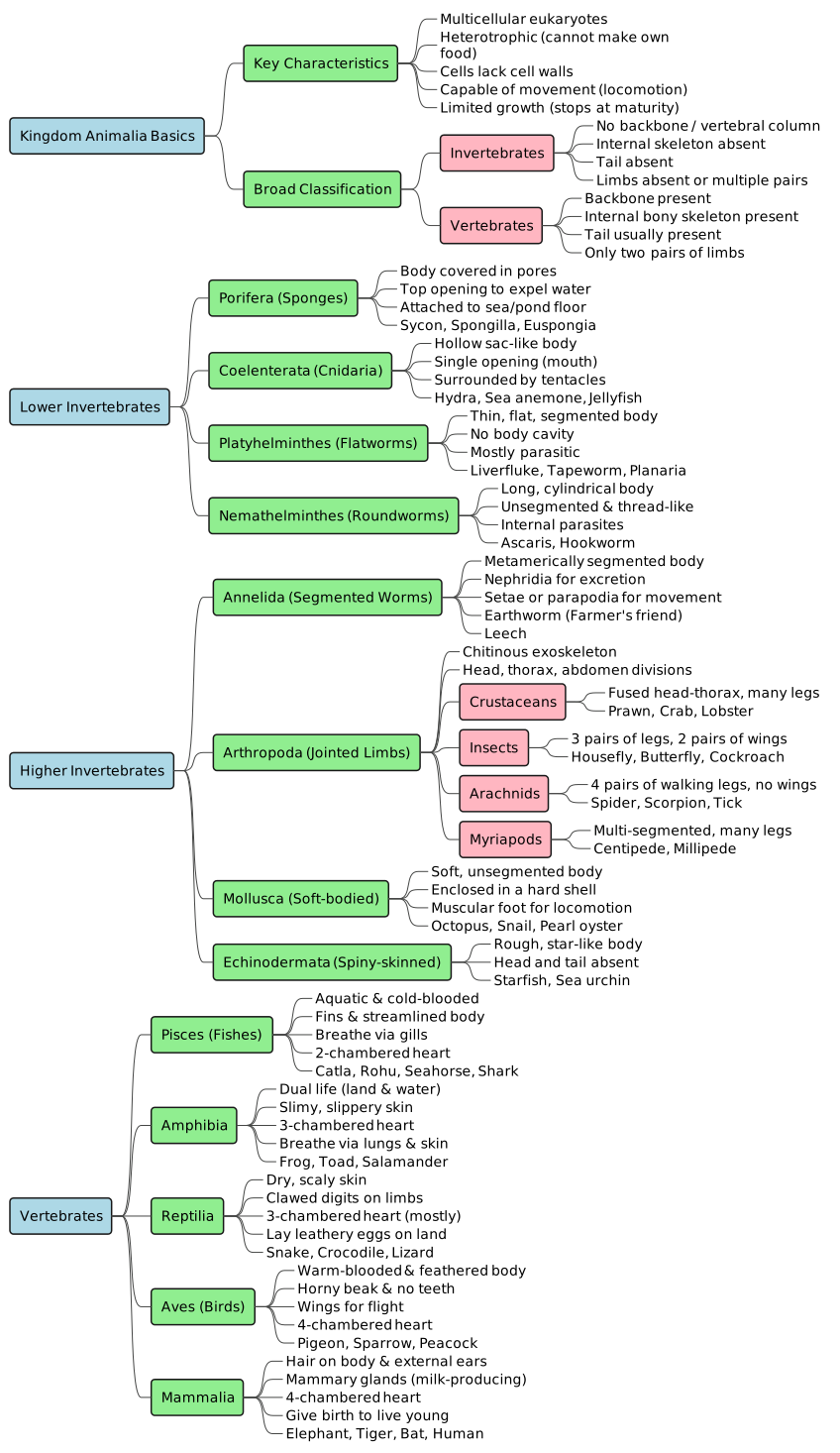
PlantUML Mindmap
Want to print your doc?
This is not the way.
This is not the way.

Try clicking the ··· in the right corner or using a keyboard shortcut (
CtrlP
) instead.