Skip to content
Sound is a form of energy that produces the sensation of _ _ _ _ _ _ _ _ _ _ _ _ _ _ in our ears.The pitch of a sound is determined by its _ _ _ _ _ _ _ _ _ _ _ _ _ _ of vibration.In a _ _ _ _ _ _ _ _ _ _ _ _ _ _ wave, particles of the medium vibrate in the same direction as that of the sound wave.Sounds of frequencies higher than 20,000 Hz are called _ _ _ _ _ _ _ _ _ _ _ _ _ _ sounds.Humans produce sound with the help of an organ called the _ _ _ _ _ _ _ _ _ _ _ _ _ _.
Sound waves can travel through a vacuum where no particles are present. (T / F)Two waves of the exact same frequency can have different amplitudes. (T / F)The speed of sound is faster in liquids than in solids. (T / F)Human ears can easily perceive infrasonic sounds of frequencies less than 20 Hz. (T / F)The voice of a woman is typically shriller because her larynx is smaller than a man’s, producing tighter and thinner vocal cords of high frequency. (T / F)
AmplitudeEchoWavelengthInfrasonic Sounds
Identify the term represented by the letter ‘A’ (the maximum displacement of the wave on either side of its mean position) and state its unit.Identify the term represented by the letter ‘B’ (the distance between two successive crests) and state the Greek letter used to represent it.
Materials RequiredProcedureObservationConclusion

Share
Explore
 Question Paper
Prepared by: learnloophq@gmail.com
Chapter: 06. Sound
SOUND: CLASS VII SCIENCE PRACTICE EXAM PAPER
Time Allowed: 2 Hours
Maximum Marks: 50
SECTION A: MULTIPLE CHOICE QUESTIONS (MCQs)
(5 × 1 = 5 Marks)
Q1. The speed of sound is fastest in which of the following mediums?
a. Air
b. Water
c. Steel
d. Vacuum
Q2. How many vocal cords do human beings actually have inside the larynx?
a. Two
b. Four
c. One
d. Multiple pairs
Q3. What is the SI unit of frequency?
a. Metre (m)
b. Second (s)
c. Hertz (Hz)
d. Decibel (dB)
Q4. To hear a distinct echo in air (where the speed of sound is 340 m/s), what is the minimum distance required between the source of sound and the reflecting surface?
a. 34 m
b. 17 m
c. 10 m
d. 20 m
Q5. Which of the following is a bad reflector (good absorber) of sound?
a. Steel sheet
b. Copper plate
c. Glass pane
d. Thermocol sheet
SECTION B: FILL IN THE BLANKS
(5 × 1 = 5 Marks)
Note: Fill in the blanks using the exact terms.
SECTION C: TRUE OR FALSE
(5 × 1 = 5 Marks)
SECTION D: EXPLANATION OF TERMS
(4 × 2 = 8 Marks)
Define the following terms in one or two sentences:
SECTION E: IDENTIFY AND DIFFERENTIATE
(2 × 3 = 6 Marks)
Q1. Differentiate between Stringed Instruments and Percussion Instruments.
Provide a brief comparison table based on how they produce vibrations and give two examples of each.
Q2. Differentiate between Ultrasonic and Infrasonic sounds.
Compare them based on their frequency ranges and their audibility to the human ear.
SECTION F: DIAGRAM-BASED QUESTIONS
(2 × 2 = 4 Marks)
A displacement-distance graph of a sound wave showing amplitude and wavelength.
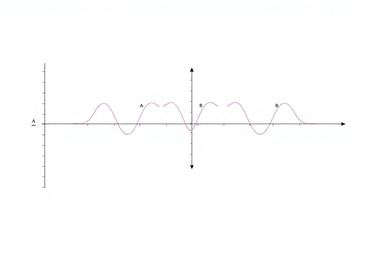
Based on the diagram description above, answer the following questions:
SECTION G: SHORT ANSWER QUESTIONS
(4 × 3 = 12 Marks)
Q1. During a thunderstorm, why is the flash of lightning seen before the sound of thunder is heard, even though they occur at the exact same moment in the clouds?
Q2. A sound wave oscillates 50 times in 5 seconds. Calculate its:
a. Frequency (Hz)
b. Time period (s)
Q3. Explain how bats navigate and locate their prey in the dark.
Q4. Anushka visited a big indoor auditorium to hear a music recital. She noticed that the floor was covered with a thick carpet and the walls were coated with rough, porous materials. Explain the scientific reason behind this architectural design.
SECTION H: LONG ANSWER QUESTIONS
(1 × 5 = 5 Marks)
Q1. Describe the bell jar experiment to demonstrate that sound needs a material medium to propagate and cannot travel through a vacuum. Organize your answer under the following headings:
Want to print your doc?
This is not the way.
This is not the way.

Try clicking the ··· in the right corner or using a keyboard shortcut (
CtrlP
) instead.