Skip to content
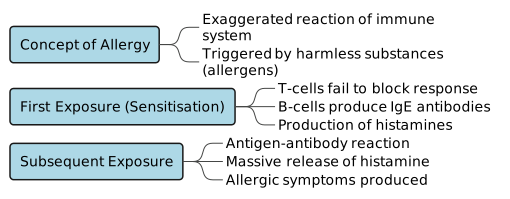
Explain the concept and mechanism of an allergic reaction in the human body.Allergy is an exaggerated or abnormal reaction of a person’s immune system to certain foreign substances called allergens, which are typically harmless to most people. In a normal individual, T-cells recognize an antigen or allergen as harmless and prevent B-cells from responding to it. However, in an allergic person, the first exposure to an allergen triggers a primary immune response where B-cells start producing IgE antibodies and histamines in a process known as sensitisation. Upon subsequent exposure to the same allergen, the sensitised person experiences a hypersensitive antigen-antibody reaction. This reaction triggers a large release of histamine, which, along with the IgE antibodies, produces the classic allergic response or symptoms.
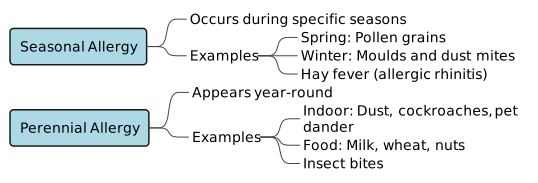
 Differentiate between seasonal and perennial allergies, providing examples of each.Seasonal and perennial allergies are classified based on the period for which the allergic reaction persists or appears in a person. Seasonal allergy develops only during specific seasons and comes and goes, such as spring allergies caused by pollen grains, and winter allergies triggered by moulds and dust mites. In contrast, perennial allergy appears at any time year-round without being restricted to a specific season. Perennial allergies include indoor reactions triggered by dust, mould, cockroaches, feathers, and pet dander, as well as food-related allergies and reactions from insect bites. While seasonal allergies are primarily respiratory in nature, perennial allergies cover a wider variety of causative agents, including dietary and contact-based allergens.
 Describe the three entry routes of allergens into the human body and provide examples of allergens for each route.Allergens enter the human body through three primary routes: the nose, the mouth, and the skin. The nose serves as the breathing route where air-borne particles such as pollen, mould spores, dust particles, dust mites, and perfumes enter during respiration. The mouth is the eating route where ingestion of food items like soya, wheat, milk, peanuts, eggs, fish, and certain medicines can trigger an allergic response. The skin is the contact route through which allergens like plant sap, cosmetics, strong sunlight, and insect bites make direct physical contact with the body. Understanding these specific entry pathways is crucial for diagnosing and managing different types of hypersensitive reactions.

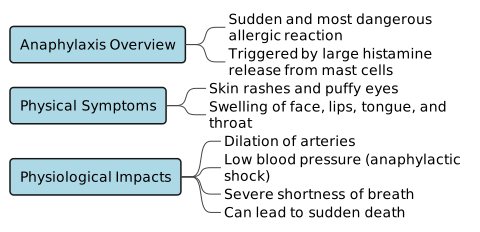
 What is anaphylaxis, and why is it considered the most dangerous type of allergic reaction?Anaphylaxis, or an anaphylactic attack, is the sudden and most dangerous of all allergic reactions. It is characterized by the discharge of large quantities of histamine released by mast cells, which produces a critical condition known as anaphylactic shock. Within a few minutes of exposure, a patient develops widespread skin rashes, facial swelling, puffy eyes, and severe swelling of tissues around the mouth, tongue, and throat. Due to the rapid dilation of arteries, the patient experiences a severe drop in blood pressure and critical shortness of breath. This rapid progression of symptoms is extremely life-threatening and can lead up to sudden death if immediate medical intervention is not provided.
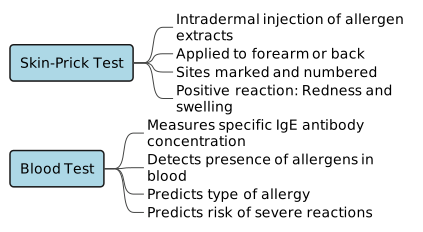
 Explain the diagnostic tests used to identify allergens and specific antibodies in an allergic patient.To identify the specific antibodies and the allergens that induce their formation, medical professionals perform diagnostic tests such as the skin-prick test and blood tests. During a skin-prick test, small amounts of suspended allergens or their extracts are injected intradermally into the patient’s forearm or back. Each injection site is marked and numbered, and the doctor looks for inflammatory reactions like swelling and redness to identify the offending allergen. Alternatively, blood tests are performed to detect the presence and concentration of specific IgE antibodies in the blood. A higher value of specific IgE antibodies indicates a greater likelihood of experiencing symptoms and helps predict the risk of severe reactions.

Share
Explore
 Long Answers
Prepared by: learnloophq@gmail.com
Chapter: 08. Allergy
Want to print your doc?
This is not the way.
This is not the way.

Try clicking the ··· in the right corner or using a keyboard shortcut (
CtrlP
) instead.