Skip to content
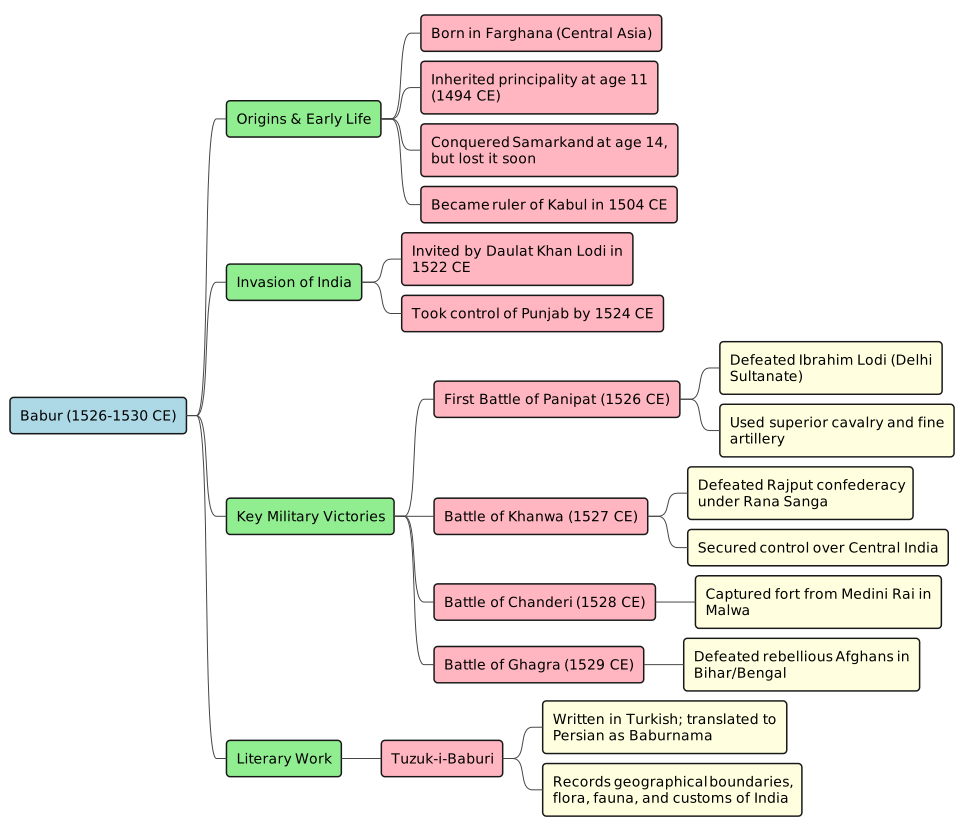
Inheritance of Farghana: In 1494 CE, at just 11 years of age, Babur inherited Farghana, a small principality in Central Asia, following his father’s death.The Dream of Samarkand: At 14, he fulfilled his dream of conquering Samarkand. However, he quickly lost both Farghana and Samarkand, becoming a homeless wanderer.Rise in Kabul: Exhibiting extraordinary determination and courage, Babur overcame these setbacks to become the ruler of Kabul in 1504 CE.The Invitation to India: In 1522 CE, Daulat Khan Lodi, seeking to overthrow the unpopular and cruel Sultan of Delhi, Ibrahim Lodi, invited Babur to invade India. Babur seized this golden opportunity.Control of Punjab: By 1524 CE, within three weeks of crossing the Indus, Babur established himself as the master of the Punjab. Although Daulat Khan subsequently turned against him, Babur returned from Kabul the next year, defeated Daulat Khan, and marched directly toward Delhi.
Tuzuk-i-Baburi: Written in flawless Turkish, these memoirs are considered one of the world’s finest autobiographies.Detailed Record: It provides a graphic and fascinating picture of Babur’s personal adventures, character, and observations on the habits, appearances, customs, and occupations of his countrymen.Accounts of Hindustan: Features highly detailed descriptions of India’s boundaries, population, revenues, resources, fruits, flowers, birds, and animals.The Baburnama: During the reign of his grandson Akbar, this invaluable historical source was translated into Persian and titled the Baburnama.
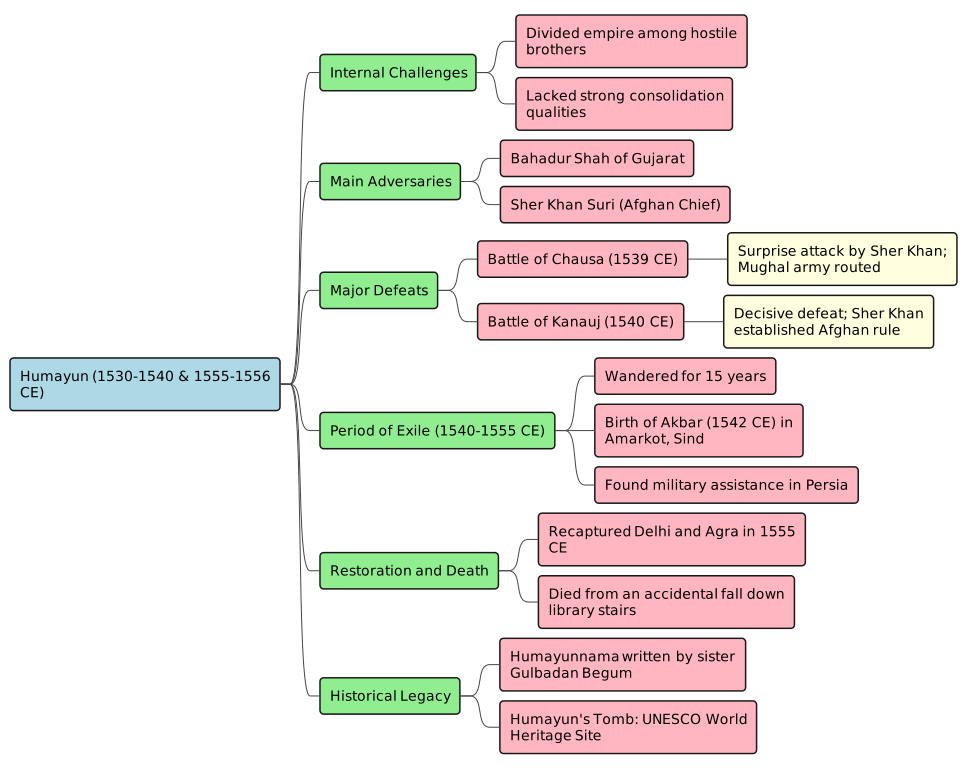
Hostile Brothers: In compliance with his father’s dying wishes, Humayun treated his younger brothers with great kindness and divided the empire among them. However, they remained openly hostile and constantly plotted against him.Sher Khan Suri: A fiercely ambitious Afghan chief in the east who rapidly consolidated power with his eyes set on the throne of Delhi.Bahadur Shah of Gujarat: The powerful ruler of Gujarat and Malwa who actively planned to capture Delhi and establish himself as the emperor of India.
Fifteen Years of Exile (1540–1555 CE): Humayun wandered as a homeless fugitive. His brothers refused to offer help.Birth of Akbar: On October 15, 1542 CE, in the small town of Amarkot in Sind, Humayun’s wife Hamida Banu gave birth to their son, Jalaluddin Muhammad Akbar, under the shelter of the Rajput ruler Rana Virsala.Refuge in Persia: Humayun eventually found military assistance and shelter in the court of the Shah of Persia.Recovery of Territories: With Persian military support, Humayun recovered Kabul and Kandahar from his hostile brother Kamran (who was subsequently blinded and sent to Mecca).Restoration of Mughal Rule (1555 CE): Following the death of Sher Shah in 1545 CE, his successors proved weak and incompetent. Humayun invaded India and successfully recaptured Delhi and Agra in 1555 CE.Tragic Death: Shortly after his return, Humayun died from an accidental fall down the stone stairs of his library.The Humayunnama: A detailed biographical account of his life was written by his sister, Gulbadan Begum, who played an active role in the cultural, intellectual, and family life of the court.
Origins: Born as Farid Khan, he was the son of Hasan Khan, a jagirdar of Sasaram in Bihar.The Title of “Sher Khan”: He was awarded the title “Sher Khan” after single-handedly killing a wild tiger.Military Training: He joined the Mughal army during Babur’s invasion, where he closely studied Mughal military strategies and warfare techniques.Expansion: Exploiting the instability after Babur’s death, he established absolute authority over Bihar and Bengal, eventually defeating Humayun at Chausa and Kanauj.Conquests: Between 1540 and 1545 CE, Sher Shah expanded his empire by conquering Malwa, Rajputana, Multan, Sind, and Punjab.Death: In 1545 CE, during the siege of Kalinjar, Sher Shah died in an accidental gunpowder explosion.
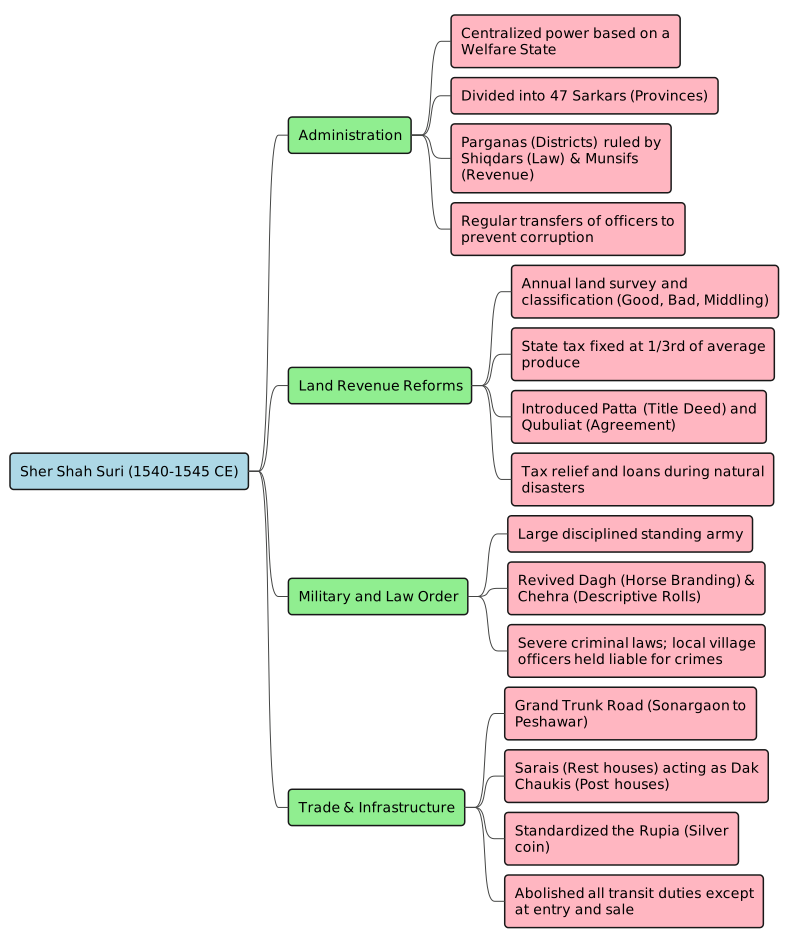
Central Administration: Sher Shah was the supreme executive head. He divided the government into several specialized departments, each headed by a minister and assisted by officers. He instituted an efficient spy system and went on regular inspection tours.Provincial division: The empire was divided into 47 Sarkars (provinces), each managed by an Afghan chief.Pargana Level: Sarkars were further divided into Parganas (districts).Shiqdar: Responsible for law, order, and general administration.Munsif: Responsible for civil court cases and tax collection.The administrative work of these officers was supervised by the Shiqdar-i-shiqdaran and the Munsif-i-munsifan.Periodical Transfers: To prevent provincial officials from becoming overly powerful or corrupt, Sher Shah introduced the practice of transferring them periodically.Village Level: Managed by local Panchayats composed of village elders. The central government maintained contact through local village officials:Patwari: Responsible for land revenue collection.Muqaddam: Responsible for maintaining peace and security.
Standing Army: Established a large, highly trained, and disciplined standing army.Direct Recruitment: Sher Shah took personal interest in the recruitment, training, and salary structure of his soldiers. Salaries were fixed based on skill and ability.Branding and Rolls: Revived Alauddin Khilji’s systems of:Dagh: Branding of royal horses to prevent substitution.Chehra: Maintaining descriptive rolls of soldiers to avoid proxy presence.Division of Units: Divided the army into distinct units under designated commanders and placed garrisons across various parts of the empire.
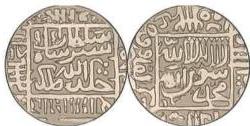
Built four major road networks to facilitate quick military movement, ease travel, and boost trade.The Grand Trunk Road: The longest and most important road, connecting Sonargaon (present-day Bangladesh) in the east to Peshawar (present-day Pakistan) in the northwest.Sarais (Rest Houses): Constructed rest houses and dug wells at regular intervals along the highways.Dak Chaukis (Post Houses): Sarais double-served as mail posts where two horsemen were kept stationed at all times to rapidly transport royal mail across the country.Abolition of Duties: To promote commerce, Sher Shah abolished all internal transit duties except two:A duty levied when goods entered the country.A duty levied at the place of sale.Safety of Traders: Local zamindars and village headmen were held personally liable for the safety of merchants and their goods. If a trader was robbed or murdered, the local officers were severely punished if they failed to catch the culprit.Uniform Weights and Measures: Standardized weights and measures across the empire.Introduced standard coins of gold, silver, and copper.The Rupia: His silver coin, the rupia, was designed with such high standard and quality that it remained the basis of India’s currency system for centuries after his death.
Land Survey: Land was surveyed and measured annually.Fertility Classification: Land was classified into three categories based on soil fertility: good, bad, and middling.Tax Rate: The tax was fixed at one-third (1/3) of the average produce, payable in cash or kind.Collection Policy: Insisted on lenient assessment of taxes but strict and uncompromising collection.Relief Measures: Taxes were reduced or suspended, and state loans were granted to farmers in the event of crop damage caused by war, drought, or floods.Patta and Qubuliat: Discouraged the exploitative jagir system and introduced:Patta: A title deed given to the peasant showing ownership and land details.Qubuliat: A written agreement signed by the peasant accepting the revenue assessment and terms of payment.

Share
Explore
 Self Study
Prepared by: learnloophq@gmail.com
Chapter: 08. Babur Humayun And Sher Shah
Theme 5: The Mughal Empire — Babur, Humayun and Sher Shah
1. Babur’s Invasion and the Emergence of the Mughal Dynasty (1526–1530 CE)
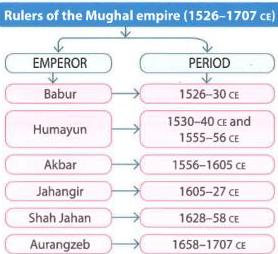
At the beginning of the 16th century CE, India presented a picture of political disunity and discord. The Delhi Sultanate had dwindled in size and power, with its control confined strictly to Delhi and surrounding areas. The subcontinent was fragmented into numerous small, independent kingdoms. This fragmented landscape offered the perfect opportunity for Zahiruddin Muhammad Babur, an ambitious descendant of Amir Timur and Chenghiz Khan, to invade and conquer India.
Zahiruddin Muhammad Babur: Profile & Early Struggles
The Decisive Battles of Babur
Battle
Year
Opponent
Significance & Outcomes
First Battle of Panipat
1526 CE
Ibrahim Lodi
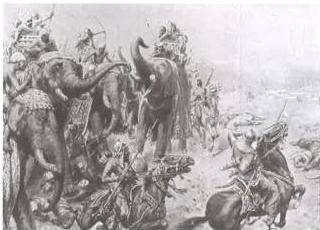
Ibrahim’s large army was routed in a few hours by Babur’s smaller, disciplined force equipped with excellent cavalry and fine artillery. Ibrahim Lodi and 15,000 soldiers died. Babur entered Delhi and was proclaimed Emperor of Hindustan.
Battle of Khanwa
1527 CE
Rana Sanga of Mewar
Fought near Agra against a powerful Rajput confederacy. Babur rallied his homesick, war-weary soldiers with an eloquent speech. Utilizing superior artillery and cavalry, Babur won. This secured supreme control over Central India and removed the biggest obstacle to Mughal rule.
Battle of Chanderi
1528 CE
Medini Rai
Babur besieged and captured the Rajput stronghold of Chanderi in Malwa. Almost all defending Rajputs perished. This ended any direct Rajput challenge to his authority.
Battle of Ghagra
1529 CE
Rebellious Afghan Chiefs
Babur inflicted a crushing defeat on the rebellious Afghans of Bihar and Bengal, extending his empire from the Punjab and Delhi across the Gangetic plain up to Bihar.
Babur’s Literary Contribution: The Memoirs
Did You Know?
There is a legendary (though historically unvalidated) story regarding Babur’s death. It is said that when his eldest son Humayun fell seriously ill, Babur performed a religious ceremony offering his own life to save his son. As Humayun recovered, Babur’s health rapidly deteriorated. He died in Agra on December 26, 1530 CE. In accordance with his wishes, Babur was buried in Kabul.
2. Humayun: Achievements, Failures, and Exile (1530–1540 CE & 1555–1556 CE)
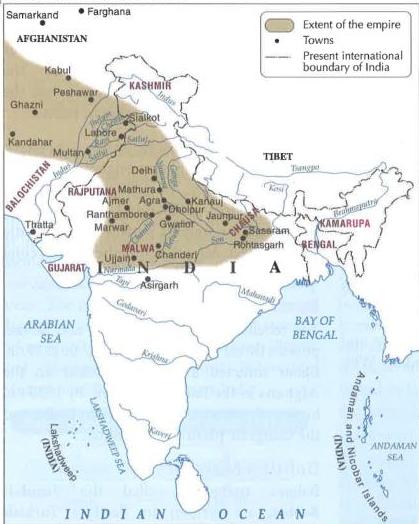
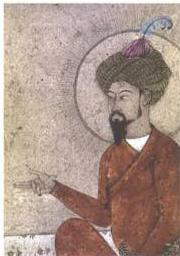
Humayun succeeded his father, Babur, as the emperor of a vast but unstable empire that stretched from Kabul to Bihar, and from the Himalayas to Gwalior. Lacking the strict military and administrative qualities required to hold such a fragile empire together, Humayun faced severe internal and external threats.
Internal and External Challenges
Key Military Expeditions and Setbacks
1. Attack on Chunar
Humayun besieged the fort of Chunar, a stronghold of Sher Khan. He abandoned the siege after four months to deal with Bahadur Shah of Gujarat, leaving the fort in Sher Khan’s possession in exchange for a superficial promise of loyalty.
2. Conquest and Loss of Gujarat & Malwa
Humayun marched against Bahadur Shah, capturing Malwa and Gujarat without facing active resistance. However, while Humayun was away, Sher Khan consolidated his position in Bihar and Bengal. Humayun left Gujarat and Malwa under the administration of his brother to march east. Taking advantage of this, Bahadur Shah quickly returned and recaptured both territories.
3. Invasion of Bengal
Humayun spent six months besieging Chunar Fort again while Sher Khan invaded Bengal, captured its capital Gaur, and seized its vast treasures. When Humayun finally reached Gaur unopposed, he wasted several critical months in merrymaking. Meanwhile, his brother Hindal declared himself emperor at Agra, and Sher Khan successfully cut off Humayun’s supply lines and communications.
4. Battle of Chausa (1539 CE)
The Mughal and Afghan armies faced each other at Chausa for three months. While peace negotiations were underway, Sher Khan launched a sudden, surprise attack. The Mughal army was completely routed. Humayun narrowly escaped drowning in the Ganga by floating down the river on an inflated water bag provided by a helpful water carrier.
5. Battle of Kanauj (1540 CE)
Sher Khan prepared a massive offensive and met the Mughal forces at Kanauj. The Mughal army suffered a decisive defeat. Sher Khan occupied Delhi and Agra, assuming the royal title of Sher Shah. This brought a temporary end to Mughal rule, replacing it with the Afghan Sur dynasty.
Humayun’s Exile and Triumphant Return
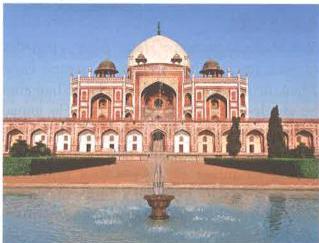
Knowledge of India: Architectural Heritage & Climate Action (SDG 13)
Humayun’s Tomb in New Delhi is a magnificent monument and a designated UNESCO World Heritage Site. Today, human activities and environmental pollution (such as acid rain) pose serious threats to the preservation of these structural marvels.
3. Sher Shah Suri and the Sur Empire (1540–1545 CE)
Sher Shah Suri established Afghan rule in India after driving Humayun into exile. Though his reign lasted for only five brilliant years, his administrative, military, and land reforms set high standards of governance that served as a blueprint for future monarchs, including the later Mughals.
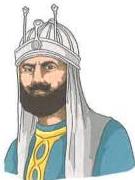
Early Life and Rise to Power
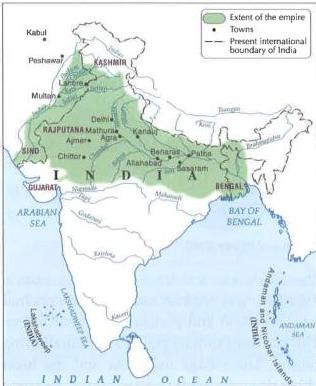
Central and Provincial Administration
Sher Shah was a brilliant administrator who operated on the principle of a welfare state. He personally supervised every administrative detail to prevent corruption and maintain strict efficiency.
[ CENTRAL GOVERNMENT ]
(Sher Shah - Supreme Head & Ministers)
|
v
[ 47 SARKARS ] (Provinces)
(Overseen by Afghan Chiefs)
|
v
[ PARGANAS ] (Districts)
(Supervised by Shiqdar-i-Shiqdaran & Munsif-i-Munsifan)
/ \\
v v
[ SHIQDAR ] (Law & Order) [ MUNSIF ] (Revenue & Civil)
\\ /
\\_________________ _______________________/
v
[ VILLAGES ]
(Managed by Panchayats, Patwaris, Muqaddams)
Key Administrative Features:
Military Reforms
Infrastructure, Communication, and Trade
1. Communication Network
2. Trade and Commerce
3. Currency System
The Land Revenue System
Sher Shah’s land revenue system is widely considered his greatest administrative achievement.
4. Summary & Study Aids
Chronological Timetable of Important Events
Year (CE)
Event
1494
Babur becomes the ruler of Farghana at 11 years of age.
1504
Babur captures and becomes the ruler of Kabul.
1522
Daulat Khan Lodi invites Babur to invade India.
1526
The First Battle of Panipat: Babur defeats Ibrahim Lodi; foundation of the Mughal Dynasty.
1527
Battle of Khanwa: Babur defeats Rana Sanga of Mewar, establishing control over Central India.
1528
Battle of Chanderi: Babur captures the fort of Chanderi from Medini Rai.
1529
Battle of Ghagra: Babur defeats the rebellious Afghan forces in Bihar and Bengal.
1530
Death of Babur; Humayun ascends the throne.
1539
Battle of Chausa: Sher Khan defeats Humayun.
1540
Battle of Kanauj: Sher Khan decisively defeats Humayun, establishing the Sur (Afghan) Dynasty.
1542
Akbar is born in Amarkot, Sind.
1545
Death of Sher Shah Suri in a gunpowder explosion at Kalinjar.
1555
Humayun defeats weak Sur successors, recapturing Delhi and Agra.
1556
Death of Humayun due to an accidental fall down library stairs.
Want to print your doc?
This is not the way.
This is not the way.

Try clicking the ··· in the right corner or using a keyboard shortcut (
CtrlP
) instead.