Skip to content
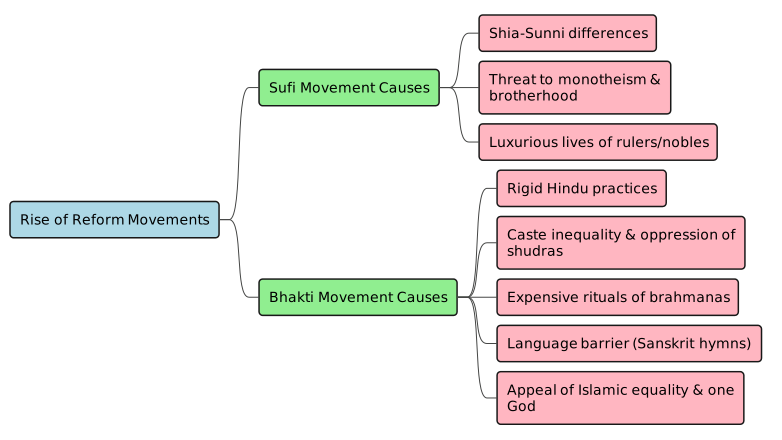
Intra-Religious Conflicts: Following the death of Prophet Muhammad, deep theological differences arose between the Shia and Sunni sects, resulting in prolonged hostility and threat to the core Islamic ideals of monotheism and universal brotherhood.Opposition to Luxury: There was a growing trend among Muslim rulers and elites to live lives of extreme luxury and indulgence, which directly opposed the Islamic principles of piety, simplicity, and simple living.
Rigidity in Hinduism: Over time, Hindu practices grew rigid, complex, and filled with superstitious beliefs.Caste Discrimination and Inequality: The hierarchical caste system led to social injustice and the systematic exploitation of lower castes, particularly the Shudras, by the dominant higher castes.Ritualistic Burden: The Brahmanas prescribed highly complex, expensive, and meaningless rituals, which imposed heavy financial burdens on the poor.Sanskrit Language Barrier: Lower castes were prohibited from studying Sanskrit scriptures, leaving them unable to understand the hymns and mantras used in rituals.Attraction of Islamic Ideals: The simple Islamic doctrines of monotheism (one God), absolute equality, and universal brotherhood greatly appealed to liberal-minded Hindus.
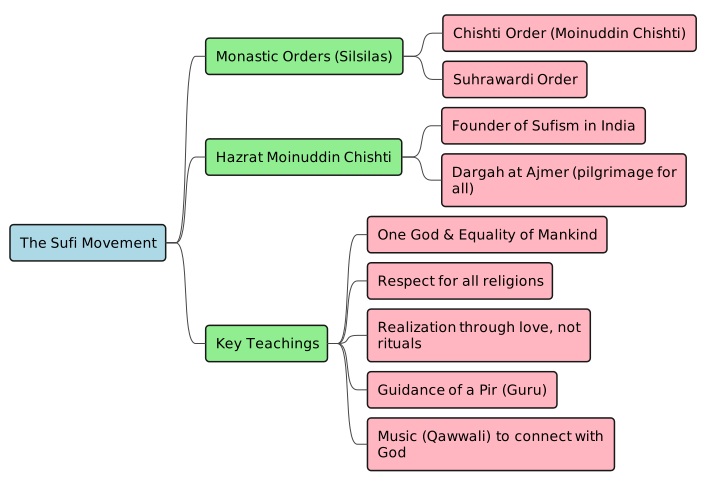
The Sufis arrived in India along with the Turks in the 12th century CE.Over time, they integrated Buddhist and Hindu elements into their practices, winning respect from both communities.Similar to the Buddhist sangha, the Sufis established monastic organizations known as silsilas.The two most popular silsilas in India were the Chishti and the Suhrawardi orders.
He was the founder of the Sufi Movement in India (Chishti order).His famous shrine, the dargah in Ajmer, remains a major pilgrimage center for both Muslims and Hindus.
Monotheism: There is only one God, and all human beings are His children.Equality: All human beings are born equal; caste and social differences are irrelevant.Universal Path: Different religions are merely different paths leading to the same singular God; thus, every religion deserves respect.Devotion over Rituals: Fasts and complex rituals are unnecessary. God can be realized strictly through pure love and devotion.Spiritual Guidance: It is essential to follow a spiritual guide, known as a pir (guru), to navigate the right spiritual path.Music as Worship: Devotees can achieve closeness to God through soul-stirring devotional music, known as qawwali.Inner Purity: Conversion is unnecessary; one should focus on being a good Hindu or a good Muslim by leading a disciplined, pure life.
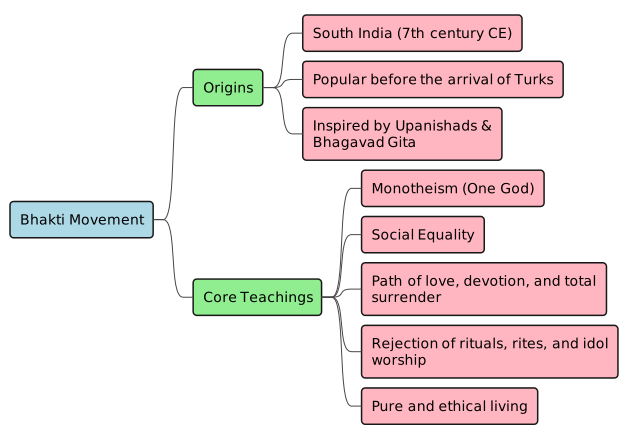
Timeline and Geography: It originated in South India in the 7th century CE and became highly popular long before the Turkish invasions.Scriptural Roots: The Bhakti saints drew their primary spiritual inspiration from the Upanishads and the Bhagavad Gita.Social Impact: By advocating monotheism, social equality, and ritual-free worship, the movement bridged cultural gaps and enabled peaceful, harmonious coexistence between Hindus and Muslims.
Belief in One God: There is only one God, and everyone is equal in His eyes.Path of Surrender: God is attained through pure love, intense devotion, and absolute surrender to His divine will, rather than through idols, rituals, and ceremonies.Purity of Character: It is essential for every individual to lead a pure, ethical life.
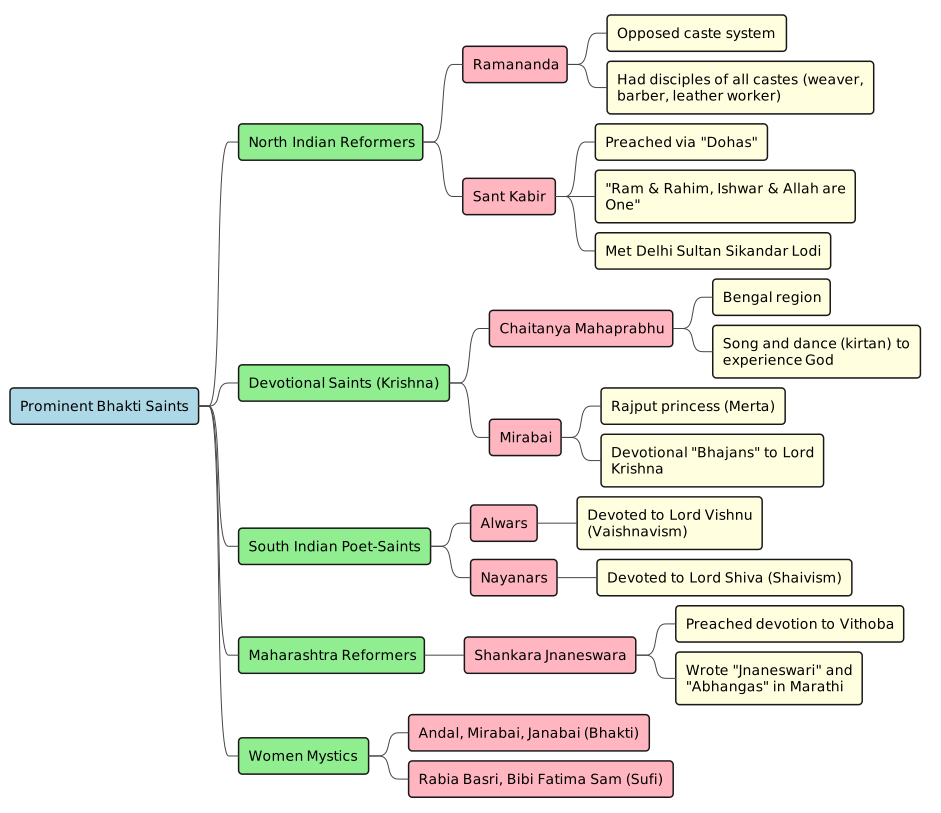
Sultan Connection: Historical accounts state that Kabir shared his belief in one God with the contemporary Delhi Sultan, Sikandar Lodi.
The Alwars: Devoted to Lord Vishnu; they composed spiritual hymns in local Tamil to popularize Vaishnavism as a path to salvation.The Nayanars: Devoted to Lord Shiva; they composed hymns in Tamil and worked alongside the Alwars to spread bhakti.
Jnaneswari: A commentary on the Bhagavad Gita written in the local Marathi language.Abhangas: Lyrical Marathi poems through which he spread the message of devotion.
Bhakti Movement: Key figures included Andal (South India), Mirabai (Rajasthan), and Janabai (Maharashtra).Sufi Movement: Notable female mystics included Rabia Basri and Bibi Fatima Sam, who played vital roles in expanding Sufi teachings.
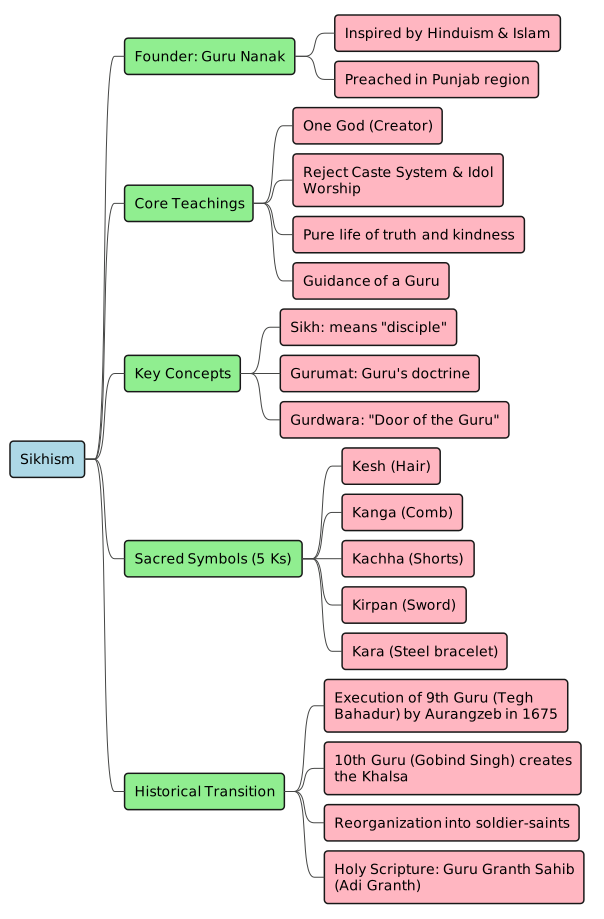
Monotheism: There is only one God, who is the sole creator of the universe.Equality: All human beings are equal. The caste system must be rejected in favor of universal brotherhood.Ethical Life: One must live a life of truth, honesty, and kindness, while discarding meaningless rituals, ceremonies, and idol worship.Importance of a Guru: True spiritual enlightenment and salvation can only be obtained through the guidance of a spiritual teacher (Guru).
Gurumat: Sikhism is also known as Gurumat, meaning “the Guru’s doctrine.” God is considered the original Guru, and Nanak is His chosen disciple. The word “Sikh” itself translates to “disciple.”The Ten Gurus: There were ten living human Gurus in Sikhism.Guru Granth Sahib: The tenth and last human Guru, Guru Gobind Singh, transferred spiritual authority to the holy scriptures, known as the Adi Granth or Guru Granth Sahib, which now acts as the permanent, living Guru.Gurdwara: The place of worship for Sikhs, translating to “the door of the Guru.”
Kesh: Uncut hair (symbolizing acceptance of God’s will).Kanga: A wooden comb (symbolizing cleanliness and order).Kachha: Special undergarments/shorts (symbolizing self-discipline).Kirpan: A ceremonial sword (symbolizing the defense of the weak and justice).Kara: A steel bracelet (symbolizing connection with God and community).
In 1675 CE, the ninth Sikh Guru, Guru Tegh Bahadur, was executed by the Mughal Emperor Aurangzeb. This event deeply angered the community.Under the leadership of the tenth Guru, Guru Gobind Singh, the Sikhs were reorganized into a disciplined, military-spiritual order called the Khalsa (soldier-saints), transforming them into a formidable martial race.
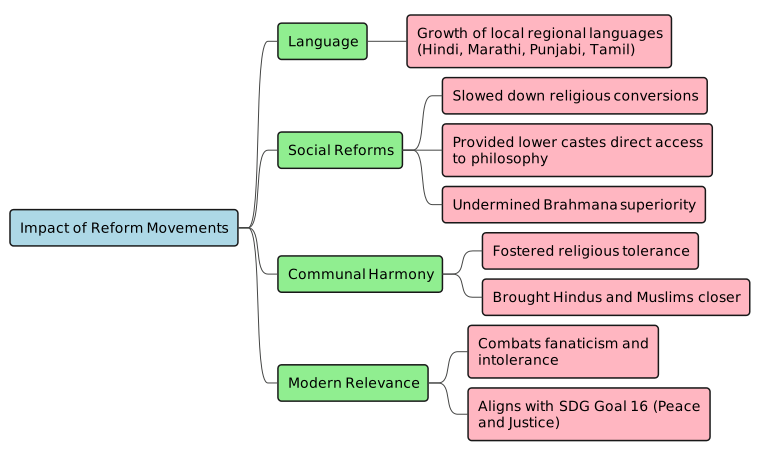
Growth of Vernacular Languages: Because the Bhakti and Sufi saints preached and composed their hymns in the everyday languages of the common people, regional languages (such as Hindi, Punjabi, Tamil, and Marathi) experienced rapid growth and development.Slowing down of Religious Conversions: Since the lower castes were granted direct, easy access to the spiritual truths of Hindu philosophy without complex language barriers, the rate of religious conversions slowed down significantly.Weakening of Priestly Dominance: The movements successfully exposed the futility of complex rites and rituals, which eroded the religious monopoly and superiority of the Brahmanas.Communal Harmony and Tolerance: By emphasizing monotheism, universal brotherhood, and mutual respect, the Sufis and Bhaktas fostered an environment of religious tolerance, bringing Hindus and Muslims closer together.
SDG Goal 16 (Peace, Justice, and Strong Institutions): The teachings of these medieval saints, centered on the idea that belief is a personal matter and that all spiritual paths lead to one God, serve as powerful tools today to fight sectarianism, communal violence, and global fanaticism.
Life Span: Born in Amritsar, Punjab, in 1621.Role: He was the ninth Sikh Guru and the father of the tenth Guru, Gobind Singh.Mission: Traveled extensively to spread the core messages of Guru Nanak Dev Ji, focusing on religious freedom, universal brotherhood, and tolerance.Martyrdom: Executed in 1675 CE under the orders of Mughal Emperor Aurangzeb. His sacrifice is commemorated annually on 24 November as Shaheed Diwas.
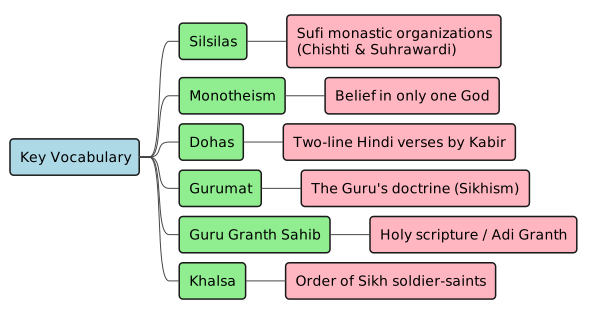
Silsilas: The specialized monastic organizations established by Sufi mystics. The Chishti and Suhrawardi orders were the most prominent in India.Monotheism: The philosophical and religious belief in the existence of only one Supreme God.Dohas: Short, beautiful, and easy-to-understand two-line Hindi poems used by Sant Kabir to spread his socio-religious messages.Gurumat: Literally translating to “the Guru’s doctrine,” it is another traditional name for Sikhism.Guru Granth Sahib: The holy scripture of Sikhism, also known as the Adi Granth, which is regarded as the eternal, living Guru.Khalsa: A highly disciplined military-spiritual order of Sikh soldier-saints created by Guru Gobind Singh in response to persecution.

Share
Explore
 Self Study
Prepared by: learnloophq@gmail.com
Chapter: 11. Bhakti And Sufi Movements
SECTION 1: INTRODUCTION AND RISE OF RELIGIOUS REFORM MOVEMENTS
During the Medieval Period, the political relationship between the Delhi Sultans and the Indian population transitioned from initial hostility to mutual tolerance. Realizing they were a minority, the Sultans chose not to disturb the predominantly Hindu cultural fabric. Consequently, Hindu and Muslim cultures coexisted, influenced, and enriched each other, leading to the emergence of two liberal reform movements: the Sufi and Bhakti movements.
Causes for the Rise of the Sufi Movement
Causes for the Rise of the Bhakti Movement
Core Objective of Both Movements
To liberate the common masses from the grip of priestly classes, eradicate meaningless rituals, and restore worship to its original simplicity and purity based on spiritual devotion and monotheism.
SECTION 2: THE SUFI MOVEMENT
The Sufis were Muslim mystics who sought direct spiritual knowledge and union with God through prayer, meditation, and self-discipline. Originally emerging as a reform movement within Islam in West Asia, Sufism was deeply inspired by the teachings of the Koran.

The practice of whirling is followed by certain Sufi mystics. It symbolizes their spiritual journey towards God.
The practice of whirling is followed by certain Sufi mystics. It symbolizes their spiritual journey towards God.
Introduction to India
Hazrat Moinuddin Chishti

Moinuddin Chishti’s dargah at Ajmer is an important pilgrimage centre not only for Muslims but for Hindus as well.
Moinuddin Chishti’s dargah at Ajmer is an important pilgrimage centre not only for Muslims but for Hindus as well.
Core Teachings of Sufism
SECTION 3: THE BHAKTI MOVEMENT & ITS TEACHINGS
The word bhakti translates to “devotion to God.” The Bhakti Movement emerged as a powerful, liberal religious reform movement within Hinduism.
Origins
Core Teachings of the Bhakti Saints
SECTION 4: PROMINENT SAINTS OF THE BHAKTI MOVEMENT
The Bhakti Movement was led by several spiritual reformers who reached out to the masses in local languages.
Saint / Group
Region / Focus
Key Teachings & Contributions
Ramananda
North India
Opposed the caste system; welcomed disciples from all castes, including a leather worker, a barber, and a Muslim weaver.
Sant Kabir
North India
Taught that Ishwar, Allah, Ram, and Rahim are different names of the same God; rejected idol worship, caste, and rituals; composed dohas.
Chaitanya Mahaprabhu
Bengal / Krishna Devotion
Devotee of Lord Krishna; preached universal brotherhood; used singing and dancing (kirtan) to experience God; rejected priestly dominance.
Mirabai
Rajasthan / Krishna Devotion
Rajput princess; wrote devotional bhajans to Krishna; challenged traditional patriarchal boundaries through her total spiritual surrender.
Alwars & Nayanars
South India
Poet-saints of Tamil Nadu; Alwars popularized Vaishnavism (devotion to Vishnu); Nayanars popularized Shaivism (devotion to Shiva).
Shankara Jnaneswara
Maharashtra
First bhakti preacher in Maharashtra; criticized caste, ritualism, and brahmana dominance; wrote Jnaneswari; composed lyrical abhangas to God Vithoba.
Detailed Profiles of Key Saints
Ramananda
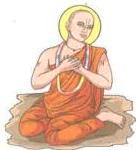
He was a pioneering saint who strongly criticized the rigid Hindu caste system. He opened his doors to all sections of society. Among his twelve closest disciples were individuals from marginalized backgrounds, including a leather worker, a barber, and a Muslim weaver.
Ramananda was strongly opposed to the caste system.
Ramananda was strongly opposed to the caste system.
Sant Kabir
He strongly propagated the concept of a single, formless God, asserting that “Ishwar and Allah, Ram and Rahim” are merely different names for the same Supreme Divine. Kabir sought to establish Hindu-Muslim unity and criticized caste discrimination, idol worship, and rituals. He conveyed his profound messages through simple, two-line Hindi poems called dohas.
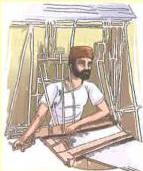
Sant Kabir preached his message through dohas.
Sant Kabir preached his message through dohas.
Chaitanya Mahaprabhu
A passionate devotee of Lord Krishna, he believed that spiritual union with God could be achieved through ecstatic love, devotion, community singing, and dancing. He traveled extensively, preaching universal brotherhood, while condemning religious ceremonies and the dominance of the priestly class.

Chaitanya Mahaprabhu was a devotee of Krishna.
Chaitanya Mahaprabhu was a devotee of Krishna.
Mirabai
Mirabai was a Rajput princess, the daughter of Ratan Singh Rathore of Merta. Raised in a devout Vaishnava atmosphere, she dedicated her entire life to Lord Krishna. She composed deeply emotional devotional songs called bhajans. She spent her time singing and dancing in the company of other devotees, completely ignoring aristocratic boundaries and patriarchal norms.
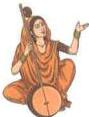
Mirabai spread her message through her bhajans.
Mirabai spread her message through her bhajans.
The Alwars and Nayanars
These South Indian poet-saints spearheaded the Bhakti movement in Tamil-speaking regions:
Shankara Jnaneswara (Sant Dnyaneshwar)
The first major Bhakti reformer of Maharashtra, he strongly condemned caste divisions, expensive rituals, and the supremacy of the brahmanas. He urged people to surrender completely to Vithoba (an incarnation of Vishnu). He wrote:
Women in Bhakti and Sufi Movements
The Bhakti and Sufi movements provided a unique platform for women to express their spiritual experiences, actively challenging contemporary patriarchal norms:
SECTION 5: SIKHISM
Sikhism was founded by Guru Nanak as an independent religious sect. Deeply inspired by the core philosophies of both Hinduism and Islam, Nanak blended elements of both to form a unique, egalitarian faith that grew highly popular, especially in Punjab, by the 17th century CE.
Core Teachings of Guru Nanak
Key Concepts in Sikhism
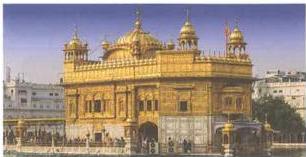
Sri Harmandir Sahib at Amritsar is one of the most important places of worship for the Sikhs.
Sri Harmandir Sahib at Amritsar is one of the most important places of worship for the Sikhs.
The Five Ks (Five Sacred Symbols)
Every baptized Sikh must wear five sacred symbols of faith at all times:
Transformation into a Martial Race
SECTION 6: IMPACT AND LEGACY OF THE MOVEMENTS
The Bhakti and Sufi movements profoundly transformed medieval Indian society, leaving a legacy that remains highly relevant today.
Major Impacts on Indian Society
Modern Relevance & Sustainable Development Goals (SDGs)
SECTION 7: BIOGRAPHIES, TIMELINES, & KEYWORDS
Biography: Guru Tegh Bahadur

Historical Timeline
gantt
title Historical Timeline of Bhakti, Sufi, and Sikh Movements
dateFormat YYYY
axisFormat %Y
section Milestones
Beginning of Bhakti Movement in South India :active, milestone, 0700, 1d
Arrival of Sufi Mystics in India with Turks :active, milestone, 1100, 1d
Rise & Acceptance of Sikhism in Punjab :active, milestone, 1600, 1d
Execution of Guru Tegh Bahadur by Aurangzeb :active, milestone, 1675, 1d
Important Words Dictionary
Want to print your doc?
This is not the way.
This is not the way.

Try clicking the ··· in the right corner or using a keyboard shortcut (
CtrlP
) instead.