Skip to content
Metabolic Wastes: Substances produced during biochemical reactions that are either useless or harmful to the body. Examples include carbon dioxide, undigested food, urea, and ammonia.Excretory Substances: Specific waste substances that cannot be stored in the body and must be removed immediately to prevent toxicity.Excretion: The biological process of removing unwanted excretory substances from the body.Excretory System: The collective group of organs that assist in the removal of these metabolic waste products.
Cellular Harm: Accumulating wastes can prove highly toxic and poison living cells.Alteration of Internal Environment: The chemical balance of the cellular environment changes, disrupting normal metabolic pathways.Disturbance of Ionic Balance: Accumulation of wastes alters the concentration of essential ions within the cell, leading to cellular malfunction.
Ammonia Production: Ammonia is produced inside liver cells by the breakdown of excess amino acids.Urea Formation: Because ammonia is highly toxic, liver cells quickly combine ammonia with carbon dioxide to synthesize urea. The blood then transports this urea from the liver to the kidneys for filtration.
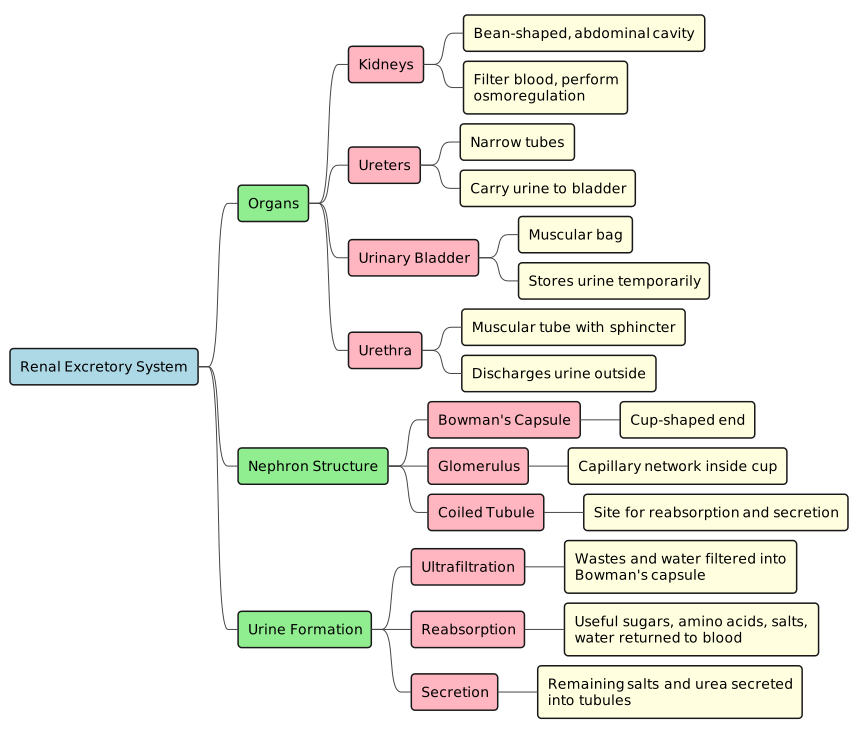
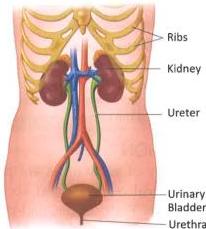
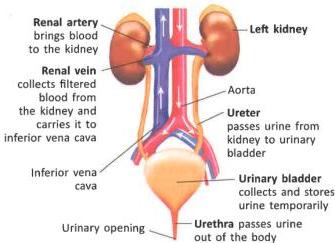
Kidneys (Two): Reddish-brown, bean-shaped structures located in the abdominal cavity, on either side of the backbone at the level of the last two ribs. Each kidney measures about 7–10 cm in length and 2.5–4 cm in width.Ureters (Two): Narrow tubes arising from the inner side of each kidney that carry urine down to the urinary bladder.Urinary Bladder (One): A muscular bag located in the lower abdomen that temporarily collects and stores urine.Urethra (One): A median tube arising from the urinary bladder that opens to the outside. Urination is regulated by a sphincter muscle made of circular involuntary muscles.
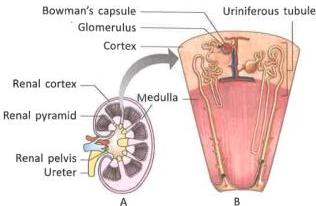
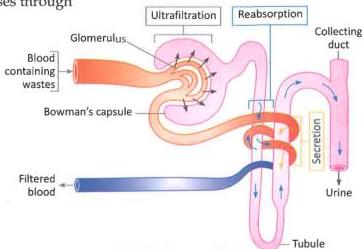
Nephrons (Uriniferous Tubules): The basic structural and functional excretory units of the kidney. Each kidney contains approximately one million nephrons.Bowman’s Capsule: The cup-shaped anterior end of a nephron.Glomerulus: A dense network of blood capillaries situated inside the Bowman’s capsule. It receives blood from the renal artery and acts as a primary filter.Renal Blood Vessels: The renal artery brings oxygenated, waste-laden blood to the kidneys, while the renal vein carries clean, filtered blood away.
UltrafiltrationOccurs as blood flows under pressure through the glomerulus capillaries.Water and nitrogenous wastes are filtered out of the blood into the Bowman’s capsule, moving down into the coiled tubule of the nephron.ReabsorptionAs the filtrate travels through the long coiled tubule, useful substances like glucose, amino acids, essential salts, and water are reabsorbed back into the blood capillaries surrounding the nephron.SecretionAny remaining salts, urea, or uric acid left in the blood are actively secreted directly into the tubules.The remaining fluid, consisting of water, urea, and uric acid, is now called urine.
Blood Filtration Rate: The kidneys clean all the blood in our body once every 30 minutes. They filter about 200 liters of blood daily.Daily Urine Output: An adult excretes about 1.5 to 2.0 liters of urine every 24 hours.Urine Composition: Urine is typically composed of 95% water, 2.5% urea, and 2.5% other waste products.Osmoregulation: The process of maintaining water balance and salt concentration in the blood.Survival: A person cannot survive if both kidneys are damaged and non-functional without medical intervention.
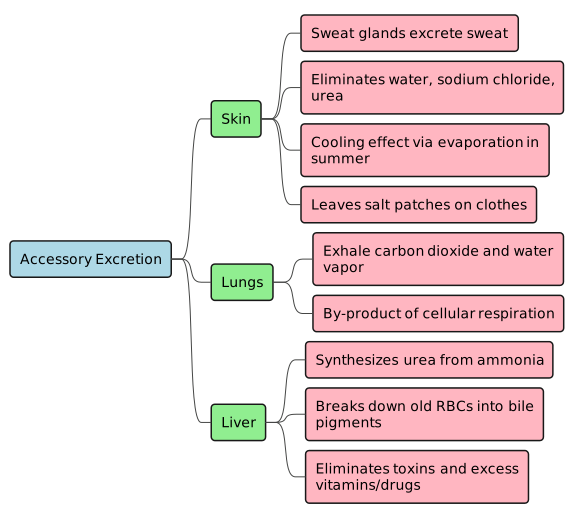
Why We Sweat in Summer: When external temperatures are high, sweat is produced. As sweat evaporates from the skin’s surface, it absorbs heat energy from the body, producing a cooling effect. This increased water loss is why we feel more thirsty in summer.Underarm Sweat & White Patches: Sweat glands are highly concentrated in the underarm areas. When sweat dries, the water evaporates, leaving behind salts. This leaves distinct white patches on dark or colored clothing.
Urea Synthesis: Converts toxic ammonia (from amino acid breakdown) and carbon dioxide into less harmful urea.Bile Pigment Removal: Breaks down exhausted Red Blood Cells (RBCs) and excretes the resulting bile pigments.Toxin/Drug Elimination: Metabolizes and neutralizes excess vitamins, drugs, and other toxins circulating in the blood.
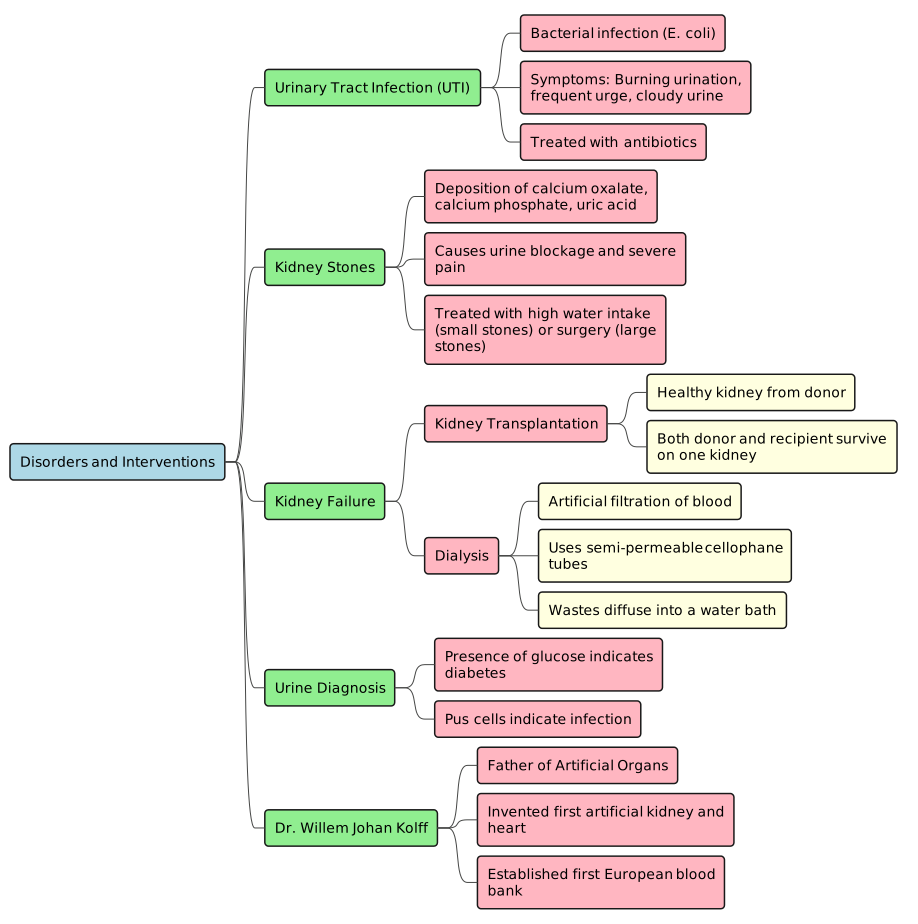
Cause: A bacterial infection affecting any part of the urinary tract (kidneys, ureters, urinary bladder, or urethra). It is most commonly caused by the bacterium Escherichia coli (E. coli).Symptoms:Strong, frequent urge to urinate.Pain and burning sensation during urination.Cloudy or strange-smelling urine.Fever-like feelings (especially if the infection spreads up to the kidneys).Treatment: Treated effectively using antibiotics.
Cause: Crystallization and accumulation of substances like calcium oxalate, calcium phosphate, and uric acid. When these substance concentrations are too high, they stick together and form solid deposits within the kidney tubules, ureters, or urinary bladder.Symptoms: Blockage of urine flow and severe abdominal or back pain.Treatment:Small stones can be flushed out naturally by drinking large amounts of water.Larger stones (up to 2.5 cm or larger) require surgical removal.
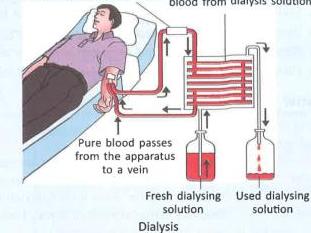
Mechanism: Blood is drawn from a vein and passed through a dialysis machine containing cellophane tubes immersed in a water bath (dialysis solution).Role of Cellophane Tubes: These tubes have microscopic pores that act as a selectively permeable membrane. Waste products easily diffuse through these pores into the dialyzing solution, while essential blood cells and large proteins are retained.Return of Blood: The purified blood is safely returned to the patient’s vein.
Diabetes Detection: The presence of glucose (sugar) in urine suggests that the pancreas is not producing enough insulin (or the body is not utilizing it), causing blood sugar levels to rise. The excess sugar is excreted out of the body through the urine.Other Indicators: The presence of pus cells or other materials can indicate active infections or malfunctions in corresponding organs.
Background: Dr. Willem Johan Kolff was an innovative Dutch physician who earned his doctorate from the University of Groningen in 1946.Key Inventions:Invented the first artificial kidney using simple everyday materials like sausage casings and orange juice cans.Created the first artificial heart.Established the first European blood bank.Legacy: His early designs laid the foundation for the modern dialysis machine and heart-lung machine, earning him the title of the “Father of Artificial Organs”.
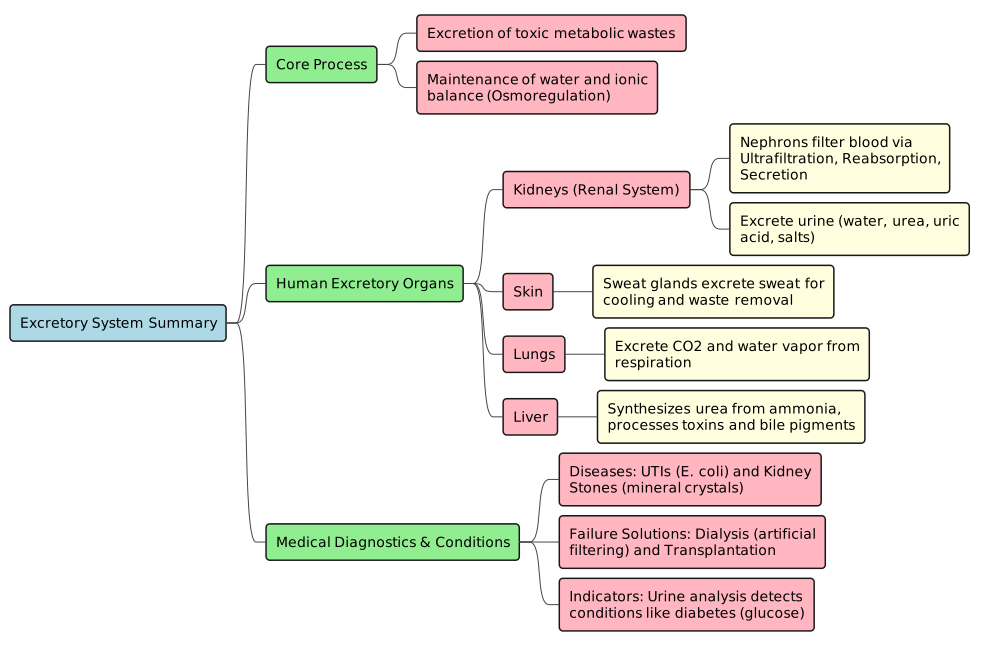
Excretion is the essential physiological process of removing toxic metabolic wastes (like urea, ammonia, and CO₂) to maintain a stable internal cellular environment and ionic balance (osmoregulation).The Renal Excretory System includes two kidneys, two ureters, a urinary bladder, and a urethra.The Nephron is the functional unit of the kidney, housing the Bowman’s capsule and the glomerulus.Urine formation takes place in three key steps: Ultrafiltration in the glomerulus, Reabsorption of nutrients and water in the tubules, and Secretion of leftover wastes.Accessory excretory organs include:Skin: Removes water and salts as sweat to aid cooling.Lungs: Excretes carbon dioxide.Liver: Converts toxic ammonia to urea and breaks down old RBCs.Common urinary disorders include UTIs (bacterial infections) and kidney stones (crystallized mineral deposits).Kidney Failure is managed using artificial blood filtration (dialysis) or kidney transplantation. Urine composition analysis serves as a vital diagnostic indicator for systemic diseases like diabetes.

Share
Explore
 Self Study
Prepared by: learnloophq@gmail.com
Chapter: 06. Excretory System
6 Excretory System

1. Excretion and the Need for Excretion
Living cells continuously perform biochemical reactions. These reactions break down sugars, fats, and proteins to produce energy and essential molecules, but they also produce various by-products.
Metabolic Wastes and Excretion
The Critical Need for Excretion
If toxic waste substances like carbon dioxide and ammonia accumulate inside the cells, they can cause serious physiological damage:
Comparison: Waste Products vs. Excretory Products
Feature
Waste Products
Excretory Products
Definition
Unusable or unwanted substances produced during various metabolic processes.
Metabolic wastes that must be eliminated from the body and cannot be stored inside.
Storage
Some waste products (like undigested food) may reside in the body temporarily before disposal.
Cannot be stored inside the body due to their high toxicity.

2. Human Excretory System & Organs of Excretion
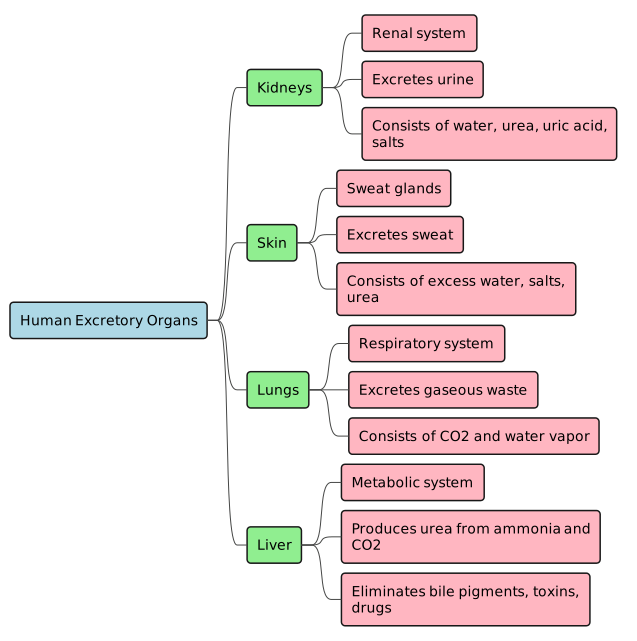
While the kidneys serve as the primary excretory organs in humans, several other organs work in coordination to eliminate different forms of waste.
Primary and Accessory Organs of Excretion
Organ
Associated System
Excretory Products Eliminated
Kidneys
Renal Excretory System
Water, urea, uric acid (nitrogenous waste), and excess salts in the form of urine
Skin
Integumentary (Sweat Glands)
Excess water, salts (like sodium chloride), and small amounts of urea in the form of sweat
Lungs
Respiratory System
Carbon dioxide and water vapor in exhaled air (gaseous waste)
Liver
Digestive/Metabolic System
Bile pigments, toxins, and urea (which is transported via blood to the kidneys for final excretion)
Important Biochemical Pathways in the Liver
3. The Renal Excretory System
The renal excretory system (also known as the urinary system) is the main system responsible for filtering blood, managing water balance, and maintaining salt concentration (osmoregulation).
Components of the Renal Excretory System
The human renal system consists of four main parts:
Internal Structure of the Kidney and the Nephron
Detailed Steps of Urine Formation
The formation of urine involves three sequential processes:
Key Physiological Facts
4. Accessory Excretory Organs: Skin, Lungs, and Liver
Apart from the renal system, other organs play essential supporting roles in removing specific metabolic wastes.
Skin as an Excretory Organ
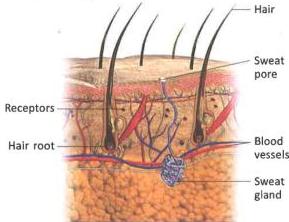
The skin contains specialized sweat glands that absorb water, salts, and small amounts of urea from the surrounding blood capillaries. These glands release a fluid called sweat through tiny pores on the skin’s surface.
Lungs as Excretory Organs
During cellular respiration, cells break down glucose to generate energy, producing carbon dioxide (CO₂) and water as by-products. The lungs excrete these gaseous wastes during exhalation.
Excretory Function of the Liver
The liver is the primary metabolic processing center of the body:
5. Disorders of the Urinary System and Medical Interventions
Disruptions in the urinary system can lead to severe infections, painful conditions, or life-threatening organ failure.
1. Urinary Tract Infection (UTI)
2. Kidney Stones
3. Kidney Failure and Medical Interventions
When both kidneys fail, toxic metabolic wastes accumulate rapidly in the blood, which is fatal if left untreated. Two major solutions exist:
A. Dialysis (Artificial Kidney)
Dialysis is the artificial process of filtering blood to remove urea, uric acid, excess ions, and excess glucose when the kidneys are non-functional.
B. Kidney Transplantation
If kidney damage is irreversible, a healthy kidney from a compatible living or deceased donor can be surgically transplanted into the patient. Both the donor and the recipient can survive healthily with just one functioning kidney.
Urine as an Indicator of Disease
Analyzing the composition of urine is a powerful diagnostic tool:
Know Your Scientist: Willem Johan Kolff (1911–2009)

6. Comprehensive Chapter Summary
Want to print your doc?
This is not the way.
This is not the way.

Try clicking the ··· in the right corner or using a keyboard shortcut (
CtrlP
) instead.