Skip to content
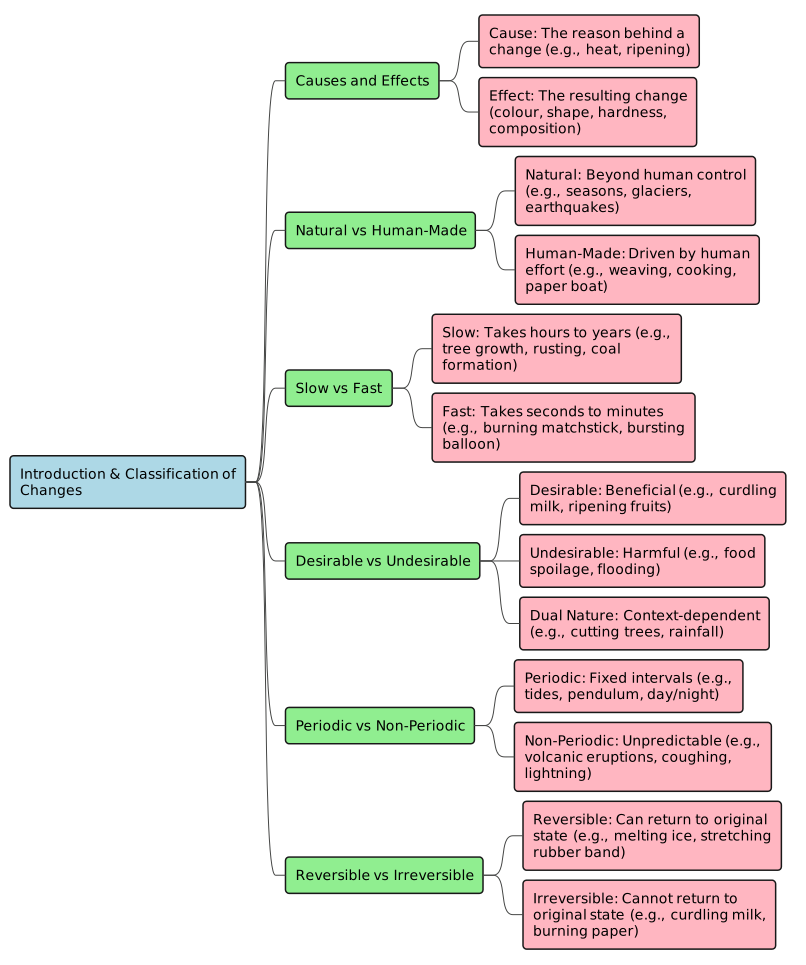
Change in Properties: When a change takes place, the substance can undergo variations in physical and chemical attributes, including:ColourSizeShapeHardnessPositionCompositionOdourTasteTemperatureIllustrative Examples:Cooking Rice: Raw rice is hard and difficult to digest. Heating (cooking) is the cause, and the softening of the rice is the effect.Tomato Ripening: A green raw tomato turns red upon ripening. Ripening is the cause, and the change in colour is the effect.Melting Ice: An ice cube kept in an open space begins to melt. Heat is the cause, and the change in the size and shape of the ice is the effect.
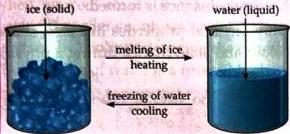
Natural Changes: Occur naturally in nature and are completely beyond human control.Examples: Alternation of day and night, change of seasons, melting of glaciers, formation of coal from dead matter, volcanic eruptions, earthquakes, and the growth of seedlings.Human-Made Changes: Occur as a result of human efforts, activities, or intervention.Examples: Cooking food, burning fuel, weaving cloth, making chapatis, agricultural production of food grains, and folding a paper boat.Slow Changes: Take a long duration (hours, days, months, or years) to complete.Examples: Growth of a tree from a seedling, rusting of iron, tooth decay, change of seasons, coal and petroleum formation, and the growth of living organisms.Fast Changes: Happen rapidly, taking only a few seconds or minutes to complete.Examples: Burning of a matchstick, bursting of firecrackers, beating of the heart, lighting an electric bulb, burning paper, and bursting an inflated balloon.Desirable Changes: Changes that benefit humankind and are wanted.Examples: Curdling of milk, cooking of food, drying of wet clothes, and ripening of fruits.Undesirable Changes: Changes that cause harm to humankind and are unwanted.Examples: Flooding of rivers, spoilage of food, earthquakes, and diseases.Dual Nature Changes: Some changes are desirable in one context but undesirable in another:Cutting Trees: Desirable for producing paper and furniture, but undesirable because it causes soil erosion and flooding.Rainfall: Desirable for farmers during the sowing of seeds, but undesirable at the time of harvest.Periodic Changes: Occur at fixed, predictable intervals of time.Examples: Day and night cycles, sunset and sunrise, lunar phases (full moon/new moon), high and low ocean tides, and the swinging of a clock’s pendulum.Non-Periodic Changes: Do not occur at fixed intervals of time and are unpredictable.Examples: Landslides, volcanic eruptions, coughing, thunder and lightning, and occurrence of diseases.Reversible Changes: Can be easily reversed by altering the conditions to get back the substance in its original form.Examples:Melting of ice to water (reversible by cooling):
 Boiling of water to steam (reversible by condensation):
 Dissolving common salt in water, stretching a rubber band, glowing of an electric bulb, and melting of wax.Irreversible Changes: Cannot be reversed to obtain the original substance, even if the conditions are altered.Examples: Burning paper into ash, changing milk to curd, ageing of human beings, weathering of rocks, ripening of fruits, grinding wheat into flour, and rusting of iron.
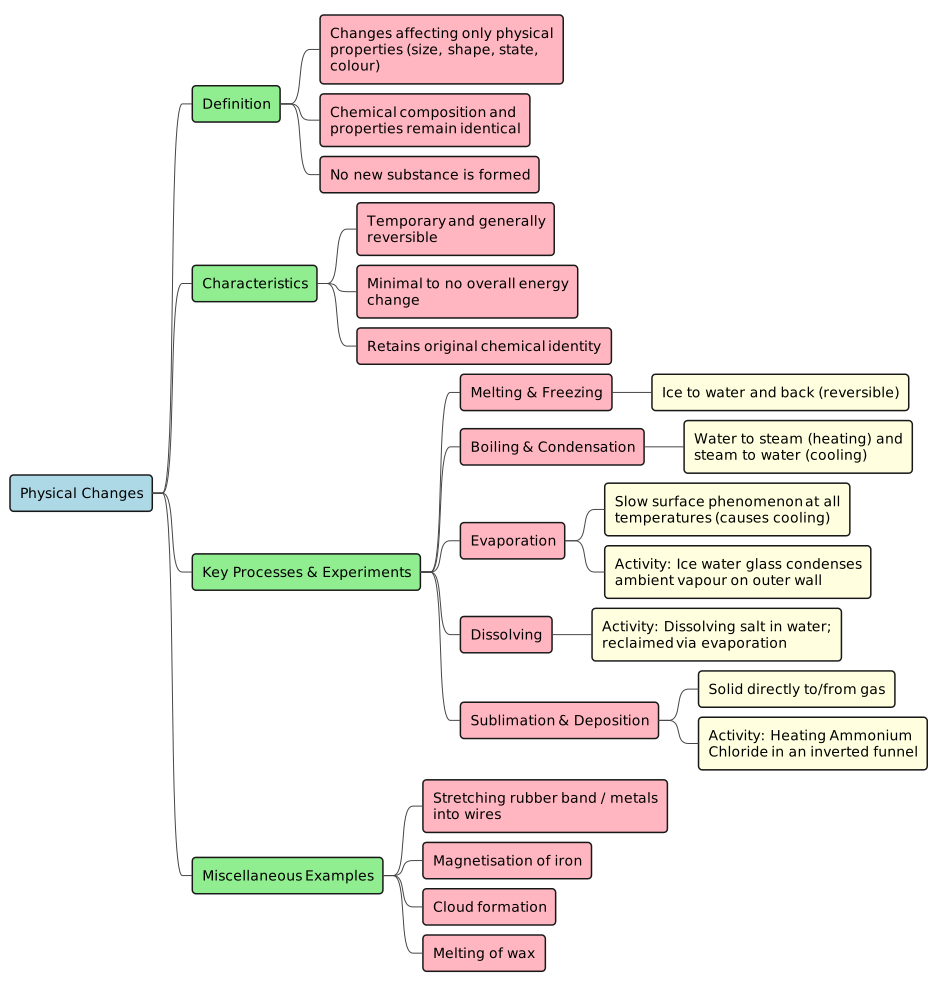
Physical Properties include: Shape, size, colour, state (solid, liquid, gas).Key Characteristics:It is temporary and generally reversible.No new substance is formed.Energy changes (absorption or release of heat/light) are generally negligible.When the cause of the change is removed, the substance usually returns to its original state.
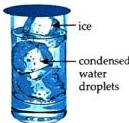
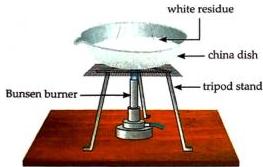
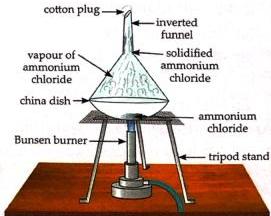
Melting & Freezing:Melting: Solid changes into a liquid at a fixed temperature on heating.Freezing: Liquid changes into a solid at a fixed temperature on cooling.Activity 1: Placing ice cubes in sunlight melts them into water. Putting this water back into the freezer solidifies it back into ice. No new chemical substance is formed.Boiling & Condensation:Boiling: Liquid changes into its gaseous state at a fixed temperature on heating.Condensation: Gas changes into its liquid state at a fixed temperature on cooling.Definition: The process where a liquid changes into its vapour state at any temperature below its boiling point.Mechanism: The liquid absorbs heat from its surroundings to turn into gas, which causes a cooling effect.Activity 2: Dropping ice cubes into a dry glass causes tiny droplets of water to appear on its cold outer surface. This demonstrates that water vapour present in the air condenses upon contacting a cold surface.Definition: Dissolving a solute (like salt or sugar) in a solvent (like water) to form a solution is a physical change. No new chemical substances are created, and the solute can be reclaimed.Activity 3: Dissolving salt in water creates a clear salt solution. When this solution is heated in a china dish over a Bunsen burner, the water evaporates completely, leaving behind a white residue of common salt.Sublimation: The process in which a solid changes directly into a gas on heating, without passing through the liquid state.Deposition: The process in which a gas changes directly back into a solid on cooling.Examples: Camphor, iodine, solid carbon dioxide (dry ice), naphthalene, and ammonium chloride.Activity 4: Heating solid ammonium chloride in a china dish covered by an inverted funnel (plugged with cotton). The solid turns directly into white fumes (vapour) which then condense and deposit back as solid ammonium chloride on the cooler upper walls of the funnel.Stretching of a rubber bandGrinding of a substance (e.g., crushing chalk into powder)Expansion or contraction of materials upon heating or coolingMelting of waxFormation of clouds in the skyMagnetisation of an iron piece (temporary and does not create a new substance)Stretching of ductile metals to form thin wires
Key Characteristics:It is permanent and cannot be reversed using simple physical methods.One or more new substances with completely different properties are formed.Significant energy change occurs (a large amount of heat, light, or sound is either absorbed or released).Marked by indicators such as colour changes, gas evolution, or precipitate formation.
Change in Colour: For instance, cut fruit slices browning in open air.Evolution of Gas: Release of bubbles or fumes.Change in Temperature: Release of heat (exothermic) or absorption of heat (endothermic).Production of Sound or Light: Such as the explosion of firecrackers.
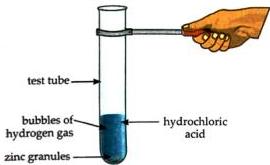
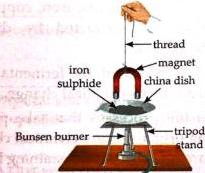
Activity 5 (Zinc and Hydrochloric Acid): When zinc granules are added to dilute hydrochloric acid in a test tube, rapid bubbling occurs, indicating the evolution of hydrogen gas. The gas burns with a characteristic “pop” sound when a lighted matchstick is brought near. Additionally, the test tube becomes hot, proving heat is released.  Activity 6: Placing an iron nail in tap water and leaving it for 2–3 days causes the formation of a rough, reddish-brown flaky coating. This coating is a completely new chemical substance called rust (hydrated iron oxide). It is permanent and irreversible.Activity 7 (Iron and Sulphur):Group A (Physical Mixture): Simply mixing 5g of iron filings and 3g of sulphur powder in a china dish forms a mixture. If a magnet is brought near, the iron filings are easily attracted and separated. No chemical change occurred.Group B (Chemical Compound): When the same mixture is heated strongly, the sulphur melts and reacts with the iron to form a dark grey substance called iron sulphide. Bringing a magnet near this new compound shows no attraction, because the iron has lost its magnetic properties. This is a permanent chemical change.Activity 8 (Burning of Sugar): Heating a spoonful of sugar in a frying pan causes it to melt, turn reddish-brown, and eventually decompose into a black residue called charred sugar (pure carbon), while releasing carbon dioxide and water vapour. The sweet taste is lost, and the process cannot be reversed.Curdling of Milk: Lactic acid bacteria turn liquid milk into semi-solid curd.Cooking Food: Heat alters the complex chemical structure of raw vegetables and grains, making them soft and edible.Photosynthesis: Green plants absorb solar energy to synthesize glucose and oxygen from carbon dioxide and water in the presence of chlorophyll:
 Respiration: Digested glucose reacts with oxygen in body cells to release energy, carbon dioxide, and water:
 Explosion of Firecrackers: High-energy reaction producing heat, light, sound, and toxic gases.Burning of Fuels: Wood, coal, kerosene, LPG, and petrol combine with oxygen to release heat and carbon dioxide.Spoilage of Food, Digestion, and Fruit Ripening.

Share
Explore
 Self Study
Chapter: 02. Physical And Chemical Changes
CHAPTER STUDY NOTES: PHYSICAL AND CHEMICAL CHANGES
Change is a fundamental law of nature. In our daily lives, we continuously observe various transformations around us, such as the changing of day and night, weather changes, rainfall, the rusting of iron, and the digestion of food.
SECTION 1: CAUSES, EFFECTS, AND CLASSIFICATIONS OF CHANGES
1. Causes and Effects of Changes
Every change that occurs has an underlying reason (cause) and produces a specific outcome (effect).
2. Broad Classifications of Changes
All changes can be grouped into several contrasting categories:
A. Natural vs. Human-Made Changes
B. Slow vs. Fast Changes
C. Desirable vs. Undesirable Changes
D. Periodic vs. Non-Periodic Changes
E. Reversible vs. Irreversible Changes
Section 1 Visual Recap: PlantUML Mindmap
SECTION 2: PHYSICAL CHANGES
1. Understanding Physical Change
A physical change is a transformation in which only the physical properties of a substance change, while its chemical composition and chemical properties remain completely unaltered. No new substance is formed.
2. Key Examples and Experimental Activities of Physical Changes
A. Phase Changes (Melting, Freezing, Boiling, Condensation)
The interconversion of states of matter is a classic physical change.
B. Evaporation
Differences between Evaporation and Boiling
1.
Slow process.
Fast process.
2.
Takes place only from the surface of the liquid.
Takes place throughout the entire mass of the liquid.
3.
Occurs at all temperatures.
Occurs only at a specific fixed temperature (boiling point).
4.
Causes cooling of the surroundings.
Does not cause cooling.
Note: Boiling can be considered an extreme form of evaporation. The rate of evaporation is influenced by temperature, humidity, surface area, and wind speed.
C. Dissolving a Substance
D. Sublimation and Deposition
E. Other Notable Physical Changes
Section 2 Visual Recap: PlantUML Mindmap
SECTION 3: CHEMICAL CHANGES
1. Understanding Chemical Change
A chemical change is a transformation in which the chemical composition and properties of a substance are permanently altered, resulting in the formation of one or more entirely new substances.
2. Indicators of a Chemical Change
A chemical change is often accompanied by one or more of the following phenomena:
3. Key Examples and Experimental Activities of Chemical Changes
A. Reaction of Metals with Acids
B. Rusting of Iron
C. Compound Formation vs. Simple Mixing
D. Thermal Decomposition / Charring
E. Common Chemical Changes in Daily Life
Want to print your doc?
This is not the way.
This is not the way.

Try clicking the ··· in the right corner or using a keyboard shortcut (
CtrlP
) instead.