Skip to content
Immunity: The ability of the body to defend against infections and develop resistance to infectious diseases. The immune system normally defends the body against foreign invaders (viruses, bacteria, foreign proteins, and toxins).Allergy: An exaggerated or abnormal reaction (hyperactivity) of the immune system of a person to certain foreign substances in the environment that are harmless to most normal people.Hyperactivity: The hypersensitive state of being allergic.History & Key Scientists:Clemens Von Pirquet (1906): Viennese paediatrician who introduced the concept of allergy. In Greek, allergy means “other work”. He defined it as “an altered capacity of the body to react to a foreign substance.”Dr. Charles Robert Richet: Awarded the Nobel Prize in Physiology or Medicine (1913) for his research on anaphylaxis (a word he coined to designate sensitivity to a colloid, protein, or toxin). He also studied thermoregulation in homeothermic animals.
Pollen grains (from grasses, trees, weeds)Animal dander (shed pet skin particles, saliva, or skin gland oil)Dust and dust mites (found in pillows, mattresses, carpets, curtains)Fungal or mould spores (most commonly Aspergillus and Penicillium)Foods (milk, wheat, eggs, shellfish, fish, soya, nuts)Drugs (aspirin, antibiotics like penicillin, sulpha drugs)Plant sap (latex, poison ivy, oak)Insect stings (wasps, bees, fire ants)Cosmetics and metals (nickel, gold, platinum)Strong sunlight and ultraviolet (UV) rays
Seasonal Allergy: Develops only during specific seasons; comes and goes.Spring: Caused by pollen grains.Summer: Triggered by pollen from grasses and weeds.Fall: Caused by ragweed, moulds, and dust mites.Winter: Caused by moulds and dust mites.Hay Fever (Allergic Rhinitis): An allergic reaction to pollen grains. Characterized by sneezing, coughing, runny nose, itchy/watery eyes, and body ache. (Can be seasonal or perennial).Perennial Allergy: Appears year-round at any time. Triggered by indoor allergens (dust, mould, cockroaches, feathers, pet dander), food allergies, and insect bites.
Respiratory Allergies: Often seasonal (e.g., pollen, dust).Food Allergies: Intolerance to consumed foods.Milk allergy: Triggered by the milk protein casein; causes immediate wheezing and vomiting.Wheat allergy (including gluten-related reactions).Nut allergy: Triggered by peanuts, cashewnuts, walnuts.Others: Egg, fish, shellfish, soy, and mushroom allergies.Skin Allergies: Caused by physical contact with allergens.Contact dermatitis: Red, itchy rashes at the contact point.Urticaria (Hives): Outbreak of swollen, pale-red bumps/patches on the skin.Poisonous plant sap: From ivy, oak, etc.Insect stings: From wasps, bees, fire ants.Other Allergies:Sun allergy: Triggered by UV radiation.Cosmetic allergy: Caused by fragrances or preservatives.Metal allergy: Caused by nickel, gold, etc.Eye allergies: Leads to conjunctivitis and dry eyes.Drug allergy: Caused by aspirin, penicillin, and sulpha drugs.
Sensitisation (First Exposure):The allergen enters the body.T-cells fail to recognize the allergen as harmless.B-cells develop a primary immune response, producing IgE antibodies and histamines. No immediate allergic symptoms occur during this stage.Hypersensitive Reaction (Subsequent Exposure):Re-exposure to the same allergen triggers an immediate antigen-antibody reaction.Mast cells release large amounts of histamine.Histamines, alongside IgE antibodies, generate the inflammatory allergic response.
Hay Fever: Swollen, watery eyes, runny nose, sneezing, coughing, and headache.Allergic Asthma: Narrowing of the bronchi and bronchospasm. Symptoms include difficulty breathing, wheezing, coughing, and breathlessness.Anaphylaxis (Anaphylactic Shock): The most sudden and dangerous allergic reaction. Mast cells release massive amounts of histamine, causing:Rapid skin rashes, facial swelling, puffy eyes, swollen lips, and a thick feeling in the throat.Arterial dilation leading to dangerously low blood pressure.Severe shortness of breath, which can result in sudden death if untreated.
Skin-prick Test (Prick/Puncture Testing):Small amounts of allergen extracts are injected intradermally into the skin (usually on the forearm or back) using a syringe.Sites are numbered/marked.Positive reactions appear as local swelling and redness (inflammatory reaction).Blood Test:Measures the concentration of specific IgE antibodies in the blood.Higher IgE levels correlate directly with a greater likelihood and severity of allergic symptoms.
There is no permanent cure for allergies. Medications only provide symptomatic relief.Allergy shots are effective for managing seasonal allergies.The primary defense is complete avoidance of known triggering allergens.Consultation with specialized allergy doctors is necessary.

Share
Explore
 Recap Hub
Prepared by: learnloophq@gmail.com
Chapter: 08. Allergy
Revision Crash Course: Allergy
1. Core Concepts: Immunity and Allergy
2. Allergens and their Entry Routes
Allergens
Substances that trigger an allergic reaction. Common examples include:
Entry Routes in the Body
Entry Route
Method of Entry
Common Allergens
1. Nose
Breathing
Pollen, mould spores, dust particles, dust mites, perfumes
2. Mouth
Eating
Food items (soya, wheat/wheat products, milk/milk products, peanuts, nuts, eggs, fish, shellfish), medicines
3. Skin
Contact
Plant sap (latex), mites, strong sunlight, cosmetics, insect bites, injections
3. Types of Allergies
Allergies are classified based on two main criteria: Period of Occurrence and Causative Agents.
A. On the Basis of Period of Allergy
B. On the Basis of Causative Agents
4. Mechanisms & Symptoms of Allergic Reactions
Common Symptoms
Frequent sneezing, itching, skin rashes, swollen mucous membranes, watering of eyes, difficulty breathing, vomiting, gastrointestinal colics, and diarrhoea.
The Allergic Reaction Process
Key Allergic Conditions
5. Diagnosis & Precautions
Diagnosis
Tests are performed to detect specific IgE antibodies and pinpoint causative allergens:
Precautions and Management
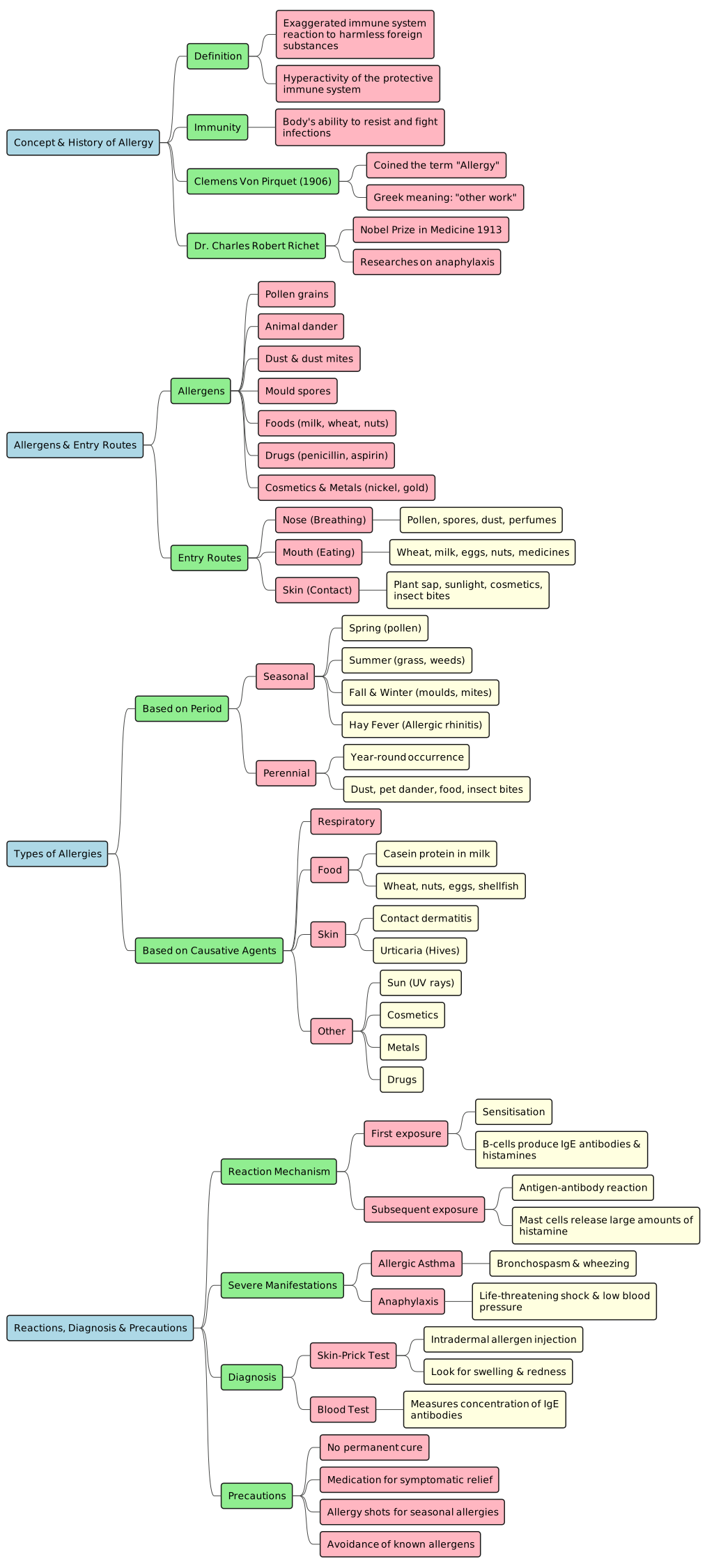
PlantUML Mindmap
Want to print your doc?
This is not the way.
This is not the way.

Try clicking the ··· in the right corner or using a keyboard shortcut (
CtrlP
) instead.