Skip to content
Biological Classification: The process of grouping living organisms together based on their similarities and separating them into different groups based on their differences.Taxonomy: The branch of biology that deals with identifying, naming, and classifying organisms according to established systems.
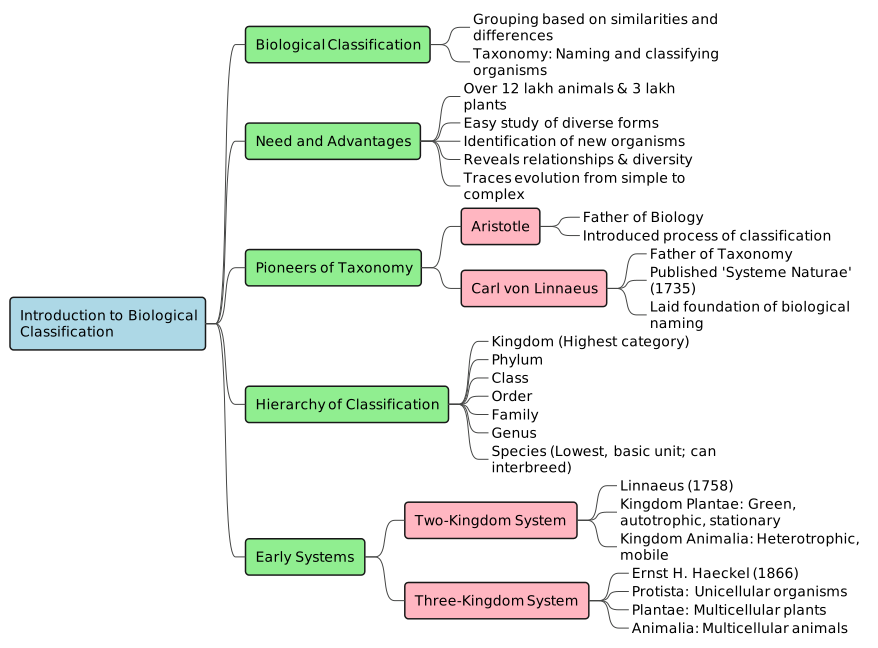
Immense Diversity of Life: There is a vast number of living organisms on Earth, estimated to include more than 12 lakh (1.2 million) types of animals and 3 lakh (300,000) types of plants residing on land, in water, and in the air.Simplification of Study: Identifying and grouping these organisms based on similar characteristics makes studying their vast numbers manageable and systematic.
Ease of Study: Simplifies the study of a wide variety of organisms.Identification: Helps in the accurate identification of newly discovered organisms.Interrelationships: Helps in understanding the relationships between different groups of organisms.Understanding Diversity: Provides a clear picture of the structural and functional diversity among organisms.Evolutionary Origins: Helps in tracing the possible origin of one group of organisms from another.Evolutionary Trends: Aids in understanding how complex organisms have evolved over time from simpler ancestral forms.
Role: A Greek philosopher known as the Father of Biology.Contribution: He introduced the very first scientific processes of biological classification.Role: A Swedish botanist, zoologist, taxonomist, and physician.Key Work: Published his landmark work Systema Naturae in 1735.Legacy: He laid the foundations of biological naming (nomenclature) and the modern system of classification. For these contributions, he is called the Father of Taxonomy.
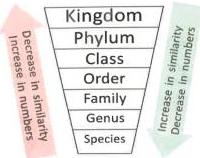
Kingdom: The highest and most comprehensive category of classification.Species: The lowest, basic unit of classification.A species is defined as a group of organisms that are most closely related, share highly similar characteristics, and can breed among themselves to produce fertile offspring, but cannot do so with members of other species.
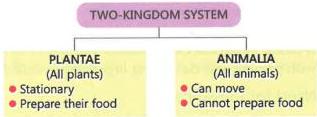
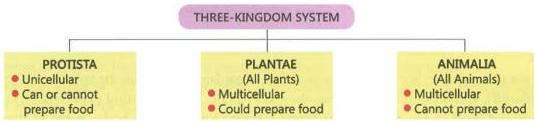
Proposer: Proposed by Carl von Linnaeus in 1758.Basis: Classified organisms into two kingdoms based on their ability to prepare food:Kingdom Plantae: Included green organisms capable of synthesizing their own food due to the presence of chlorophyll. These organisms were typically stationary.Kingdom Animalia: Included organisms that lacked chlorophyll, were unable to prepare their own food, depended on plants for nutrition, and possessed the ability to move.Diagrammatic representation:Proposer: Proposed by the German zoologist Ernst H. Haeckel in 1866.Basis: Categorized organisms based on cell complexity (number of cells) into three distinct kingdoms:Kingdom Protista: Included all unicellular organisms. Some members had the ability to make food, while others did not.Kingdom Plantae: Included multicellular, autotrophic (food-producing) plants.Kingdom Animalia: Included multicellular, heterotrophic animals.Diagrammatic representation:
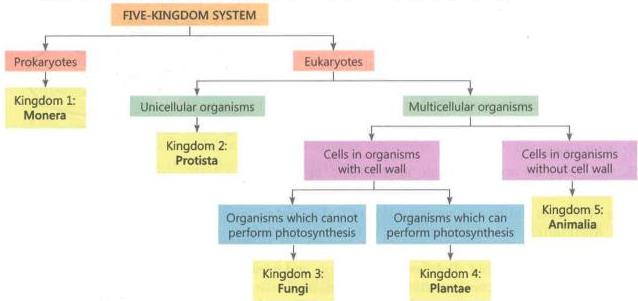
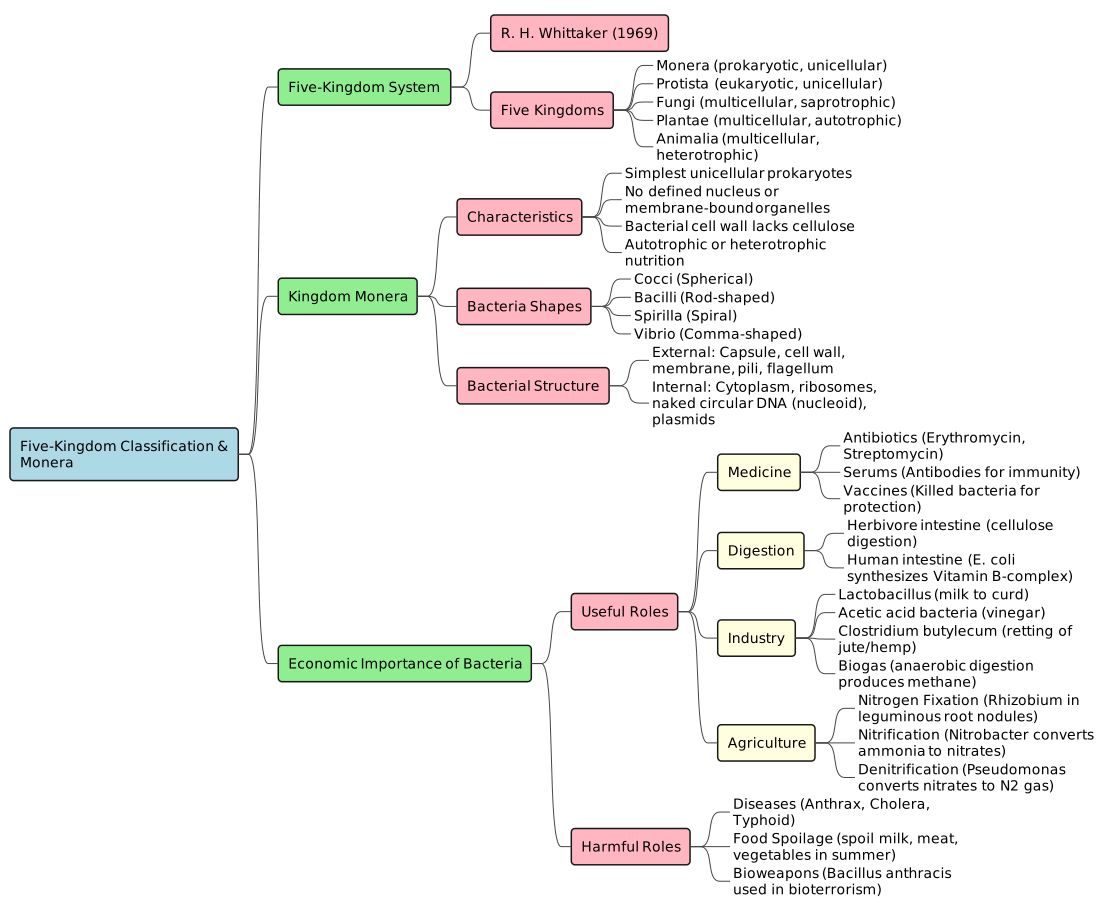
Kingdom Monera: Simplest unicellular prokaryotes (e.g., bacteria, blue-green algae).Kingdom Protista: Unicellular eukaryotes (e.g., protozoans like Amoeba, unicellular algae).Kingdom Fungi: Multicellular, non-green saprotrophic eukaryotes (e.g., mushrooms, bread mould, yeast).Kingdom Plantae: Multicellular, green, autotrophic plants.Kingdom Animalia: Multicellular, heterotrophic animals.
Cellular Organization: Simplest unicellular and prokaryotic organisms.Lack of Organelles: They do not possess a defined nucleus (the genetic material is naked) or membrane-bound cell organelles like endoplasmic reticulum, Golgi bodies, mitochondria, and chloroplasts.Cell Wall: Present in some organisms, absent in others. The cell wall of monerans (specifically bacteria) is unique because it is not made of cellulose, unlike plant cell walls.Nutrition: Can be autotrophic (e.g., blue-green algae, certain bacteria) or heterotrophic (including parasitic, saprozoic, or symbiotic forms).Examples: Mycoplasma, blue-green algae (Cyanobacteria such as Anabaena and Nostoc), and bacteria (such as Salmonella typhi, Vibrio cholerae, and Escherichia coli).
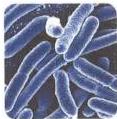
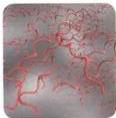
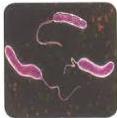
Cocci (Spherical): Circular bacteria often arranged in chains or clusters.Bacilli (Rod-shaped): Elongated rod-like cells.Spirilla (Spiral-shaped): Twisted, wavy, or spiral cells.Vibrio (Comma-shaped): Curved rod-like cells, often featuring a flagellum.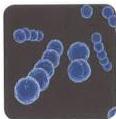
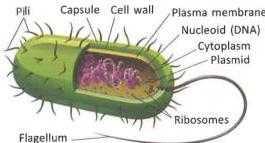
 Outer Layers: Protected by an outer capsule, cell wall, and plasma membrane. Hair-like structures called pili extend outward, and a long tail-like flagellum helps in movement.Genetic Material: Contains no nucleus. A single, circular molecule of DNA lies naked in the center of the cytoplasm in a region called the nucleoid. Smaller circular DNA rings called plasmids are also present.Protein Synthesis: Contains ribosomes scattered throughout the cytoplasm.
Antibiotics: Chemical substances produced by bacteria that inhibit the growth of or destroy other disease-causing (pathogenic) microorganisms.Examples: Chloromycetin, streptomycin, and erythromycin are produced by bacteria to treat infections like typhoid, diphtheria, pneumonia, and tuberculosis.Serums: Liquids containing specific antibodies against pathogens, injected to provide instant immunity against particular bacterial infections.Vaccines: Suspensions of killed or weakened pathogenic bacteria. When injected, they induce the body to form protective antibodies, providing immunity against diseases like typhoid, cholera, and smallpox.Herbivore Intestines: Plant-eating animals like cows and buffaloes cannot digest cellulose directly. Cell-digesting bacteria living symbiotically inside their intestines break down cellulose for them.Human Intestines: Escherichia coli (E. coli) bacteria live in the human intestine and synthesize Vitamin B-complex, aiding in digestion and nutrient absorption.Preparation of Curd: Lactobacillus bacteria ferment milk sugar (lactose) into lactic acid, curdling the milk.Curing of Cheese: Specialized bacteria impart specific flavors and textures to cheese.Vinegar Manufacturing: Acetic acid bacteria ferment sugar solutions to manufacture vinegar.Tea and Tobacco Processing: Bacteria are utilized to cure and ripen tea and tobacco leaves to develop their characteristic flavor and aroma.Tanning of Leather: Fermenting action of bacteria helps remove hair and animal tissues from hides and mammal skins.Retting of Fibres: Pond water bacteria like Clostridium butylecum break down the soft tissues of plants like jute, hemp, and flax, allowing the tough fibers to be separated and woven into ropes and linen.Chemical Production: Clostridium acetobutylicum helps manufacture alcohol and acetone from acetic acid.Biogas (Gobar Gas) Production: Anaerobic bacteria ferment animal dung (excreta) and agricultural waste in biogas plants. They degrade cellulose to produce methane (an inflammable cooking gas) and rich manure.Nitrogen Fixation: Rhizobium bacteria reside in the root nodules of leguminous plants (like peas and beans). They convert free atmospheric nitrogen in the soil into usable nitrates, which plants absorb to build proteins, enhancing soil fertility.Nitrification: Soil bacteria like Nitrobacter convert ammonia in the soil into nitrates, making nitrogen accessible to plants.Denitrification: Free-living bacteria like Pseudomonas break down nitrates from waste products and dead organic matter back into free nitrogen gas, completing the nitrogen cycle.Pathogens (Diseases): Cause serious infections in plants, animals, and humans (e.g., anthrax in sheep, cholera, typhoid, and tuberculosis in humans).Food Spoilage: Bacteria spoil cooked food, milk, vegetables, butter, fish, and meat, especially during hot summer months.Bioweapons: Pathogenic bacteria or their toxic outputs can be used as agents of bioterrorism. Examples include Bacillus anthracis (causing anthrax), and bacteria causing botulism, cholera, and poliomyelitis.
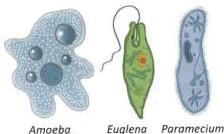
Cellular Structure: Unicellular and eukaryotic organisms. Unlike monerans, they have a well-defined nucleus and membrane-bound organelles (like mitochondria, endoplasmic reticulum, and vacuoles).Locomotion: Protists move using specialized locomotor structures:Cilia: Hair-like structures covering the cell body (e.g., Paramecium).Flagella: Whip-like, tail structures (e.g., Euglena).Pseudopodia: “False feet” formed by temporary cytoplasmic extensions (e.g., Amoeba).Sub-Groups:Plant-like Protists (Algae): Possess cellulose-based cell walls and chloroplasts. They are autotrophs (e.g., unicellular Chlamydomonas).Animal-like Protists (Protozoa): Lack cell walls and chloroplasts. They are heterotrophs (e.g., Amoeba, Paramecium, and Euglena).
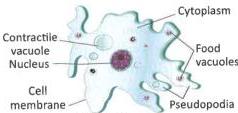
Cell Membrane: A thin, flexible outer membrane that encloses the cytoplasm.Cytoplasm: Divided into an outer clear layer and an inner granular layer containing cell structures.Nucleus: A single, distinct nucleus situated in the center.Contractile Vacuole: A water-filled vacuole that regulates water balance (osmoregulation) and helps in the excretion of ammonia (nitrogenous waste).Food Vacuoles: Temporary vacuoles formed around captured food where digestion takes place.
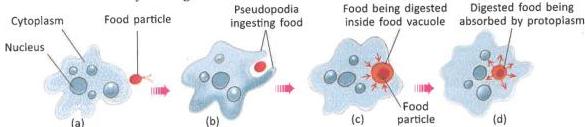
Pseudopodia: Amoeba has an irregular body shape that changes constantly. To move or feed, it pushes out temporary projections called pseudopodia.Mechanism of Ingestion: When it encounters a food particle, it extends pseudopodia around the prey. The pseudopodia fuse, engulfing the prey along with a drop of water into a newly formed food vacuole. Digestive enzymes break down the food, nutrients are absorbed, and waste is excreted out through the cell membrane.Diffusion: Amoeba breathes through its outer cell membrane. Oxygen dissolved in the water diffuses into the cytoplasm, and carbon dioxide diffuses out into the surrounding water.

Share
Explore
 Self Study
Prepared by: learnloophq@gmail.com
Chapter: 02. Kingdom Classification
1. Introduction to Biological Classification
In biology, classification is a vital method to systematically organize the diverse range of living organisms on Earth. Understanding how and why we classify helps biologists establish relationships, identify new species, and trace the history of life on Earth.
What is Classification?
The Need for Classification
Advantages of Classification
History of Classification & Key Scientists
Aristotle
Carl von Linnaeus

Taxonomic Hierarchy (Categories of Classification)
Carl von Linnaeus initially introduced four categories: Class, Order, Genus, and Species. Later, Family, Phylum, and Kingdom were added, establishing the seven major taxonomic categories or ranks used today.
Early Systems of Classification
1. Two-Kingdom System
2. Three-Kingdom System
2. Five-Kingdom Classification & Kingdom Monera
The modern framework of biological classification relies on cell structure, complexity, and modes of nutrition.
The Five-Kingdom System
Proposed by the American ecologist R. H. Whittaker in 1969, this system divides the living world into five distinct kingdoms:
KINGDOM 1: MONERA
Characteristic Features
Deep Dive: Bacteria
Bacteria are microscopic, single-celled, or acellular organisms that exist almost everywhere—in air, water, soil, food, and inside other living bodies.
1. Bacterial Shapes
Bacteria are broadly classified into four categories based on their physical shape:
Cocci (Spherical)
Bacilli (Rod-shaped)
Spirilla (Spiral)
Vibrio (Comma-shaped)
2. Cellular Structure of a Bacterium
Economic Importance of Bacteria
Useful Bacteria
Bacteria play crucial roles in medicine, digestion, industrial processes, and agriculture.
A. In Medicine
B. In Digestion
C. In Industry
D. In Agriculture
Harmful Bacteria
3. Kingdom Protista
Kingdom Protista contains a diverse group of simple, eukaryotic organisms that bridge the evolutionary gap between simple prokaryotes and complex multicellular life.
Characteristic Features
Detailed Study: Amoeba
Amoeba is a classic unicellular, animal-like protist commonly found in stagnant water bodies like ponds, ditches, and slow-moving streams.
Body Structure of Amoeba
Key Life Processes in Amoeba
1. Locomotion and Food Ingestion
2. Respiration
Want to print your doc?
This is not the way.
This is not the way.

Try clicking the ··· in the right corner or using a keyboard shortcut (
CtrlP
) instead.