Skip to content
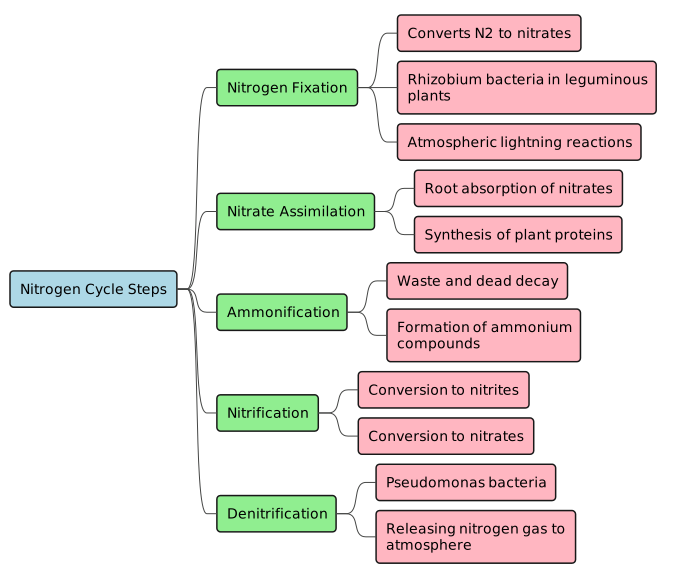
Explain the steps involved in the Nitrogen Cycle as described in the chapter.The nitrogen cycle is a cyclic process of circulation of nitrogen continuously through living and non-living components of the ecosystem. It begins with nitrogen fixation, where atmospheric nitrogen is converted into soluble nitrates by bacteria like Rhizobium or lightning. Next, during nitrate assimilation, plants absorb these nitrates from the soil through their roots to convert them into plant proteins, which are then consumed by animals. Ammonification then converts waste materials and decaying proteins of dead plants and animals into ammonium compounds. Finally, these compounds undergo nitrification to produce nitrites and nitrates again, while denitrification by Pseudomonas bacteria converts some nitrates back into nitrogen gas.
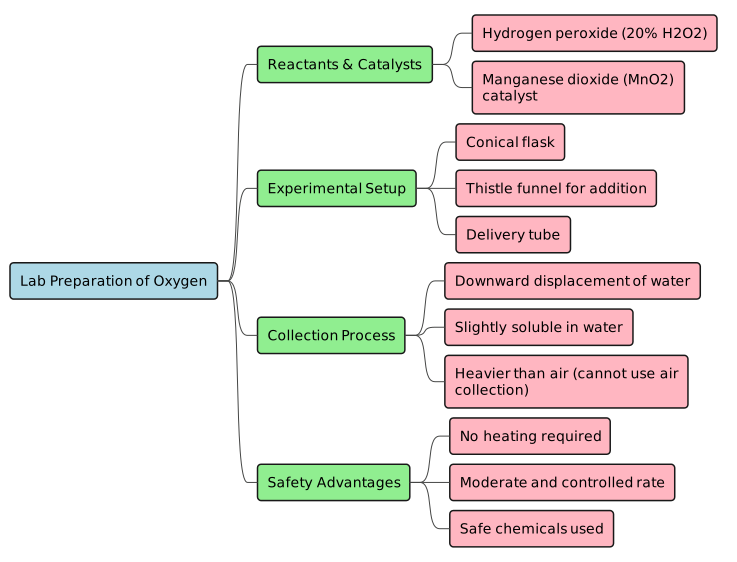
 How is oxygen gas prepared and collected in the laboratory using hydrogen peroxide?In the laboratory, oxygen is prepared by decomposing a 20% hydrogen peroxide solution using manganese dioxide as a catalyst. Hydrogen peroxide is poured drop by drop through a thistle funnel into a conical flask containing manganese dioxide, which rapidly liberates oxygen gas without requiring any heating. The evolved oxygen gas passes through a delivery tube and is collected in an inverted gas jar filled with water. This collection method is called the downward displacement of water because oxygen is slightly soluble in water and can easily displace it downwards. Since oxygen is heavier than air, it cannot be collected over air, making water displacement the preferred and safest choice.
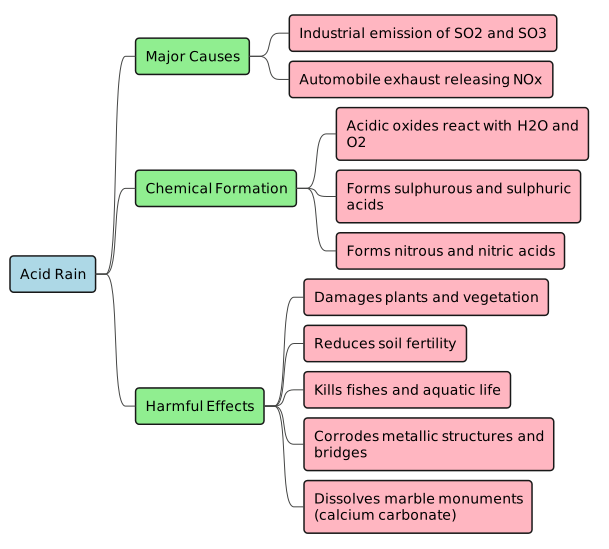
 Describe the causes, chemical formation, and harmful effects of acid rain.Acid rain is caused by the release of acidic gases like sulphur dioxide and oxides of nitrogen into the air by automobiles, industries, and power stations. These gases react with water, oxygen, and other chemicals in the atmosphere to produce sulphurous, sulphuric, nitrous, and nitric acids. When these acids mix with rainwater, they fall to the earth’s surface, lowering the pH of precipitation. This acidic rainfall damages plants, reduces soil fertility, and kills aquatic life by making lakes and rivers highly acidic. Furthermore, acid rain corrodes metallic structures like railway bridges and damages marble buildings and monuments by altering their chemical composition.
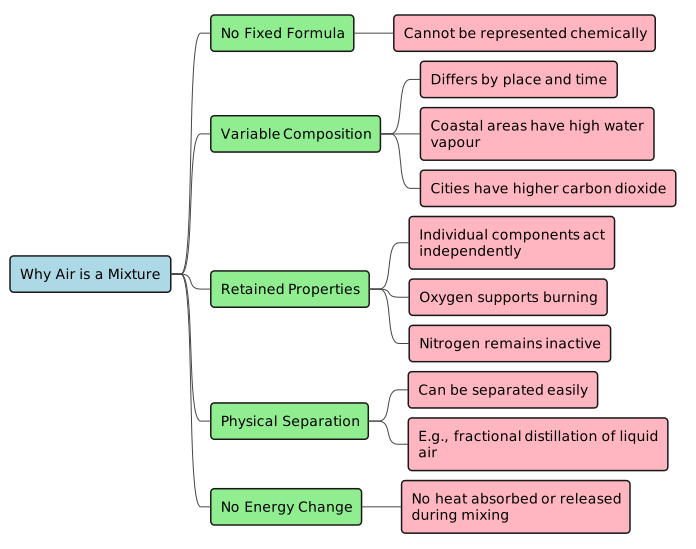
 Explain why air is considered a mixture rather than a chemical compound.Air is considered a mixture because it cannot be represented by a single, fixed chemical formula. Additionally, the composition of air is not fixed and varies across different places and times, such as having higher humidity in coastal areas or more carbon dioxide in industrial cities. The individual components of air, like oxygen supporting burning and nitrogen remaining inactive, retain their unique physical and chemical properties. Furthermore, these constituent gases can be separated by simple physical methods like fractional distillation of liquid air. Finally, there is no change in energy, such as the absorption or evolution of heat, when the components of air are mixed together.

Share
Explore
 Long Answers
Chapter: 07. Air And Atmosphere
Want to print your doc?
This is not the way.
This is not the way.

Try clicking the ··· in the right corner or using a keyboard shortcut (
CtrlP
) instead.