Skip to content
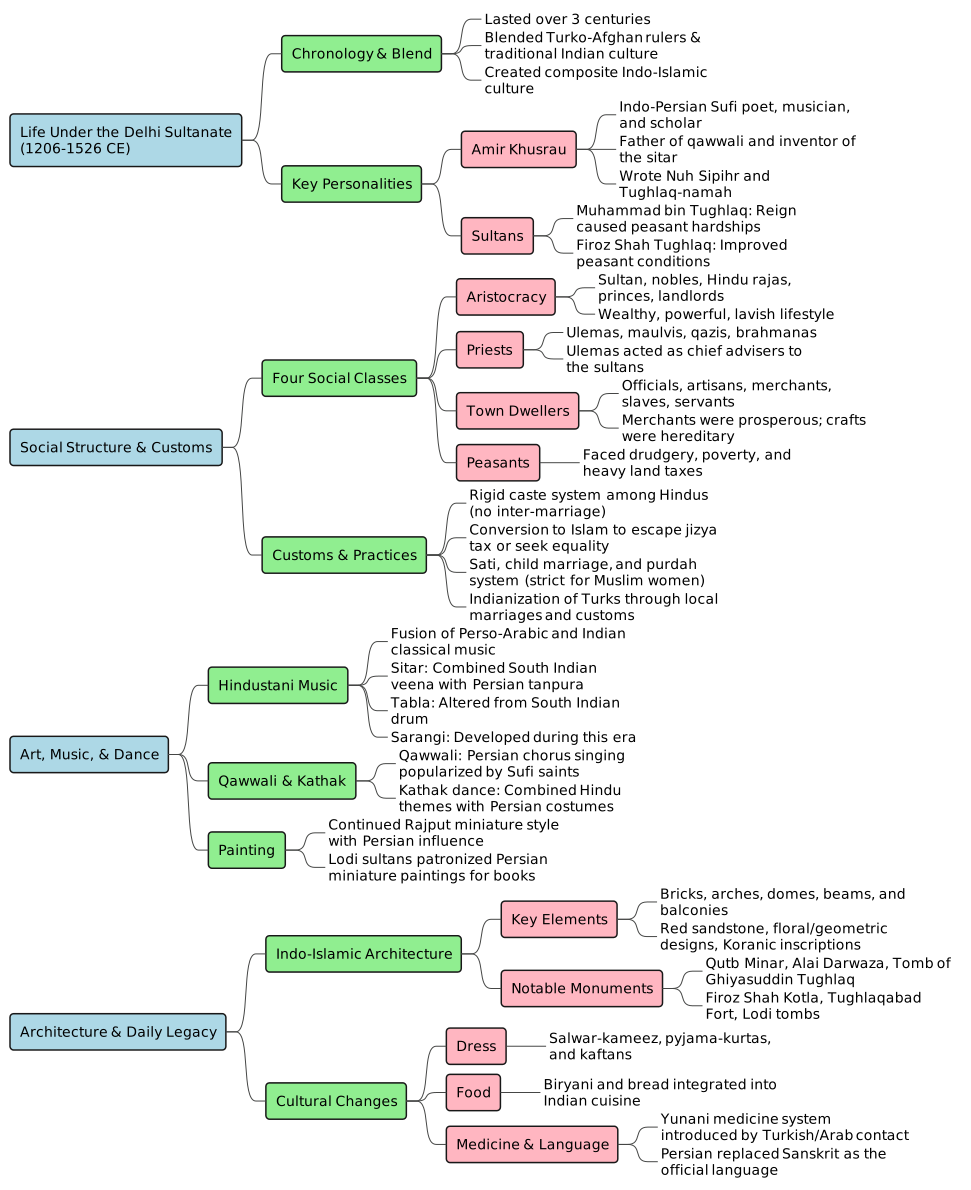
Timeline: The Delhi Sultanate lasted for over three centuries, from 1206 to 1526 CE.The Fusion: Interaction between Turko-Afghan rulers and traditional Indian culture resulted in a composite Indo-Islamic culture. This fusion permanently reshaped the political, economic, social, and cultural fabric of India.
The Caste System: Very rigid among Hindus; inter-caste marriages were strictly forbidden.Religious Conversions: Many lower-class Hindus embraced Islam, attracted by its principles of equality or seeking to escape the jizya tax (a tax imposed strictly on non-Muslims).Social Evils: Practices like sati, child marriage, and the purdah system became widely prevalent. The purdah system was strictly observed by Muslim women.Cultural Assimilation:Turkish rulers who married Indian Muslims adopted local cultural traits, leading to their “Indianization”.A social pattern resembling a caste system gradually evolved among the Turks.Rural Indian Muslims continued to practice several Hindu wedding and social customs.
Key Features:Extensive use of arches, domes, bricks, beams, and balconies.Heavy reliance on red sandstone, which added distinct color to the structures.Inscriptions of verses from the Koran engraved onto building walls.Liberal application of floral and geometric designs to decorate otherwise plain Turkish monuments.Prominent Monuments:Qutb Minar complexAlai DarwazaTomb of Ghiyasuddin TughlaqFiroz Shah KotlaTughlaqabad FortTombs of the Lodi sultans
Hindustani Music: Developed as a direct outcome of the fusion of Perso-Arabic and Indian classical music styles.Musical Instruments:Sitar: Invented by the Persian poet Amir Khusrau, who combined the South Indian veena with the Persian tanpura. The name comes from the Persian word sehtar (seh meaning three, tar meaning strings).Tabla: Likely created by modifying the South Indian drum.Sarangi: Also developed during this period.Qawwali: A Persian style of chorus singing popularized by Sufi saints (Muslim mystics) during their devotional meetings.Kathak: A classical dance form that emerged during this era, combining Hindu themes with Persian costumes.
Apathy of Early Rulers: Early Turkish rulers showed very little interest in painting.Rajput Miniature Art: The Rajput style of miniature painting continued but was heavily influenced by the Persian miniature style.Lodi Patronage: The later Lodi sultans patronized Persian miniature paintings specifically to illustrate books.
Dress: Introduction of pyjama-kurtas, kaftans, and salwar-kameez, which remain widely worn in India today.Cuisine: New foods like biryani and bread became central to the Indian diet.Medicine: The Yunani system of medicine was introduced, emerging as a legacy of Turkish rule and trade interactions with Arab merchants.Language: Persian replaced Sanskrit as the official language in many regions, although Hindu kings continued to patronize Sanskrit locally.
Amir Khusrau: A famous Indo-Persian Sufi singer, poet, musician, and scholar. Celebrated as the “father of qawwali”. His writings, including the historical poems Nuh Sipihr (“The Nine Heavens”) and Tughlaq-nāmah (“The Book of Tughlaq”), are vital historical sources.Muhammad bin Tughlaq: Sultan under whose reign peasants suffered major hardships.Firoz Shah Tughlaq: Sultan under whose rule peasant welfare and prosperity improved.
Ulemas: Muslim religious leaders who served as chief advisers to the Sultans.Qazis: Judges who administered justice according to Islamic law in cases involving Muslims.Jizya: A tax levied exclusively on non-Muslim subjects under the Sultanate.

Share
Explore
 Recap Hub
Prepared by: learnloophq@gmail.com
Chapter: 06. Life Under The Delhi Sultanate
Theme 3: The Delhi Sultanate (Revision Crash Course)
1. Introduction to Indo-Islamic Culture
2. Social Structure of the Sultanate Period
Society was divided into four distinct classes with varying levels of wealth, status, and power:
Class
Key Composition
Characteristics & Lifestyle
Aristocracy
Sultan, nobles, Hindu rajas, princes, and landlords
• The ruling class with immense wealth and power.• Enjoyed a highly lavish lifestyle.
Priests
Ulemas, maulvis, qazis, and brahmanas
• Held highly influential administrative positions.• Ulemas were the chief advisers to the sultans (though some sultans resisted their control).• Brahmanas were honored in Hindu society and active in administration.
Town Dwellers
Officials, artisans, craftspeople, merchants, slaves, and domestic servants
• Occupations were largely hereditary.• Merchants were highly prosperous.
Peasants
Crop cultivators
• Lived a life of hard work, drudgery, and poverty.• Faced severe hardships during the reign of Muhammad bin Tughlaq.• Conditions improved significantly under Firoz Shah Tughlaq.• Paid land tax, which was the government’s chief source of revenue.
3. Social Conditions and Customs
4. Indo-Islamic Architecture
The blending of Arabic/Persian styles with classical Hindu architecture gave birth to the Indo-Islamic style.
5. Music and Dance
6. Painting
7. Daily Life and Cultural Legacy
8. Key Historical Figures & Terms
Key Figures:
Key Terms:
Want to print your doc?
This is not the way.
This is not the way.

Try clicking the ··· in the right corner or using a keyboard shortcut (
CtrlP
) instead.