Skip to content
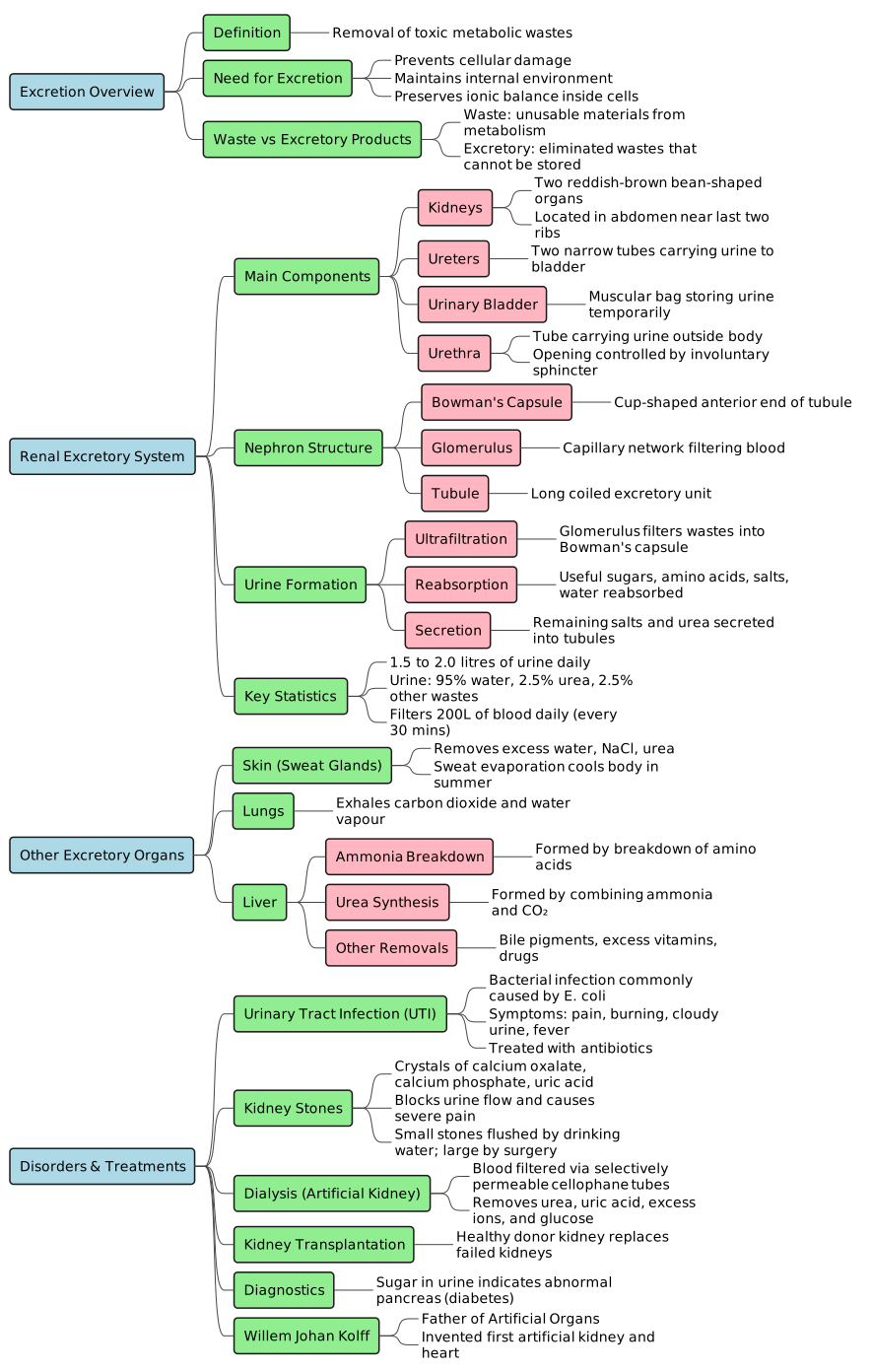
Metabolic Wastes: Unusable or toxic substances produced by continuous biochemical reactions in living cells (e.g., carbon dioxide, ammonia, urea, uric acid, and excess salts). If allowed to accumulate, they become toxic and cause severe health problems.Excretion: The chemical/biological process of removing metabolic waste substances from the body of an organism.Excretory Organs & System: Organs that help in the removal of metabolic wastes. Together, these organs form the excretory system.Need for Excretion:Prevents cellular damage from toxic accumulations.Maintains a stable internal environment within the cells.Restores and preserves the proper ionic balance within the cells.
Waste Products: Unusable or unwanted substances produced during various metabolic processes in the body of living beings.Excretory Products: Specifically metabolic wastes that are eliminated from the body and cannot be stored inside.
Ammonia Production: Formed by the breakdown of amino acids in liver cells. It is highly toxic.Urea Synthesis: Created in liver cells by combining highly toxic ammonia with carbon dioxide. The blood then carries the synthesized urea to the kidneys.
Appearance: Reddish-brown, bean-shaped structures.Location: Located in the abdominal cavity, on either side of the backbone, shielded by the last two ribs.Size: Approximately 7–10 cm long and 2.5–4 cm across.Nephrons (Uriniferous Tubules): The microscopic excretory units of the kidney (~1 million per kidney).Bowman’s Capsule: The cup-shaped anterior end of each nephron.Glomerulus: A dense network of blood capillaries inside Bowman’s capsule. It receives blood from the renal artery and acts as a high-pressure filter.Blood Flow:Renal Artery: Brings waste-laden blood to the kidneys.Renal Vein: Carries clean, filtered blood away from the kidneys.
Two narrow tubes arising from the inner side of each kidney.Function: Transport urine from the kidneys down to the urinary bladder.
A muscular, expandable bag located in the lower abdomen.Function: Collects and temporarily stores urine.
A median muscular tube arising from the base of the urinary bladder that opens to the outside.Sphincter: A ring of circular involuntary muscles that controls the urethral opening, relaxing only during urination.
Ultrafiltration:Blood passes through the capillaries of the glomerulus under high pressure.Water and nitrogenous wastes are filtered out of the blood into Bowman’s capsule and travel down the coiled tubule.Reabsorption:As the filtrate travels down the tubule, essential substances (sugars, amino acids, necessary salts, and water) are reabsorbed back into the blood capillaries surrounding the nephron.Secretion:Leftover salts and urea still present in the blood are actively secreted directly into the tubules.The remaining fluid, now consisting of water, urea, and uric acid, is called urine.
Filtration Volume: Kidneys filter approximately 200 litres of blood daily, cleaning all the blood in the body once every 30 minutes.Daily Urine Output: On average, 1.5 to 2.0 litres of urine is excreted every 24 hours.Urine Composition: Consists of 95% water, 2.5% urea, and 2.5% other waste products.Osmoregulation: The vital regulatory process of maintaining water balance and salt concentration in the blood.
Sweat glands remove water, salts (such as sodium chloride), and a small amount of urea from blood capillaries.Sweat is discharged onto the skin surface through tiny sweat pores.Body Temperature Regulation: During summer, external heat triggers sweating. The evaporation of sweat from the skin surface absorbs body heat, producing a cooling effect.Underarm Patches: The underarm area has high sweating. When the sweat evaporates, left-behind salts form white patches on colored clothes.
Excrete gaseous carbon dioxide and water vapour produced during the breakdown of glucose in cellular respiration.
Detoxifies amino acids by converting toxic ammonia into urea.Excretes bile pigments (produced from the breakdown of exhausted/old red blood cells), excess vitamins, and drugs.
A bacterial infection affecting any part of the urinary tract (kidneys, ureters, bladder, or urethra).Common Pathogen: Escherichia coli (E. coli) bacteria.Symptoms:Strong, frequent urge to urinate.Pain and burning sensation during urination.Cloudy and strange-smelling urine.Fever-like feelings (if the infection reaches the kidneys).Treatment: Antibiotics.
Formed when substances like calcium oxalate, calcium phosphate, and uric acid occur in high concentrations, crystallizing and sticking together inside the kidney tubules, ureters, or bladder.Effects: Block the flow of urine and cause severe pain.Treatment: Surgery for large stones (up to 2.5 cm); small stones in the ureters can be flushed out naturally by drinking large amounts of water.
When both kidneys are damaged and completely fail, toxic wastes build up, leading to death.Procedure: A healthy kidney is received from a suitable, compatible donor and surgically transplanted into the patient. Both the donor and recipient can survive with just one functioning kidney.
The periodic process of filtering blood artificially using a dialysis machine.How it works: Blood carrying wastes is passed through selectively permeable cellophane tubes. The tubes have microscopic holes.Waste products (urea, uric acid, excess ions, and excess glucose) diffuse out through the holes into a surrounding water bath, while essential nutrients and blood cells are retained in the blood plasma and returned to the patient.
The composition of urine is a strong indicator of general health.Diabetes Detection: The presence of excess sugar (glucose) in urine indicates that the pancreas is not functioning normally. In diabetes, blood sugar levels rise because glucose cannot enter the cells to produce energy, forcing the excess sugar to be excreted through urine.Infection Detection: The presence of pus cells or other unusual materials indicates infection or organ dysfunction.

Share
Explore
 Recap Hub
Prepared by: learnloophq@gmail.com
Chapter: 06. Excretory System
CHAPTER 6: EXCRETORY SYSTEM — CRASH COURSE REVISION MATERIAL
1. Excretion & Its Importance
Differences between Waste Products and Excretory Products
2. Organs of Excretion in Humans
The kidneys serve as the primary excretory organs. However, the skin, lungs, and liver also act as secondary excretory organs.
Organs and their Excretory Products
Organ
Excretory Products Removed
Form / Mode of Excretion
Kidneys (Renal system)
Water, urea, uric acid (nitrogenous waste), and excess salts
Excreted as liquid urine
Skin (Sweat glands)
Excess water, salts (like sodium chloride), and urea
Excreted as sweat through tiny pores
Lungs
Carbon dioxide and water vapour (gaseous waste)
Exhaled air from cellular respiration
Liver
Bile pigments, toxins, and urea
Synthesized in liver cells, then transported by blood to kidneys for final excretion
Key Liver Biochemical Processes
3. The Human Renal Excretory System
The renal excretory system (also called the urinary system) consists of two kidneys, two ureters, one urinary bladder, and one urethra.
[ Kidneys ] (Filter Blood)
│
┌───────┴───────┐
[Ureter] [Ureter] (Transport Tubes)
└───────┬───────┘
▼
[Urinary Bladder] (Temporary Storage)
│
▼
[Urethra] (Exits the Body)
A. Kidneys
B. Ureters
C. Urinary Bladder
D. Urethra
4. Role of Kidneys in Urine Formation
Urine is formed inside the nephrons through three highly regulated stages:
Key Kidneys & Urine Facts
5. Excretory Functions of Other Organs
A. Skin (Sweat Glands)
B. Lungs
C. Liver
6. Disorders of the Urinary System
A. Urinary Tract Infection (UTI)
B. Kidney Stones
7. Advanced Medical Interventions & Diagnosis
A. Kidney Transplantation
B. Dialysis (Artificial Kidney)
C. Urine Analysis as a Diagnostic Tool
Want to print your doc?
This is not the way.
This is not the way.

Try clicking the ··· in the right corner or using a keyboard shortcut (
CtrlP
) instead.