Skip to content
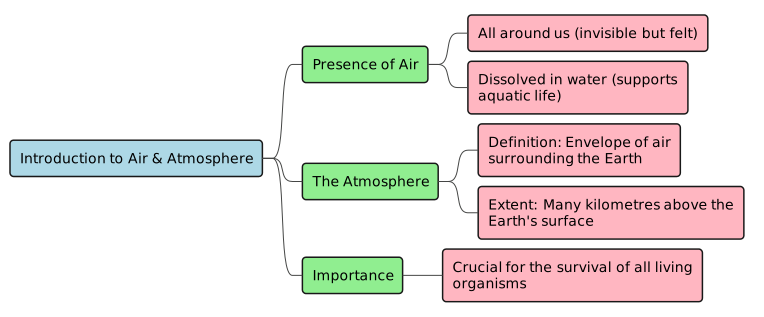
The Atmosphere: The envelope of air surrounding the Earth is known as the atmosphere, extending many kilometres above the Earth’s surface.Dissolved Air: Air is also present in a dissolved state in water, which enables aquatic life to survive.
Experimental Setup: Lavoisier heated pure mercury in a swan-necked retort. He connected this retort to an inverted bell jar filled with air, which was placed in a trough containing mercury. The retort was heated over a charcoal furnace.Observations:A red-coloured powder (red oxide of mercury) formed on the surface of the mercury in the retort.The mercury level inside the bell jar rose by exactly one-fifth of its total volume.Active Air (Oxygen): Lavoisier concluded that this one-fifth portion of air used to form the mercuric oxide was the “active” part of air. Reheating this red oxide released the active gas, which supported burning and was named oxygen.Inactive Air (Nitrogen/Azote): The remaining four-fifths portion of the air in the bell jar did not support burning (it extinguished a candle) or life. Lavoisier initially named it azote, which was later named nitrogen.Conclusion: The ratio of nitrogen to oxygen in air is approximately 4:1 by volume.Heating Mercury:
 Reheating Mercuric Oxide:

Method: A lit candle is placed on a stand inside a water trough filled three-fourths with water. The candle is covered with an inverted gas jar.Observation: The candle burns for a short time and then goes off. As the flame dies, water rises inside the gas jar, and the water level in the trough drops.Discussion: The oxygen in the jar is limited. Once it is consumed, the candle goes out. Water rises to occupy the empty space left by the consumed oxygen. The remaining gas, which does not support burning and occupies the rest of the jar, is nitrogen.Method: Air is blown from an air pump through a bent tube into a test tube containing limewater (calcium hydroxide solution).Observation: Air bubbles rise, and the limewater turns milky.Discussion: Carbon dioxide present in the air reacts with limewater to form calcium carbonate, an insoluble white precipitate.Equation:
 Method: Fill a glass tumbler more than half with ice-cold water.Observation: Fine water droplets form on the outer walls of the tumbler.Discussion: Water vapour in the surrounding air condenses into liquid droplets when it contacts the cold outer surface of the glass.
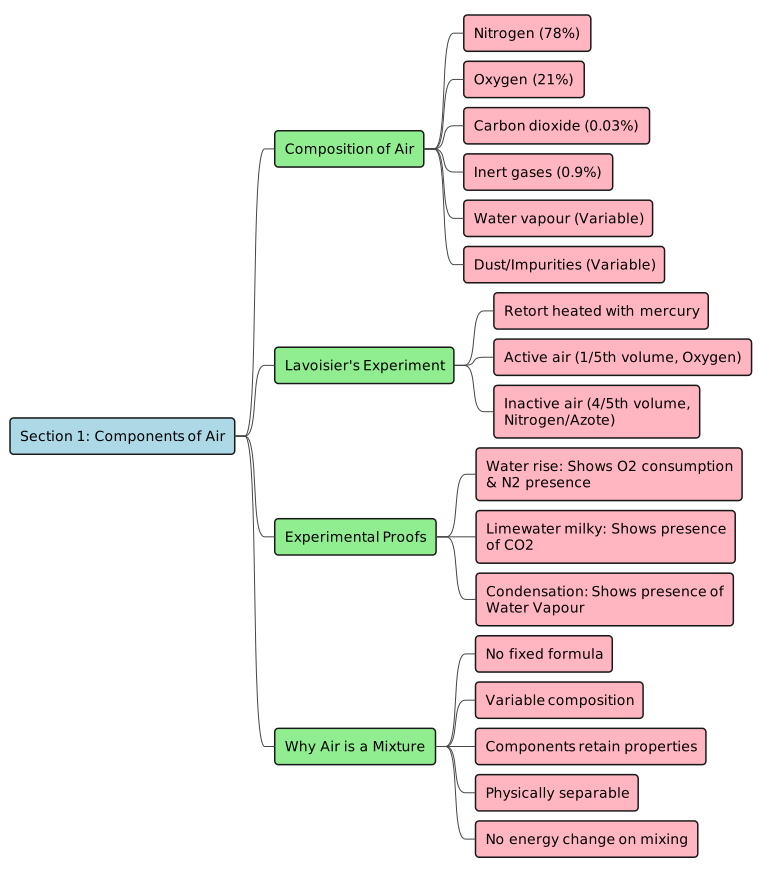
No Fixed Formula: Air cannot be represented by a single chemical formula.Variable Composition: Its composition is not fixed and varies by time and location (e.g., higher humidity during monsoons, more dust/CO₂ in industrial cities).Retention of Properties: Individual components in air retain their chemical properties (e.g., oxygen still supports combustion; nitrogen does not).Physical Separation: The components can be separated using simple physical methods.No Energy Change: There is no heat or light energy absorbed or released when the components of air are mixed.
It is a colourless, odourless, tasteless, and non-poisonous gas.It is lighter than air as a whole.It is non-combustible and does not support combustion.It is slightly soluble in water (less soluble than oxygen).
Food Preservation: Nitrogen is flushed into snack packets (like potato chips) before sealing to displace oxygen. Because bacteria cannot grow without oxygen and nitrogen is unreactive, this prevents the oxidation of food, keeping it fresh.Biological Importance: It is a basic constituent of proteins, vitamins, and nucleic acids, which are essential for the growth of living organisms.Chemical Manufacturing: It is used to manufacture nitric acid (a lab reagent) and ammonia (used to make fertilizers like urea and ammonium sulphate).Refrigerant: Liquid nitrogen is widely used to freeze food items.Combustion Control: The presence of nitrogen in the atmosphere dilutes oxygen and controls the rate of burning.Explosives: It is used to manufacture explosives like TNT (trinitrotoluene) and TNG (trinitroglycerine).
Nitrogen Fixation: The process of converting free atmospheric nitrogen into soluble nitrates.Biological Fixation: Rhizobium bacteria present in the root nodules of leguminous plants convert atmospheric nitrogen into nitrates.Atmospheric Fixation (Lightning): Under the high temperature of lightning (  ), nitrogen and oxygen react:

Nitric oxide reacts with more oxygen to form nitrogen dioxide:
Nitric oxide reacts with more oxygen to form nitrogen dioxide:

Nitrogen dioxide reacts with rain water and water vapour to form nitrous and nitric acids:
Nitrogen dioxide reacts with rain water and water vapour to form nitrous and nitric acids:

The acid rain reacts with metal carbonates in soil to form metal nitrates:
The acid rain reacts with metal carbonates in soil to form metal nitrates:
 Nitrate Assimilation: Plants absorb these soluble nitrates from the soil through their roots and convert them into plant proteins. Animals get these proteins by eating the plants.Ammonification: When plants and animals die, or when animals excrete urea/uric acid, decomposers (putrefying bacteria and fungi in the soil) convert these organic proteins into ammonium compounds.Nitrification: Soil bacteria convert ammonium compounds first into nitrites, and then into nitrates, which plants can absorb again.Denitrification: Pseudomonas bacteria in the soil convert a portion of the nitrates back into free nitrogen gas, which escapes into the atmosphere.

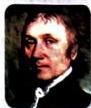
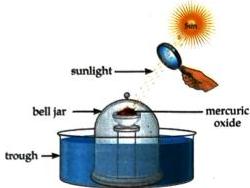
Carl Wilhelm Scheele (1772): A Swedish chemist who first prepared oxygen gas by heating mercuric oxide.Joseph Priestley (1774): An English scientist credited with discovering oxygen. He prepared it by focusing sunlight through a lens onto mercuric oxide in a bell jar, calling it dephlogisticated air.Antoine Lavoisier (1789): Prepared the gas and named it oxygen.
Free State: Accounts for 21% of atmospheric air by volume and is also present as ozone (  ).Combined State: Found in water, mineral rocks, plants, and animal bodies.Plants contain 60% oxygen by weight.Human body contains 65% oxygen by weight.Water contains 89% oxygen by weight.Earth’s crust is nearly 50% oxygen by weight, locked up in oxides, carbonates, and silicates (sand
  contains 56% oxygen).
Nitrogen boils off first at  .Liquid oxygen is collected later as it boils at
  .Equation:
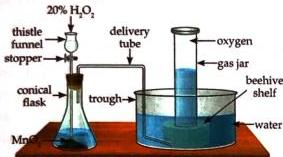
 Collection Method: Collected via downward displacement of water. This is because oxygen is only slightly soluble in water. Since oxygen is heavier than air, it cannot be safely collected over air.Safety Advantages of using
  :No heating is required.The rate of oxygen evolution is steady and easy to control.The chemicals used are safe.Why avoid Potassium Chlorate (
  )?
Potassium chlorate can decompose to yield oxygen on heating (
)?
Potassium chlorate can decompose to yield oxygen on heating (  ), but it requires very high temperatures that can crack the glass apparatus. Furthermore, if any combustible impurity is present, the mixture can explode.Potassium Nitrate:
 Red Lead:

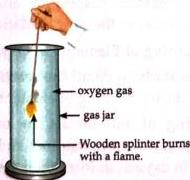
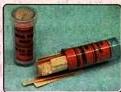
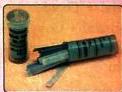
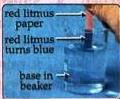
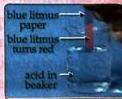
Combustibility: Oxygen is a strong supporter of combustion but is non-combustible itself. A glowing wooden splinter introduced into a jar of oxygen immediately bursts into flame.Litmus Test: Neutral in nature; it does not change the colour of moist red or blue litmus papers.Pyrogallol Solution: When passed through an alkaline pyrogallol solution, it turns the solution brown.Nitric Oxide Test: Reacts with colourless nitric oxide gas (  ) to produce reddish-brown nitrogen dioxide gas (
  ).
).
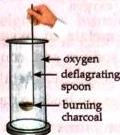
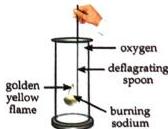
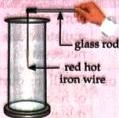
Fast Oxidation (Combustion/Burning): A rapid reaction releasing large amounts of heat and light energy once the substance is heated to its ignition temperature (minimum temperature required to catch fire).Slow Oxidation: A slow reaction occurring over a long period. Releases very little heat and no light (e.g., respiration, rusting).Burning of Non-Metals (Forms Acidic Oxides):Carbon: Burns with bright sparks to form carbon dioxide:

(In insufficient oxygen, toxic carbon monoxide is formed:
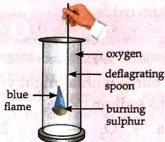
(In insufficient oxygen, toxic carbon monoxide is formed:  )Sulphur: Burns with a bright blue flame and pungent smell to form sulphur dioxide:
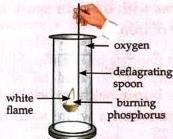
 Phosphorus: Burns with a dazzling white flame to form dense white fumes of phosphorus pentoxide:
 Hydrogen: Burns at high temperatures to produce water:
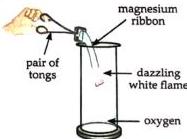
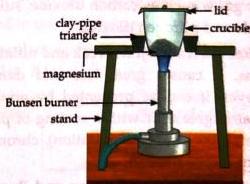
 Note: These oxides are acidic because their solutions turn blue litmus red.Burning of Metals (Forms Basic Oxides):Magnesium: Burns with a dazzling white light to form a white powder:
 Sodium: Burns with a bright yellow flame to form sodium oxide:
 Iron: Burns with bright sparks (without a flame) to form iron oxide:
 Calcium: Burns with a brick-red flame to form calcium oxide:
 Note: These oxides are basic because their solutions turn red litmus blue.Burning of Sulphides:Zinc Sulphide:
 Lead Sulphide:
 Mercuric Sulphide:
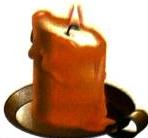
 Burning of a Wax Candle:
 Change in Weight on Burning:
When a substance burns in air, its total weight gains because it chemically combines with oxygen.Activity 8: Heating
Change in Weight on Burning:
When a substance burns in air, its total weight gains because it chemically combines with oxygen.Activity 8: Heating  of magnesium in a closed crucible (lifting the lid occasionally to let oxygen in) converts it to magnesium oxide (
  ), which weighs more than the starting magnesium ribbon.Promoters: Rusting is accelerated in the presence of acidic gases like
  ,
,  , and .Prevention: Iron can be protected by applying paint, grease, oil, plastic coatings, or metal plating (such as zinc coating/galvanisation, chromium, or tin).
Respiration: All living organisms use oxygen to break down digested food (glucose) to produce energy. This is a slow, natural, self-regulated process occurring at body temperature (  ).
).
 Combustion: Oxygen is essential for burning fuels.Medical Purposes: Oxygen cylinders are used in hospitals and ambulances for patients with breathing difficulties. A mixture of oxygen and nitrous oxide is used as a local anaesthetic in dentistry.Welding and Cutting Metals: Oxygen mixed with acetylene gas burns at
  to form an oxyacetylene flame, which melts metals easily for cutting or welding.Rocket Fuel Propellant: Liquid oxygen is carried in rockets to burn liquid hydrogen fuel because there is no oxygen in space.Purification of Iron: Oxygen oxidizes impurities (like carbon and sulphur) in molten iron into gases, leaving pure iron.Chemical Industries: Used to manufacture sulphuric acid and nitric acid.
Makes up approximately 0.03% of air.Exists in free and combined states (e.g., limestone  , dolomite
  ).Uses:Essential for photosynthesis in green plants.Used in fire extinguishers as it does not support combustion.Acts as a greenhouse gas that traps heat to keep the Earth warm.Solid carbon dioxide (dry ice) is used as a refrigerant for food.Used to manufacture baking soda (
  ) and baking powder.
These gases do not react chemically with other substances.They make up 0.9% of air by volume.The six noble gases are: helium, neon, argon, krypton, radon, and xenon.Argon is the most abundant noble gas in air.
Humidity: The amount of water vapour present in air. It varies by place and season.

Share
Explore
 Self Study
Chapter: 07. Air And Atmosphere
Comprehensive Study Notes: Air and Atmosphere
Air is one of the most vital components necessary for life. Although we cannot see air, it is present all around us, and we can easily feel its presence.
1. Components of Air & Antoine Lavoisier’s Experiment
Until the 18th century, people believed that air was a single, uniform substance. However, experiments by the French scientist Antoine Lavoisier proved that air is a mixture of several gases.
Composition of Air
The two major components of air are nitrogen and oxygen. Air also contains carbon dioxide, water vapour, inert gases, dust particles, and other impurities.
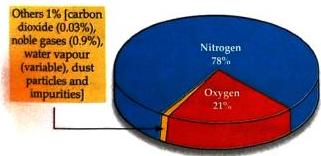
Table 7.1: Percentage of Components of Air
Gases
Percentage (approx.)
Nitrogen
78%
Oxygen
21%
Carbon dioxide
0.03%
Inert gases
0.9%
Water vapour
Variable
Dust particles and impurities
Variable
Antoine Lavoisier’s Experiment
Antoine Lavoisier conducted a landmark experiment to study the components of air:
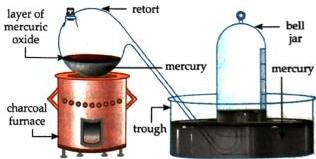
Table 7.2: Active vs. Inactive Components of Air
Component
Approximate Volume
Support for Combustion
Role in Experiment
Oxygen (Active)
1/5
Supported combustion
Used up in burning
Nitrogen (Inactive)
4/5
Did not support combustion
Remained in the bell jar
Chemical Equations of the Experiment:
Experimental Learning Activities
Activity 0: Showing the Presence of Oxygen and Nitrogen in Air
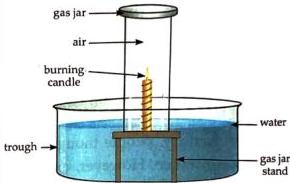
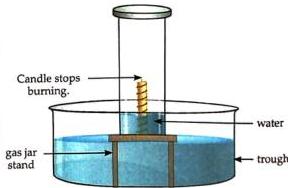
Activity 2: Showing Air Contains Carbon Dioxide
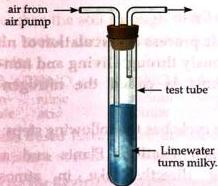
Activity 3: Showing Air Contains Water Vapour
Why Air is Classified as a Mixture (Not a Compound)
2. Nitrogen
Nitrogen is the most abundant gas in the atmosphere, making up approximately 78% of air by volume.
Properties of Nitrogen
Uses of Nitrogen
The Nitrogen Cycle
Because plants and animals cannot directly absorb atmospheric nitrogen, it must be cycled through the soil, living tissues, and back to the atmosphere.
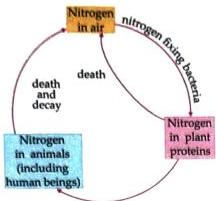
Steps of the Nitrogen Cycle:
Science in Life (Crop Rotation): Farmers grow leguminous plants in rotation with non-leguminous crops to naturally enrich the soil with nitrates, reducing the need for chemical fertilizers.
3. Oxygen
Oxygen is the second most abundant gas in the air (21% by volume, 23.2% by mass). It is crucial for respiration, helping living organisms break down food to release energy.
Chemical Details
Value
Symbol
O
Molecular Formula
Atomic Number
8
Atomicity
2
Discovery of Oxygen
Occurrence
Table 7.3: Common Oxygen-Containing Compounds
Oxides
Carbonates
Sulphates
Haematite (Iron ore): 
Limestone:
Gypsum: 
Bauxite (Aluminium ore): 
Dolomite: 
Epsom salt: 
Methods of Preparing Oxygen
1. From Air (Industrial Preparation)
Air is filtered and dried to remove dust and water vapour. It is compressed and cooled to remove carbon dioxide. The remaining air is liquefied under high pressure and cold temperatures. This liquid air is subjected to fractional distillation:
2. From Water
Oxygen is obtained by the electrolysis of acidulated water (water containing a small amount of acid to make it conductive).

3. Laboratory Preparation (Decomposition of Hydrogen Peroxide)
In the laboratory, oxygen is prepared by decomposing hydrogen peroxide ( ) using manganese dioxide (  ) as a catalyst.
4. Thermal Decomposition of Other Compounds
Oxygen can also be prepared by heating other oxygen-rich compounds:
Tests for Oxygen
Chemical Properties of Oxygen
Oxygen is highly reactive and combines with metals, non-metals, and sulphides to form oxides in a process called oxidation.
A. Burning of Elements in Oxygen
B. Rusting
When iron is exposed to oxygen and moisture, it slowly oxidizes to form a brown, flaky substance called rust.

Table 7.4: Differences Between Rusting and Burning
Parameter
Rusting
Burning
Necessary Conditions
Both air and moisture must be present
Only air is required
Release of Heat
Very small amount is released slowly
Large amount of heat is released quickly
Nature of Process
Slow oxidation
Fast oxidation
Uses of Oxygen
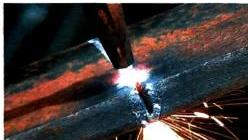
Table 7.5: Differences Between Combustion and Respiration
Parameter
Combustion (of carbon compounds)
Respiration
Nature of Reaction
Fast, artificial process
Slow, natural, and self-regulated process
Release of Energy
Large amount released as heat and light
Less energy released as heat and chemical energy
Temperature
Occurs at high temperatures
Occurs at body temperature ( )
Renewal of Oxygen in Air (The Oxygen Cycle)
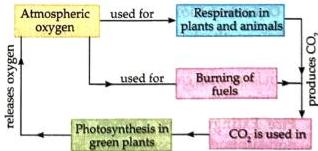
While respiration, combustion, and rusting continuously consume oxygen, the atmospheric level remains constant at 21% due to photosynthesis in green plants. Plants use carbon dioxide and water in the presence of sunlight and chlorophyll to produce glucose and oxygen:

(Note: Formula for glucose as written in chapter text is
(Note: Formula for glucose as written in chapter text is  )
)
4. Carbon Dioxide, Noble Gases, Water Vapour, and Dust
Carbon Dioxide ( )
Noble (Inert) Gases
Water Vapour
Want to print your doc?
This is not the way.
This is not the way.

Try clicking the ··· in the right corner or using a keyboard shortcut (
CtrlP
) instead.