Skip to content
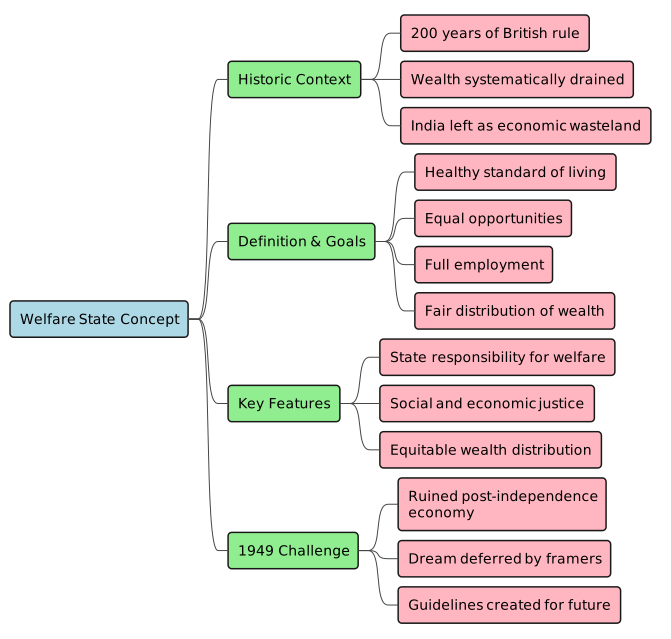
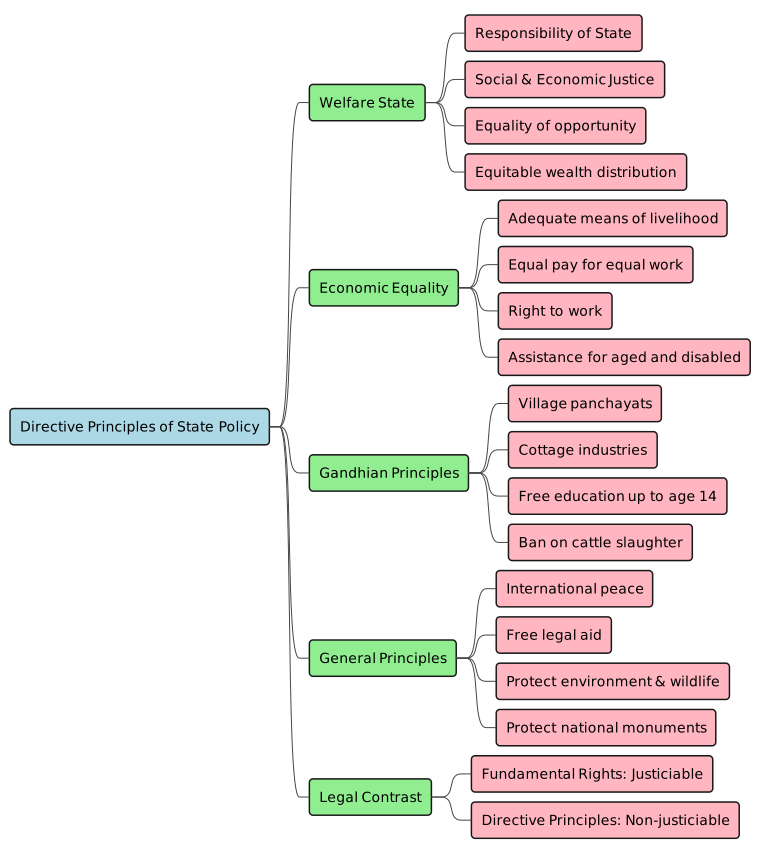
Historical Background: Prior to independence, British economic policies systematically exploited and drained India’s wealth over a period of 200 years, leaving the country as a vast economic wasteland. One of the primary duties of the newly formed Indian government was to remedy this economic ruin.Definition of a Welfare State: A welfare state is a country where all citizens are guaranteed:A healthy standard of livingEqual opportunitiesFull employmentA fair and equitable distribution of wealthSocial and economic justiceKey Features of a Welfare State:The welfare and well-being of the citizens is the direct responsibility of the state.Every citizen enjoys both social and economic justice.It operates on the principles of equal opportunities for all and aims to secure full employment.It ensures that the country’s wealth is distributed equitably among its people.The Challenge of 1949: The framers of the Constitution of India had a dream of establishing a welfare state. However, they could not fully realize this dream in 1949 because 200 years of foreign colonial rule had completely ruined the Indian economy. To guide future administrations, they laid down basic guidelines in the Constitution for all future central, state, and local governments to follow.
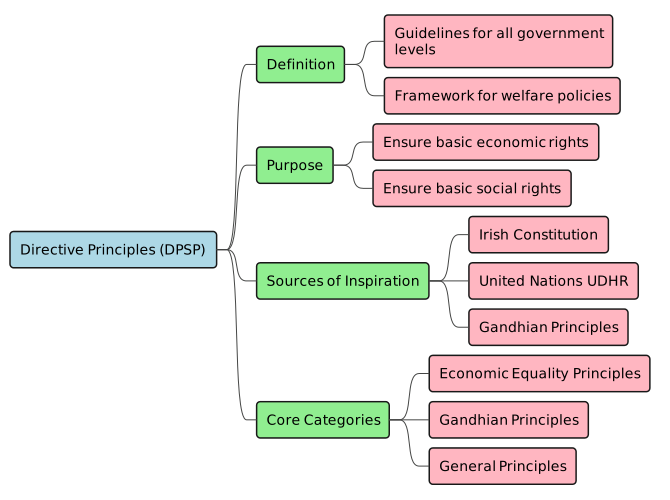
Definition: Directive Principles of State Policy are guidelines laid down in the Constitution that the central, state, and local governments are expected to follow while making and implementing policies and programs for the welfare of the people.Purpose: They contain a list of essential economic and social rights that the framers of the Constitution wanted every Indian citizen to eventually enjoy.Inspirations and Sources:The Constitution of Ireland: The makers of the Indian Constitution were highly influenced by the Irish national movement.Gandhian Principles: Social development plans worked out by Mahatma Gandhi.United Nations Universal Declaration of Human Rights: Global standards for human dignity and rights.Three Broad Classifications:Principles promoting economic equalityGandhian Principles promoting economic and social developmentGeneral Principles
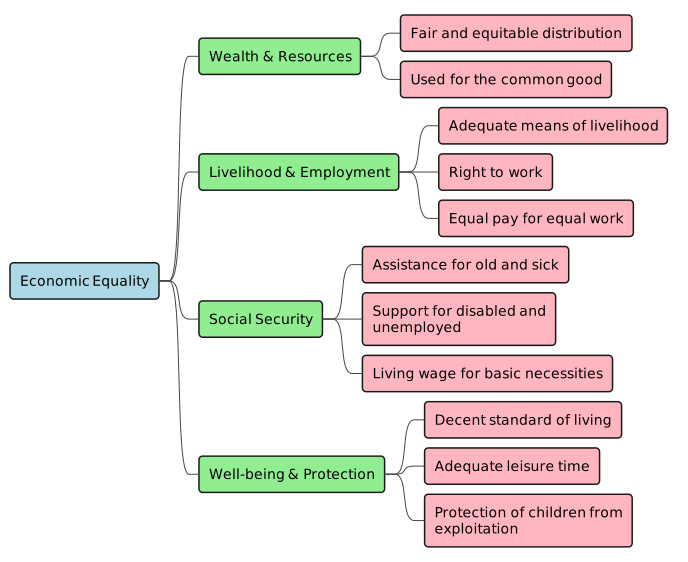
Fair Resource Distribution: Ensure fair and equitable distribution of the country’s wealth and material resources so they are utilized for the common good of all.Means of Livelihood: Secure adequate means of livelihood for every citizen.Equal Pay: Ensure equal pay for equal work for both men and women.Right to Work: Eradicate unemployment by securing the right to work.Public Assistance: Provide state assistance for the elderly, the sick, the disabled, and the unemployed.Living Wage: Ensure a living wage for all workers (a wage sufficient to buy basic necessities).Decent Standard of Living: Guarantee a decent standard of living and leisure time.Protection of Youth: Protect children and young people against exploitation and neglect.
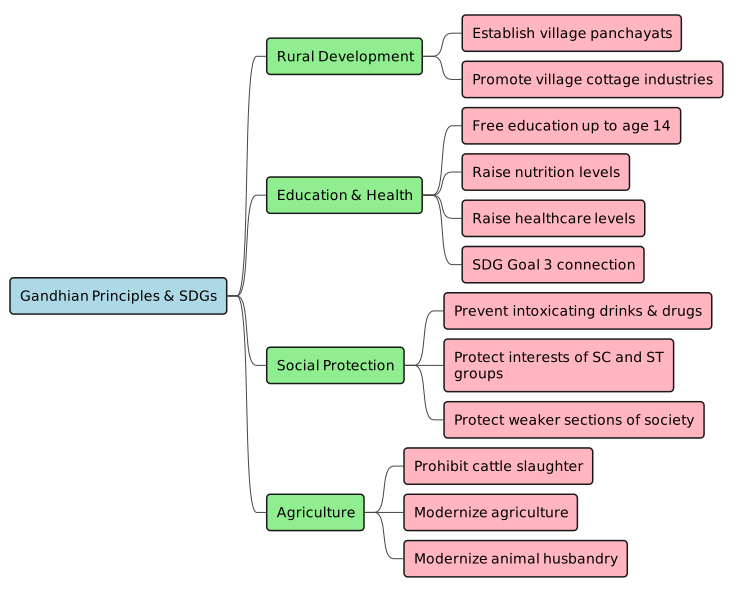
Key Gandhian Directives:Free Education: Provide free and compulsory education for all children up to 14 years of age.Cottage Industries: Promote cottage and small-scale industries in rural villages.Agriculture and Husbandry: Prohibit the slaughter of cows and other cattle, while modernizing agriculture and animal husbandry.Weaker Sections: Promote the educational and economic interests of Scheduled Castes (SCs), Scheduled Tribes (STs), and other weaker sections of society.Public Health: Improve the nutrition level and general health of the public.Prohibition: Prevent the consumption of intoxicating drinks and harmful drugs.Local Self-Government: Establish village panchayats to function as units of self-government.Sustainable Development Goals (SDGs) Connection:Goal 3: Good Health and Well-being: Directly relates to Article 47 of the Directive Principles, which makes the state responsible for raising nutrition levels and improving healthcare for all citizens.
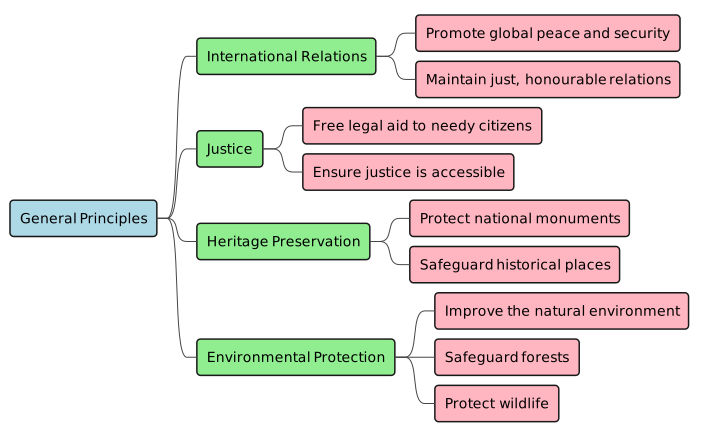
International Peace: Promote international peace and security.Foreign Policy: Maintain just and honourable relations with other countries.Free Legal Aid: Provide free legal aid to needy citizens to ensure that justice is promoted and not denied due to economic disability.Environment and Wildlife: Protect and improve the environment, and safeguard the nation’s forests and wildlife.National Heritage: Protect national monuments, historical places, and objects of national importance from damage or destruction.
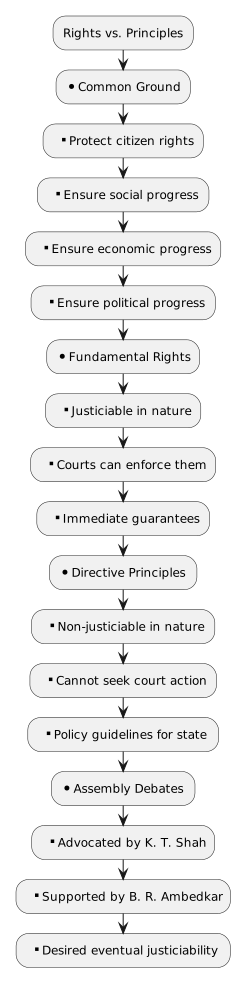
Common Purpose: Both serve to safeguard the rights of citizens and drive the social, economic, and political progress of India.Comparison Table:Knowledge of India (K. T. Shah’s Advocacy):The inclusion of the Directive Principles was strongly advocated by K. T. Shah, an economist and member of the Constituent Assembly.K. T. Shah, alongside Dr. B. R. Ambedkar, wished for these Directive Principles to eventually become justiciable once the nation had passed a certain point of time and accumulated enough resources.
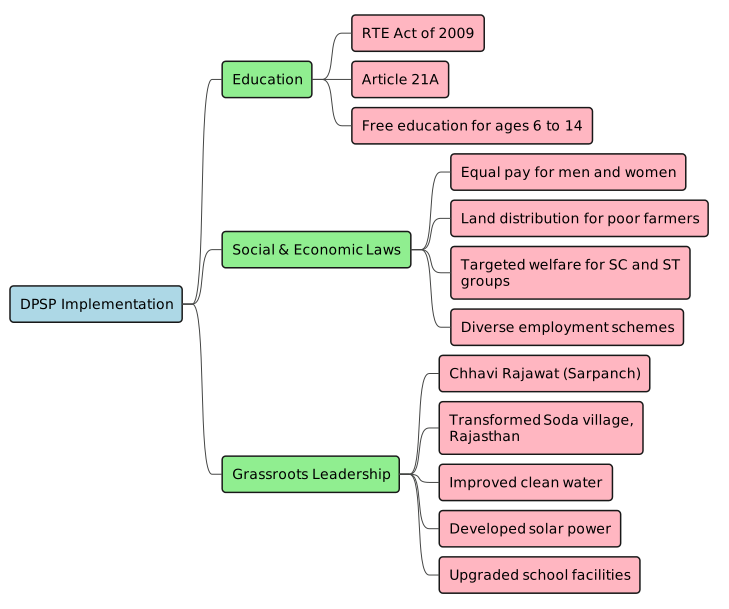
Right to Education (RTE) Act, 2009: Under Article 21A of the Constitution, free and compulsory education for all children between 6 and 14 years of age was officially made a Fundamental Right.Welfare Schemes: Central and state governments run ongoing schemes to support Scheduled Castes (SCs), Scheduled Tribes (STs), and other marginalized sections.Labor Welfare and Pay Equity: Laws have been enacted to guarantee equal pay for both men and women performing the same work.Employment and Land Reform: Government initiatives have launched numerous employment programs and enacted land distribution laws to assist poor, landless farmers.Inspiring Leadership Example (Chhavi Rajawat):Left a highly successful corporate career to serve her community.Became India’s first woman sarpanch with an MBA, leading the village of Soda in Rajasthan.Successfully transformed rural conditions by improving clean water access, solar power grids, and educational facilities.Demonstrates how modern education and dedicated local leadership can realize the welfare state dream at the grassroots level.

Share
Explore
 Self Study
Prepared by: learnloophq@gmail.com
Chapter: 13. Directive Principles Of State Policy
1. The Concept of a Welfare State
2. Introduction to Directive Principles of State Policy (DPSP)
3. Principles Promoting Economic Equality
The Indian government is directed to make and enact laws to secure basic economic rights and create a balanced economic structure:

It is the duty of the Indian government to provide assistance to people with disabilities.
It is the duty of the Indian government to provide assistance to people with disabilities.
4. Gandhian Principles & Sustainable Development Goals (SDGs)
During the Indian freedom struggle, Mahatma Gandhi developed a comprehensive plan for social and grassroots development. Several of these ideas were incorporated directly into the Constitution as Directive Principles:

Mahatma Gandhi, whose ideas inspired the Gandhian Principles.
Mahatma Gandhi, whose ideas inspired the Gandhian Principles.

The government promotes cottage industries in villages—an application of Gandhian principles.
The government promotes cottage industries in villages—an application of Gandhian principles.
5. General Principles
Certain directives focus on the areas of justice, environmental preservation, national heritage, and foreign policy:

The Indian government is duty-bound to protect the country’s wildlife.
The Indian government is duty-bound to protect the country’s wildlife.
6. Fundamental Rights vs. Directive Principles of State Policy
While both sections of the Constitution aim to protect citizen rights and ensure national progress, they have distinct differences:
Feature
Fundamental Rights
Directive Principles of State Policy (DPSP)
Justiciability
Justiciable: Citizens can approach a court of law for protection if their rights are violated or deprived.
Non-justiciable: Citizens cannot go to court to seek enforcement (e.g., if they do not get a job or living wages).
Implementation
Guaranteed immediately to all citizens.
Implemented gradually by the state through laws and schemes as resources permit.
Character
Acts as legal restrictions on state power to protect individual liberties.
Acts as positive directives and guidelines for the state to achieve social welfare.
7. Implementation of Directive Principles
All subsequent Indian governments have made dedicated efforts to convert these non-justiciable principles into active laws and welfare programs:

Chhavi Rajawat, the first woman sarpanch of Soda village, Rajasthan.
Chhavi Rajawat, the first woman sarpanch of Soda village, Rajasthan.
8. Overall Summary
Want to print your doc?
This is not the way.
This is not the way.

Try clicking the ··· in the right corner or using a keyboard shortcut (
CtrlP
) instead.