Skip to content
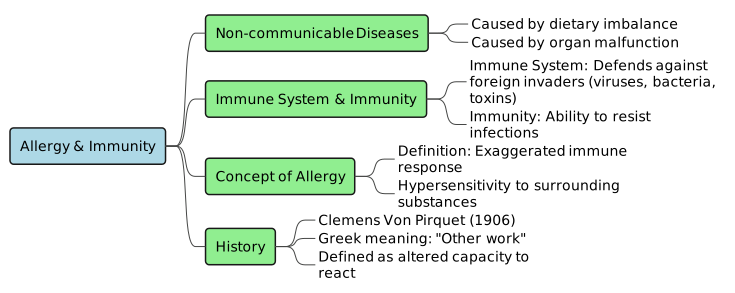
Immune System: The protective system that defends our body against foreign bodies, such as microorganisms (viruses and bacteria), foreign proteins, and toxic substances.Immunity: The body’s ability to defend itself against infections and develop resistance to infectious diseases.
Concept of Allergy: An allergy occurs when a person’s protective immune system becomes overactive to environmental factors (like pollen, dust, or animal fur) that usually cause no issues in most people.Definition: An allergy is an exaggerated or abnormal reaction of a person’s immune system to certain foreign substances that do not bother most other people.Hypersensitivity: A person with an allergy is highly sensitive (hypersensitive) to specific substances in their surroundings or those that come into contact with them.
Origin of the Term: The concept of allergy was introduced in 1906 by the Viennese paediatrician Clemens Von Pirquet.Meaning: In Greek, allergy translates to “other work”.Definition by Pirquet: He defined allergy as “an altered capacity of the body to react to a foreign substance”.
Pollen grains: From grasses, trees, and weeds.Animal dander: From pets, including their shed hair, saliva, or oil from skin glands.Dust: From air and domestic articles.Dust mites: Found in pillows, mattresses, upholstery, carpets, and curtains.Fungal or mould spores: Most commonly Aspergillus and Penicillium.Food substances: Such as milk, wheat, eggs, shellfish, fish, soya, nuts, etc.Drugs: Especially aspirin and antibiotics (like penicillin and sulpha drugs).Sap: Liquid from certain plants (latex).Insect stings: From wasps, bees, fire ants, etc.Cosmetics: Due to ingredients like fragrance and preservatives.Metals: Such as nickel, gold, platinum, etc.Sunlight: Strong sunlight and ultraviolet (UV) rays.
Dr. Charles Robert Richet: Born in 1850 in Paris, France, he won the Nobel Prize in Physiology or Medicine in 1913 for his researches on anaphylaxis. He coined the word anaphylaxis to designate the sensitivity developed by an organism to a colloid, protein, or toxin. He also worked on the mechanism of thermoregulation in homeothermic animals.
Nose (Breathing)Mouth (Eating)Skin (Contact)
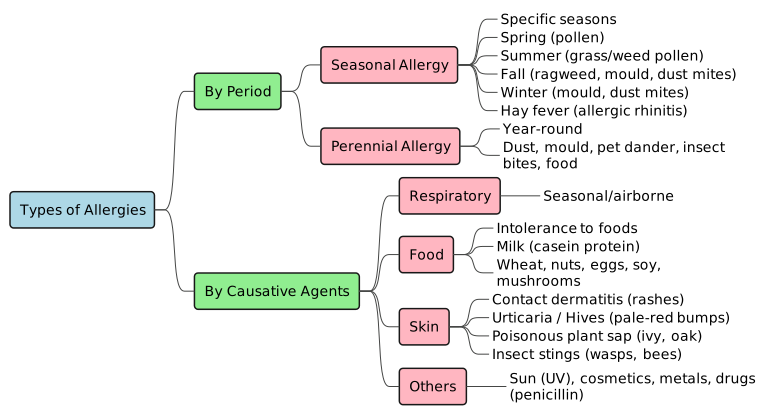
Spring Allergies: Triggered by pollen grains.Summer Allergies: Triggered by pollen from grasses and weeds.Fall Allergies: Caused by ragweed, moulds, and dust mites.Winter Allergies: Caused by indoor moulds and dust mites.Hay Fever (Allergic Rhinitis): An allergic reaction to pollen grains. It can be seasonal or perennial.Symptoms: Sneezing, coughing, runny nose, itchy and watery eyes, and general body ache.Triggers: Indoor allergies to dust, mould, cockroaches, feathers, pet dander, food allergies, and allergies due to insect bites.
Milk Allergy / Milk Intolerance: Triggered by the milk protein casein. Symptoms include immediate wheezing and vomiting.Wheat Allergy: Sensitivity to wheat products.Nut Allergy: Triggered by peanuts, cashewnuts, walnuts, or foods containing them.Other Food Allergies: Egg, fish, shellfish, soy, and mushroom allergies.Contact Dermatitis: Red and itchy rashes at the point of contact.Urticaria (Hives): An outbreak of swollen, pale-red bumps or patches on the skin.Poisonous Plant Sap: Allergy due to contact with the sap of plants like poison ivy or oak.Insect Stings: From wasps, bees, fire ants, etc.Sun Allergy: Triggered by exposure to UV radiation in sensitive individuals.Cosmetic Allergy: Skin irritation caused by specific ingredients like fragrances and preservatives in cosmetics.Metal Allergy: Sensitivity to metals like nickel and gold.Eye Allergies: Leads to conditions like conjunctivitis and dry eye allergy.Drug Allergy: Triggered by substances like aspirin, penicillin, and sulpha drugs.
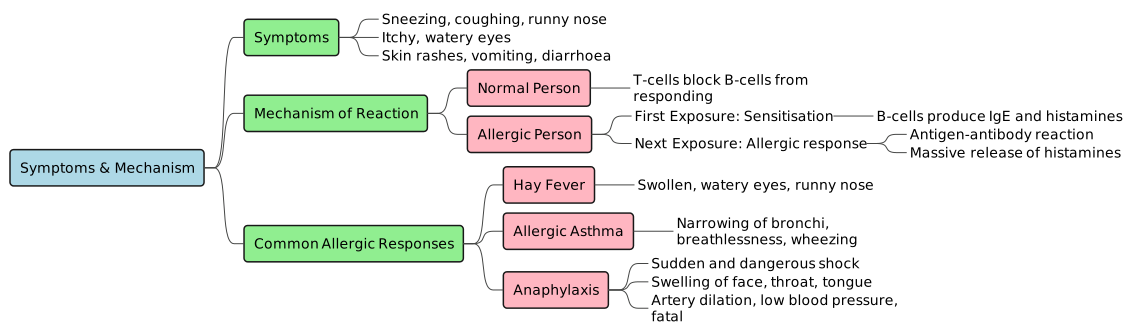
In Normal People: T-cells recognize an antigen or allergen as harmless and prevent B-cells from responding to it.In Allergic People (First Exposure): The allergen does not trigger an immediate allergy. Instead, the body develops a primary immune response where B-cells start producing IgE antibodies and histamines. This process is called sensitisation.On Subsequent Exposure (Next Exposure): The sensitised person undergoes a hypersensitive antigen-antibody reaction. This triggers a massive release of histamine from mast cells, which alongside IgE antibodies, produces the allergic response.
Symptoms: Swollen, reddened, and watery eyes, runny nose, frequent sneezing, coughing, and headache.Definition: The most common form of allergy.Symptoms: Narrowing of bronchi, bronchospasms, sneezing, wheezing, and extreme difficulty in breathing (breathlessness).Definition: The sudden, most severe, and dangerous of all allergic reactions.Mechanism: Large quantities of histamine released by mast cells trigger anaphylactic shock.Symptoms: Within minutes, rashes develop all over the skin, the face and eyes become swollen and puffy, and the lips and throat swell up (thickening of tissue around the mouth and tongue).Fatal Risk: Dilation of arteries leads to a drastic drop in blood pressure (low blood pressure) and severe shortness of breath, which can result in sudden death.
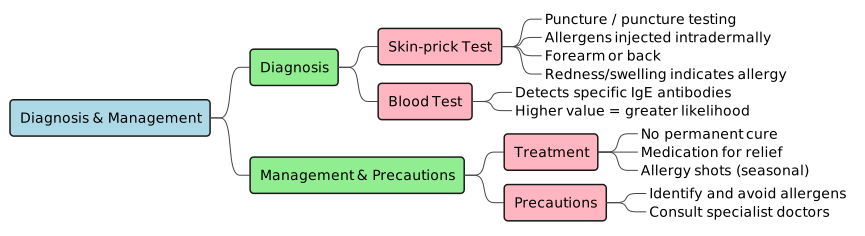
Medication: Provides systematic/symptomatic relief.Allergy Shots: Helpful in keeping seasonal allergies under control.Avoidance: Allergic individuals must identify their specific triggers and actively prevent exposure.Medical Consultation: Consulting allergy specialists is crucial to maintaining safety.
Procedure: Small amounts of suspended allergens or their extracts are injected intradermally (into the skin) using a syringe.Location: Typically performed on the patient’s forearm or back.Tracking: Each injection site is marked with a pen or dye and numbered according to the allergen list.Result: An inflammatory reaction (swelling and redness) at the injection site indicates a positive allergic reaction to that substance.Procedure: A blood sample is analyzed to detect specific allergens.Mechanism: The test measures the concentration of specific IgE antibodies in the blood.Key Indicator: The higher the value of specific IgE antibodies, the greater the likelihood and severity of allergic symptoms. Quantitative measurement helps doctors predict the type of allergy and assess the risk of a severe allergic reaction.

Share
Explore
 Self Study
Prepared by: learnloophq@gmail.com
Chapter: 08. Allergy
Chapter 8: Allergy — Study Notes
1. Introduction to Allergy & Immunity
In non-communicable diseases, illnesses are caused by dietary imbalances or the malfunctioning of vital body organs, unlike communicable diseases which spread through microorganisms. Allergies, however, are caused by an over-reaction (hyperactivity) of our immune system to substances that are harmless to most people.
Key Concepts of Immunity
What is an Allergy?
Historical Context: “Something More”
2. Allergens & Their Entry Routes
What are Allergens?
Substances that trigger an allergic reaction are called allergens.
Common Allergens
Know Your Scientist

Dr. Charles Robert Richet
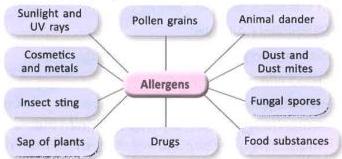
Categories of Allergens
Entry Routes of Allergens
Allergens enter the human body through three main pathways:
Table 8.1: Allergens and their Entry Routes
Entry Route
Allergens
Method of Entry
1. Nose
Pollen, mould spores, dust particles, dust mites, and perfumes
Through breathing
2. Mouth
Food items (soya, wheat and wheat products, milk and milk products, peanuts, nuts, eggs, fish, shellfish), medicines, etc.
By eating
3. Skin
Sap (latex) from certain plants, mites, strong sunlight, cosmetics, insect bites, and injections
By contact

3. Types of Allergies
Allergies are classified based on two main criteria: the period of occurrence and the causative agent.
A. On the Basis of Period of Allergy
1. Seasonal Allergy
Develops only during specific seasons and comes and goes with them.
2. Perennial Allergy
Appears year-round at any time.
B. On the Basis of Causative Agents
1. Respiratory Allergies
Commonly seasonal allergies affecting the airways (e.g., allergic rhinitis).
2. Food Allergies
Intolerance to specific food items eaten by individuals.
3. Skin Allergies
Caused by substances making direct contact with the skin.
4. Other Allergies
4. Symptoms & Common Allergic Reactions
Allergic reactions depend heavily on the nature of the allergen. Symptoms can range from mild local irritation to life-threatening systemic collapse.
Table 8.2: Common Allergens, Allergy Types, and Symptoms
Type of Allergy
Allergens
Symptoms
1. Pollen allergy
Pollen, spores, and other air-borne particles
Sneezing, coughing, runny nose, itchy and watery eyes, Hay fever
2. Dust allergy
Dust particles
Hay fever, asthma
3. Food allergy
Wheat, Milk/milk products, Seafood (fish and shellfish), Nuts
Stomach upset, vomiting, skin rashes; anaphylaxis in severe cases
4. Drug allergy
Penicillin and other antibiotics
Nausea, diarrhoea, and urticaria
5. Sun allergy
UV rays
Skin allergy (rashes, irritation)
The Cellular Mechanism of Allergy
Common Allergic Response Expressions
1. Hay Fever
2. Allergic Asthma
3. Anaphylaxis (Anaphylactic Attack)
5. Diagnosis, Prevention & Treatment
Currently, there is no permanent cure for allergic reactions. Management relies on avoiding exposure, relieving symptoms, and medical testing.
Precautions & Treatments
Diagnostic Methods
To treat allergies effectively, tests must be performed to identify the allergens and corresponding antibodies.
1. Skin-prick Test (Prick / Puncture Testing)
2. Blood Test
Chapter Summary Concept Map
Below is a comprehensive conceptual overview of the entire chapter’s curriculum.
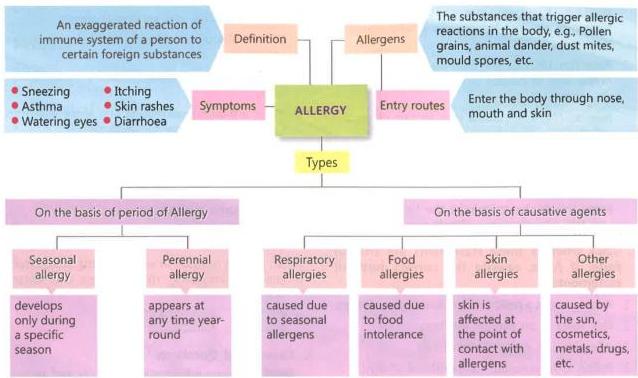
Allergy Concept Flowchart
Want to print your doc?
This is not the way.
This is not the way.

Try clicking the ··· in the right corner or using a keyboard shortcut (
CtrlP
) instead.