Skip to content
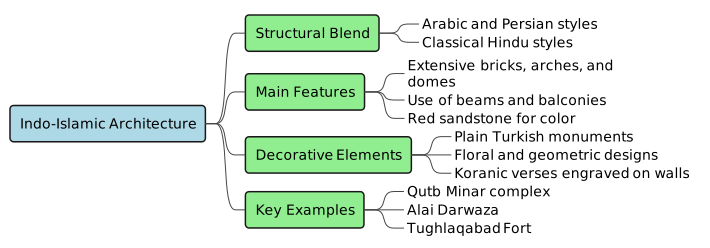
Discuss the distinctive architectural features introduced in India by the Turkish rulers.The architecture of this era was a harmonious blend of Arabic, Persian, and classical Hindu styles, which came to be known as the Indo-Islamic style. Its key structural characteristics included the extensive and innovative use of bricks, arches, domes, beams, and balconies. While the Turkish monuments were relatively plain, they incorporated liberal floral and geometric designs on their surfaces. The builders also made extensive use of red sandstone to add vibrant color and engraved verses from the Koran onto the walls of these monuments.
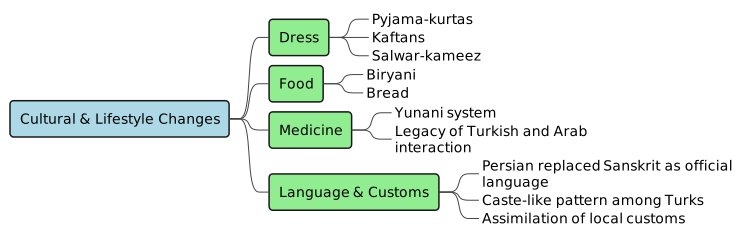
 Analyze the major cultural and lifestyle changes that transformed Indian society due to interaction with the Turks.The interaction between traditional Indian culture and the Turks introduced new attire like pyjama-kurtas, kaftans, and salwar-kameez, which remain popular today. Indian culinary traditions expanded to include rich new food items such as biryani and bread. In the field of healthcare, the Yunani system of medicine became established as a legacy of Turkish rule and trade with Arab merchants. Furthermore, Persian replaced Sanskrit as the official administrative language in many regions, while social assimilation led to some local Hindu customs being adopted by Muslims.
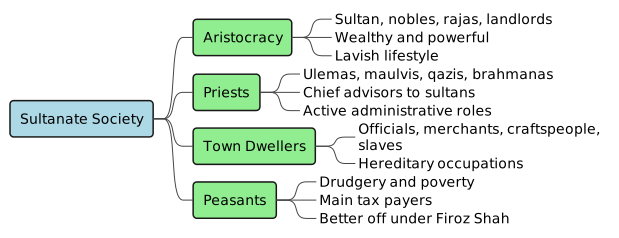
 Describe the social stratification and the lifestyle of different classes during the Delhi Sultanate period.Society during this period was divided into four main groups: the aristocracy, the priests, the town dwellers, and the peasants. The aristocracy, consisting of the sultan, nobles, rajas, and landlords, held immense wealth and power and enjoyed a highly lavish lifestyle. The priestly class, including ulemas and brahmanas, held influential administrative positions, with the ulemas acting as chief advisers to the sultans. While town dwellers comprised prosperous merchants and hereditary craftspeople, the peasants lived a life of drudgery and poverty, bearing the chief tax burden of the state.
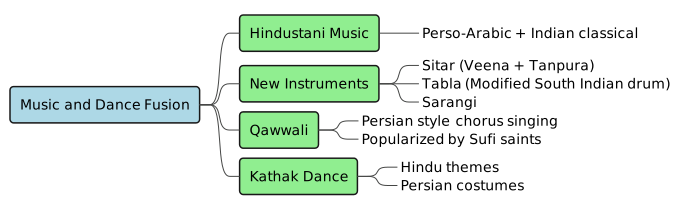
 Explain how music and dance evolved as a result of the fusion of Indo-Islamic cultures.North Indian or Hindustani music emerged as a direct outcome of the fusion between Perso-Arabic and traditional Indian classical musical styles. New musical instruments such as the sitar, tabla, and sarangi were developed during this time to enrich the musical landscape. Sufi saints popularized qawwali, a Persian style of chorus singing, by performing devotional songs at their religious meetings. Additionally, a new dance form called Kathak originated during this era, blending traditional Hindu themes with Persian costumes.

Share
Explore
 Answer key
Prepared by: learnloophq@gmail.com
Chapter: 06. Life Under The Delhi Sultanate
Want to print your doc?
This is not the way.
This is not the way.

Try clicking the ··· in the right corner or using a keyboard shortcut (
CtrlP
) instead.