Skip to content
Where is urea produced from ammonia and carbon dioxide in the human body?
(a) Kidneys
(b) Urinary bladder
© Liver
(d) LungsWhat percentage of human urine is composed of water?
(a) 2.5%
(b) 50%
© 75%
(d) 95%Who is recognized as the “Father of Artificial Organs” for inventing the first artificial heart and kidney?
(a) Willem Johan Kolff
(b) Bowman
© E. coli
(d) None of the aboveWhich bacterium is commonly responsible for causing Urinary Tract Infections (UTIs)?
(a) Lactobacillus
(b) E. coli
© Streptococcus
(d) Amoeba
The process of maintaining water balance and salt concentration in the blood is called _ _ _ _ _ _ _ _ _ _ _ _ _ _ .The kidneys are highly efficient, cleaning all the blood in our body once every _ _ _ _ _ _ _ _ _ _ _ _ _ _ minutes.Each nephron has a cup-shaped anterior end called the _ _ _ _ _ _ _ _ _ _ _ _ _ _ .The opening of the urethra is controlled by a ring of circular involuntary muscles called the _ _ _ _ _ _ _ _ _ _ _ _ _ _ .
Small kidney stones located in the ureters can be easily removed by drinking a large amount of water.Sweat glands excretory products include bile pigments, toxins, and carbon dioxide.The presence of sugar in urine indicates that the pancreas is not functioning normally and the person may have diabetes.Ureters are long, coiled tubes located inside the kidneys that act as the primary filters of blood.
UltrafiltrationMetabolic wastesDialysis
Waste Products vs. Excretory ProductsUreter vs. Urethra
Identify the anatomical parts labeled A, B, C, and D.State the primary function of the part labeled C.
Why do white patches sometimes form on colored clothes in the underarm area during summer?Explain the role of the liver in preparing nitrogenous wastes for excretion.What are the common symptoms of a Urinary Tract Infection (UTI)?
Describe the three distinct processes involved in the formation of urine within the kidneys.Why is excretion vital for the survival of living cells? Explain what happens to the cells if toxic metabolic wastes accumulate.

Share
Explore
 Question Paper
Prepared by: learnloophq@gmail.com
Chapter: 06. Excretory System
Practice Exam Paper: The Human Excretory System
Grade: 7
Subject: Biology
Time Allowed: 1.5 Hours
Section A: Multiple Choice Questions (MCQs)
Choose the correct option for each of the following questions:
Section B: Fill in the Blanks
Fill in the blanks using the exact term(s). Use ‘_ _ _ _ _ _ _ _ _ _ _ _ _ _’ for the blank space.
Section C: True or False
State whether the following statements are True or False. If false, write the correct form of the statement.
Section D: Explanations of Terms
Explain the following terms in one or two sentences based on the text:
Section E: Differentiate the Concepts
Distinguish between the following pairs of concepts:
Section F: Diagram-Based Questions
A diagram showing the human urinary system including kidneys, ureters, urinary bladder, and urethra.
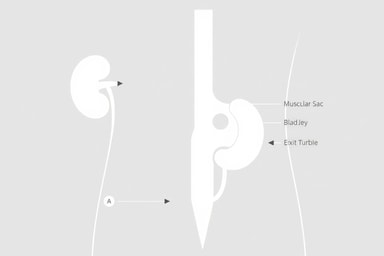
Based on the diagram description above, answer the following questions:
Section G: Short Answer Questions
Answer the following questions briefly:
Section H: Long Answer Questions
Answer the following questions in detail:
Want to print your doc?
This is not the way.
This is not the way.

Try clicking the ··· in the right corner or using a keyboard shortcut (
CtrlP
) instead.