Skip to content
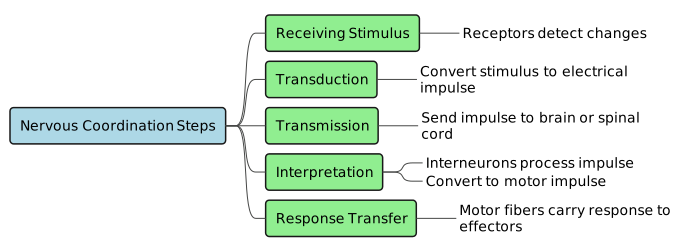
Detail the steps involved in the mechanism of nervous coordination.Nervous coordination begins when sensory cells or receptors receive a stimulus from the external or internal environment. These receptors convert the stimulus into electrical impulses through a process called transduction. The sensory impulses are then transmitted to the brain or spinal cord, where interneurons interpret them and convert them into motor impulses. Finally, motor nerve fibers transfer these responses from the central nervous system to the effector organs, which are muscles or glands. The concerned effector acts according to the received orders, translating the stimulus into a visible body response.
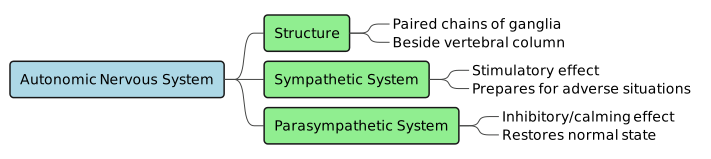
 Explain the divisions, structure, and functions of the Autonomic Nervous System (ANS).The autonomic nervous system controls involuntary actions of internal visceral organs and smooth muscles. It is made up of paired chains of ganglia lying on either side of the vertebral column. The system is divided into two antagonistic parts: the sympathetic nervous system and the parasympathetic nervous system. The sympathetic system has a stimulatory effect and prepares the body for action during adverse situations. Conversely, the parasympathetic system has a calming, inhibitory effect that returns body activities back to normal.
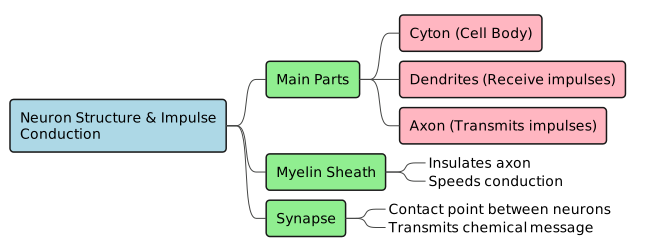
 Describe the structural components of a neuron and explain how nerve impulses are conducted through them.A neuron consists of three main parts: the cell body or cyton, finger-like branching dendrons, and a single long extension called the axon. Dendrites receive impulses from neighboring neurons and conduct them toward the cyton. The cyton passes these impulses to the axon, which transmits them away to the next neuron or an effector organ. In many neurons, the axon is insulated by a myelin sheath that helps speed up the conduction of nerve impulses. These electrical impulses travel across the gap between neurons, known as a synapse, as a chemical message.
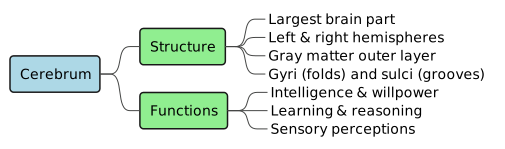
 Describe the structure and major functions of the cerebrum.The cerebrum is the largest and most highly developed part of the human brain, divided into right and left cerebral hemispheres. Each hemisphere is hollow, featuring an outer layer of gray matter that contains billions of folded neurons. These highly folded structures consist of elevated ridges called gyri and grooves called sulci. Functionally, the cerebrum serves as the seat of consciousness, intelligence, will power, learning, and reasoning. Additionally, it is responsible for interpreting sensory perceptions such as sight, hearing, taste, smell, pain, and temperature.
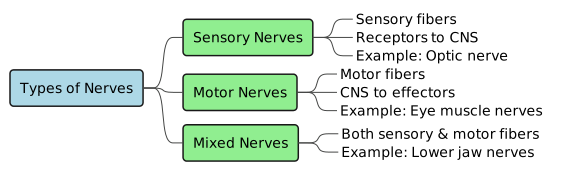
 Explain the three types of nerves found in the human body with their respective functions and examples.Nerves are classified into three types based on the impulses they conduct: sensory, motor, and mixed nerves. Sensory nerves contain sensory fibers that carry impulses from the sense organs to the brain or spinal cord, such as the optic nerve. Motor nerves are made of motor fibers that carry commands from the central nervous system to effector organs like muscles or glands. Mixed nerves contain both sensory and motor nerve fibers to perform both functions simultaneously. Examples of mixed nerves include those supplying the lower jaw, face, neck, and salivary glands.

Share
Explore
 Answer key
Prepared by: learnloophq@gmail.com
Chapter: 07. Nervous System
Want to print your doc?
This is not the way.
This is not the way.

Try clicking the ··· in the right corner or using a keyboard shortcut (
CtrlP
) instead.