Skip to content
The Directive Principles of State Policy have been inspired by the Constitution of which country?
(a) USA
(b) United Kingdom
© Ireland
(d) AustraliaWho among the following Constituent Assembly members advocated for the inclusion of the Directive Principles alongside Dr. B. R. Ambedkar?
(a) Jawaharlal Nehru
(b) K. T. Shah
© Mahatma Gandhi
(d) Chhavi RajawatUnder which Act was free and compulsory education for children between the ages of 6 and 14 years made a Fundamental Right?
(a) Right to Education Act of 2009
(2) Universal Declaration of Human Rights Act
© Directive Principles Act
(d) Equal Wages ActWhich category of Directive Principles directs the government to prevent the consumption of intoxicating drinks and harmful drugs?
(a) Principles promoting economic equality
(b) General Principles
© Gandhian Principles
(d) Fundamental Rights
A country where citizens are guaranteed a healthy standard of living, equal opportunities, full employment, and a fair distribution of wealth is known as a _ _ _ _ _ _ _ _ _ _ _ _ _ _.Fundamental Rights are justiciable, whereas Directive Principles of State Policy are _ _ _ _ _ _ _ _ _ _ _ _ _ _.Article 47 of the Directive Principles states that the state is responsible for raising the level of nutrition and _ _ _ _ _ _ _ _ _ _ _ _ _ _ of its citizens.Chhavi Rajawat left a successful corporate career to become the first woman _ _ _ _ _ _ _ _ _ _ _ _ _ _ of Soda village in Rajasthan.
The Directive Principles of State Policy were inspired only by the Constitution of Ireland.If you do not receive a proper wage or find a job, you can directly go to a court of law to demand it under the Directive Principles.Providing free legal aid to needy citizens is classified under the General Principles.The framers of the Constitution were able to completely establish a welfare state in 1949.
Welfare StateDirective Principles of State PolicyJusticiable Rights
Fundamental Rights vs. Directive Principles of State Policy (with respect to their enforceability in court).Gandhian Principles vs. General Principles (with respect to their focus areas, giving one example of each).
Why were the framers of the Indian Constitution unable to achieve their dream of establishing a welfare state immediately in 1949?Mention any two Directive Principles aimed at promoting economic equality.How did Chhavi Rajawat contribute to the development of Soda village?What is the main objective of Article 47 of the Directive Principles, and which Sustainable Development Goal (SDG) does it align with?
Describe the key measures and laws that have been enacted by various Indian governments to implement the Directive Principles of State Policy.Explain how the Directive Principles of State Policy are classified into three categories, and provide at least two goals/guidelines under each category.
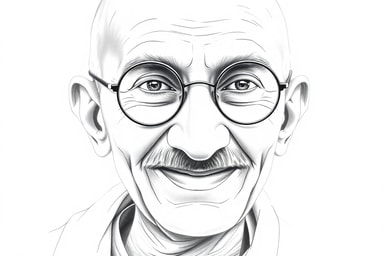
Identify the leader depicted in the sketch and name the category of Directive Principles that is based on his ideas.State two guidelines or principles included in the Constitution that were inspired by this leader’s plan for social development.

Share
Explore
 Question Paper
Prepared by: learnloophq@gmail.com
Chapter: 13. Directive Principles Of State Policy
Practice Exam: Directive Principles of State Policy
Subject: Civics
Grade Level: Middle School
Total Marks: 50
Time Allowed: 1.5 Hours
Section A: Multiple Choice Questions (MCQs)
Choose the correct option for each of the following questions. (4 × 1 = 4 Marks)
Section B: Fill in the Blanks
Fill in the blanks with the correct terms. Use only the context provided. (4 × 1 = 4 Marks)
Section C: True or False
State whether the following statements are True or False. Rewrite the false statements correctly. (4 × 2 = 8 Marks)
Section D: Explanation of Terms
Explain the following terms in one or two sentences based on the text. (3 × 2 = 6 Marks)
Section E: Differentiate Concepts
Differentiate between the following concepts. (2 × 3 = 6 Marks)
Section F: Short Answer Questions
Answer the following questions briefly in 2 to 3 sentences. (4 × 3 = 12 Marks)
Section G: Long Answer Questions
Answer the following questions in detail. (2 × 5 = 10 Marks)
Section H: Observation and Source-Based Questions
Study the illustration below and answer the questions that follow. (2 + 2 = 4 Marks)
A pencil sketch of Mahatma Gandhi wearing round spectacles and showing a gentle smile.
Want to print your doc?
This is not the way.
This is not the way.

Try clicking the ··· in the right corner or using a keyboard shortcut (
CtrlP
) instead.