Skip to content
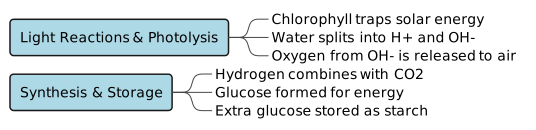
Photosynthesis begins when chlorophyll in chloroplasts traps solar energy and becomes energised. This energy is then used to split water molecules into hydrogen (H⁺) and hydroxyl (OH⁻) radicals in a process called photolysis. The hydroxyl radicals release oxygen into the air, while the hydrogen combines with carbon dioxide to synthesize glucose. The glucose produced is either immediately used by cells for energy or transported to other parts of the plant through the phloem. Any extra glucose is converted and stored in the form of starch in different plant tissues.
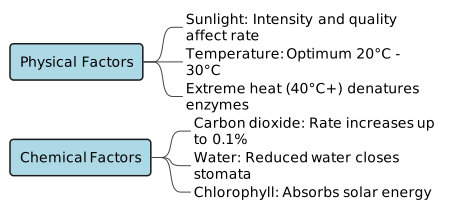
The rate of photosynthesis is heavily influenced by external factors like sunlight, temperature, carbon dioxide, and water. Sunlight duration, intensity, and quality affect the rate, with too much bright light actually destroying chlorophyll. Temperature has an optimum range of 20°C to 30°C, and extreme temperatures slow down the process because enzymes get denatured at 40°C and above. Carbon dioxide concentration increases the rate up to 0.1%, but higher concentrations cause a decrease. Lastly, a reduced availability of water causes stomata to close, which limits carbon dioxide entry and drops the rate of photosynthesis.
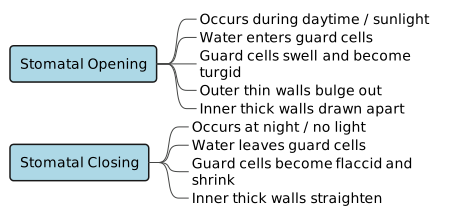
The opening and closing of stomata is controlled by the guard cells based on light and water availability. In sunlight, water from the surrounding epidermal cells enters the guard cells, causing them to swell and become turgid. As they swell, their thin outer walls bulge outward, pulling the inner thick walls apart and widening the stomatal pore. Conversely, when water leaves the guard cells, they become flaccid and shrink. This causes the inner thick walls to straighten, which closes the stomatal opening to prevent water loss.
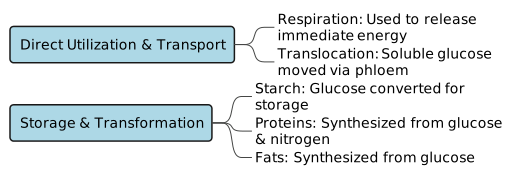
Glucose synthesized during photosynthesis has several important pathways and functions within the plant. A portion of this glucose is immediately used by the plant cells to release energy during respiration. Another portion of glucose is converted into insoluble starch and sugars for long-term storage. Furthermore, glucose is utilized along with nitrogen compounds absorbed by roots to synthesize amino acids, proteins, and fats. Finally, because glucose is soluble in water, it is easily translocated to other parts of the plant through the phloem tissue.
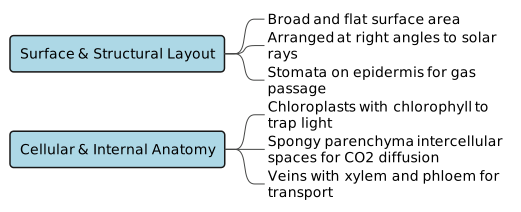
Leaves possess several unique adaptations to efficiently perform the process of photosynthesis. They contain chloroplasts filled with chlorophyll, which is the green pigment responsible for trapping solar energy. Their broad and flat surfaces maximize the absorption of sunlight and carbon dioxide. Additionally, they are arranged at right angles to solar rays to expose the maximum possible surface area to light. Finally, stomata on their epidermis allow for gas exchange, while large intercellular spaces in the spongy parenchyma help carbon dioxide diffuse easily to every cell.

Share
Explore
 Answer key
Prepared by: learnloophq@gmail.com
Chapter: 04. Photosynthesis
Question 1: Describe the step-by-step chemical and biological process of photosynthesis.
Question 2: Discuss how different environmental factors affect the rate of photosynthesis in green plants.
Question 3: How do guard cells regulate the opening and closing of stomata?
Question 4: What is the fate of glucose once it is synthesized during photosynthesis?
Question 5: Explain the adaptations of a leaf that make it the main photosynthetic organ in green plants.
Want to print your doc?
This is not the way.
This is not the way.

Try clicking the ··· in the right corner or using a keyboard shortcut (
CtrlP
) instead.