Skip to content
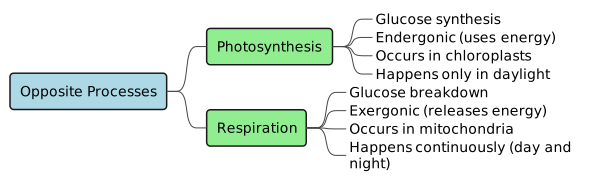
Why are photosynthesis and respiration considered opposite processes?Photosynthesis and respiration are considered opposite processes because of their chemical pathways and energy dynamics. During photosynthesis, glucose is synthesised from carbon dioxide and water inside the chloroplasts using solar energy. Conversely, respiration involves the breakdown of glucose into carbon dioxide and water inside the mitochondria to release energy. Photosynthesis is an endergonic process because it consumes energy, whereas respiration is an exergonic process because it releases energy. Furthermore, photosynthesis occurs only in green plant parts during the daytime, while respiration occurs in all living cells continuously during both day and night.
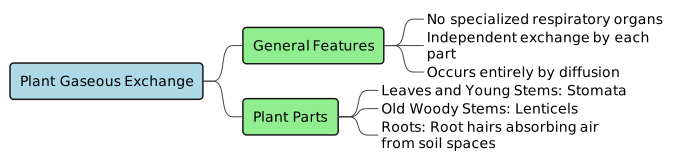
 Explain how gaseous exchange takes place in different parts of a plant.Plants do not possess specialized respiratory organs, so each part of the plant independently takes in oxygen and releases carbon dioxide. Gaseous exchange throughout the plant body takes place entirely by the physical process of diffusion. In leaves and young stems, this exchange of gases occurs through tiny pores called stomata. In older, woody stems, specialized structures called lenticels develop below the bark to facilitate gas exchange. Additionally, root hairs extending into the air spaces between soil particles absorb oxygen for root respiration.
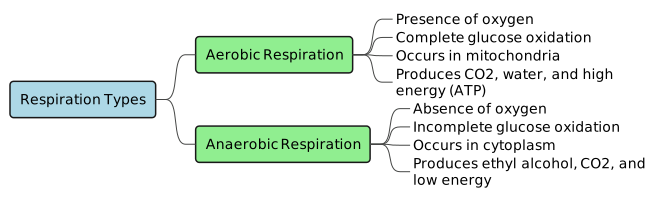
 Explain the differences between aerobic and anaerobic respiration in plants and other organisms.Aerobic respiration takes place in the presence of oxygen, resulting in the complete oxidation of glucose inside the mitochondria. This process produces carbon dioxide, water, and a large amount of energy stored as ATP. In contrast, anaerobic respiration occurs in the absence of oxygen and is completed in the cell cytoplasm. It leads to the incomplete breakdown of glucose, producing ethyl alcohol, carbon dioxide, and very little energy. While most plants and animals carry out aerobic respiration, anaerobic respiration is restricted to organisms like yeast and certain bacteria.
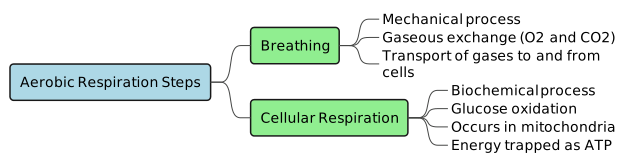
 Describe the two major steps involved in aerobic respiration.Aerobic respiration is completed in two major steps, which are breathing and cellular respiration. Breathing is a physical or mechanical process that involves the exchange of respiratory gases between the atmosphere and the cells. During this step, oxygen is taken into the cells, and carbon dioxide is transported and removed from them. Cellular respiration is a biochemical process where glucose is oxidised in the presence of oxygen to release water, carbon dioxide, and energy. This released energy is then trapped and stored in the cells as energy-rich adenosine triphosphate (ATP) molecules.

Share
Explore
 Answer key
Prepared by: learnloophq@gmail.com
Chapter: 05. Respiration In Plants
Want to print your doc?
This is not the way.
This is not the way.

Try clicking the ··· in the right corner or using a keyboard shortcut (
CtrlP
) instead.