Skip to content
a. Metre (m)b. Square metre (m²)c. Cubic metre (m³)d. Litre (L)a. Waterb. Kerosenec. Mercuryd. Alcohola. 1.20b. 920c. 2700d. 19300a. Keroseneb. Mercuryc. Waterd. Alcohola. Its mass decreases.b. Its molecules get closer to each other.c. Its volume decreases.d. Its molecules speed up and spread apart, increasing its volume.

Share
Explore
 Question Paper
Prepared by: learnloophq@gmail.com
Chapter: 01. Physical Quantities And Measurement
CLASS VII: SCIENCE
CHAPTER: PHYSICAL QUANTITIES AND MEASUREMENT
PRACTICE EXAM PAPER
Time Allowed: 1.5 Hours
Maximum Marks: 50
SECTION A: MULTIPLE CHOICE QUESTIONS (MCQs)
[5 × 1 = 5 Marks]
Q1. What is the standard SI unit of volume?
Q2. Which of the following liquids forms a convex meniscus when poured into a measuring cylinder?
Q3. What is the density of aluminium in SI units ( )?
)?
Q4. To find the volume of an irregular solid that dissolves in water (such as a lump of copper sulphate), which liquid should be used in the measuring cylinder?
Q5. When the temperature of a substance increases, its density decreases because:
SECTION B: FILL IN THE BLANKS
[5 × 1 = 5 Marks]
Q1. The internal volume of a container is called its _ _ _ _ _ _ _ _ _ _ _ _ _ _.
Q2. In CGS and SI units conversion,  is equal to _ _ _ _ _ _ _ _ _ _ _ _ _ _ .
Q3. The distance travelled by an object per unit time is known as the _ _ _ _ _ _ _ _ _ _ _ _ _ _ of the object.
Q4. To measure the volume of an irregular solid which is too large to be immersed in a measuring cylinder, an _ _ _ _ _ _ _ _ _ _ _ _ _ _ is used.
Q5. The approximate surface area of an irregular flat object, such as a leaf, can be estimated using a _ _ _ _ _ _ _ _ _ _ _ _ _ _.
SECTION C: TRUE OR FALSE
[5 × 1 = 5 Marks]
Q1. Equal volumes of two different substances will always have the exact same mass.
Q2.  is exactly equal to
  .
Q3. A physical balance is used to directly measure the volume of an irregular solid.
Q4. Water and kerosene form a concave meniscus when poured into a measuring cylinder.
Q5.
.
Q3. A physical balance is used to directly measure the volume of an irregular solid.
Q4. Water and kerosene form a concave meniscus when poured into a measuring cylinder.
Q5.  of iron contains more matter than of peas.
SECTION D: EXPLAIN THE TERMS
[3 × 2 = 6 Marks]
Q1. Unit Cube
Q2. Meniscus
Q3. Density
SECTION E: DIFFERENTIATE BETWEEN CONCEPTS
[2 × 3 = 6 Marks]
Q1. Concave Meniscus and Convex Meniscus (Give definition and one liquid example for each).
Q2. Volume and Area (State definitions and their respective SI units).
SECTION F: DIAGRAM-BASED QUESTIONS
[1 × 4 = 4 Marks]
A transparent graduated cylinder showing a downward-curving liquid boundary inside.
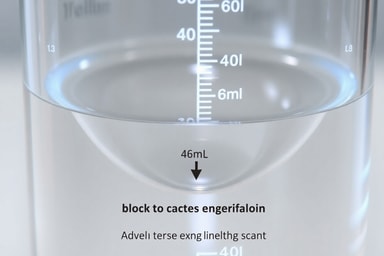
Based on the diagram description above, answer the following questions:
Q1. Identify the type of meniscus formed by the liquid in the measuring cylinder.
Q2. Name one liquid that would form this specific curve.
Q3. According to the description, what is the correct volume reading of the liquid?
Q4. Briefly state how the correct reading of such a meniscus should be taken.
SECTION G: SHORT ANSWER & NUMERICAL QUESTIONS
[4 × 3 = 12 Marks]
Q1. A measuring cylinder contains  of water. When a stone of mass
  is lowered into the measuring cylinder, the water level rises to
  . Calculate the density of the stone in
  .
.
Q2. An aluminium block has a density of  and a mass of
  . Calculate its volume in
  . (Hint: Convert the density into SI units first).
Q3. A train takes 4 hours to travel from Delhi to Chandigarh. Assuming that the train is moving with a uniform speed of  , calculate the distance between Delhi and Chandigarh.
Q4. Why is it important for chemists, engineers, and architects to have an understanding of density?
SECTION H: LONG ANSWER & EVERYDAY USE QUESTIONS
[2 × 3.5 = 7 Marks]
Q1. Describe an activity to estimate the area of an irregular leaf using a graph paper. Explain if this method provides the exact surface area of the leaf.
Q2. A person is driving a car on a highway to reach their destination. Explain the term speed, state its SI unit, and list other commonly used units of speed. If the driver travels  in 2 hours, calculate the speed of the car.
Want to print your doc?
This is not the way.
This is not the way.
Try clicking the ··· in the right corner or using a keyboard shortcut (
CtrlP
) instead.