Skip to content
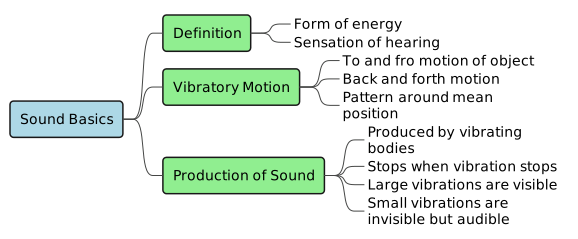
Understanding Sound: Sound is a form of energy that produces the sensation of hearing in our ears. Every sound has its own characteristic quality that helps us identify its source.Vibratory Motion: The motion of an object in which a part of the object moves to and fro or back and forth in a fixed pattern about its mean position is called vibratory motion.Mechanism of Sound Production:Sound is produced by a body when it vibrates.Sound can be heard only as long as the object continues to vibrate.Visible vs. Invisible Vibrations: Large vibrations can be visually observed, whereas small vibrations cannot be seen but the sound produced by them can still be heard.
The Vibrating Ruler:Setup: Hold one end of a plastic ruler firmly on a table with one hand. Flick the free end of the ruler with the other hand.Observation: The ruler vibrates rapidly and produces a humming sound. Touching the vibrating part of the ruler stops the vibration and immediately silences the sound.Conclusion: A vibrating ruler produces sound.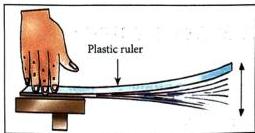
Fig. 6.1 A vibrating rulerThe Vibrating Drum:Setup: Place some ping-pong balls on the tightly stretched skin of a drum and strike it with a drum striker.Observation: Along with the sound produced by the drum, the ping-pong balls jump up and down.Conclusion: The jumping balls show that the skin of the drum is vibrating, indicating that sound production is tied directly to the state of vibration of the drum’s membrane.
Fig. 6.1 A vibrating rulerThe Vibrating Drum:Setup: Place some ping-pong balls on the tightly stretched skin of a drum and strike it with a drum striker.Observation: Along with the sound produced by the drum, the ping-pong balls jump up and down.Conclusion: The jumping balls show that the skin of the drum is vibrating, indicating that sound production is tied directly to the state of vibration of the drum’s membrane.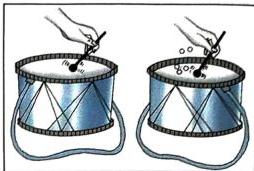
Fig. 6.2 The drum vibrates when struck and produces sound.
Fig. 6.2 The drum vibrates when struck and produces sound.
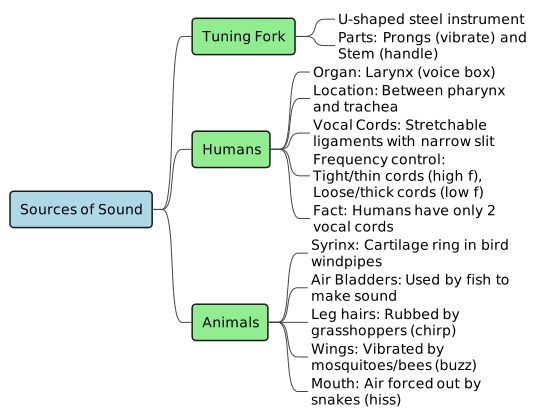
Definition: A U-shaped instrument usually made of steel, used in laboratories for producing precise sound vibrations.Parts: Consists of two arms called prongs and a handle called the stem.Working: When any of the prongs are struck gently on a rubber pad, they begin to vibrate and produce sound.
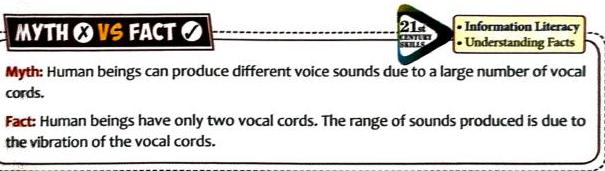
The Larynx: Humans produce sound (shouting, groaning, singing) using the larynx or voice box, which is located between the pharynx and the trachea.Vocal Cords:The larynx contains a pair of stretchable ligaments called vocal cords.A narrow slit is present between the two vocal cords for the passage of air.When air from the lungs passes through this slit, the vocal cords vibrate and produce sound.Frequency Control: Muscles attached to the vocal cords can stretch or loosen the ligaments, changing the frequency of the vibrations:High Frequency: Cords are tight and thin.Low Frequency: Cords are loose and thick.Gender Differences: The larynx is usually bigger in males than in females. Because of this, the voice of a woman is typically shriller (higher frequency/pitch) compared to a man.Anatomical Fact: Human beings have only two vocal cords. The wide range of complex sounds is due to the flexible physical manipulation and varying vibrations of these two cords, rather than having a large number of them.
Lungs & Vocal Cords: Animals with lungs (such as frogs and almost all mammals) produce sound by blowing air through their vocal cords.Larynx Position: Most animals cannot make complex speech sounds like humans because their larynx lies at a much higher position in their windpipe.Birds: Have a specialized ring of cartilage called the syrinx located at the lower part of their windpipes. Sound is produced when air passes through it. Some birds have two parts in their voice box, allowing them to produce two musical notes at the same time.Fish: Utilize air bladders that produce sound when vibrated.Insects:Grasshoppers: Produce a chirping sound by rubbing the stiff hair on their legs.Mosquitoes and Bees: Produce a buzzing sound by rapidly vibrating their wings.Snakes: Hiss by forcing air rapidly out of their mouths.
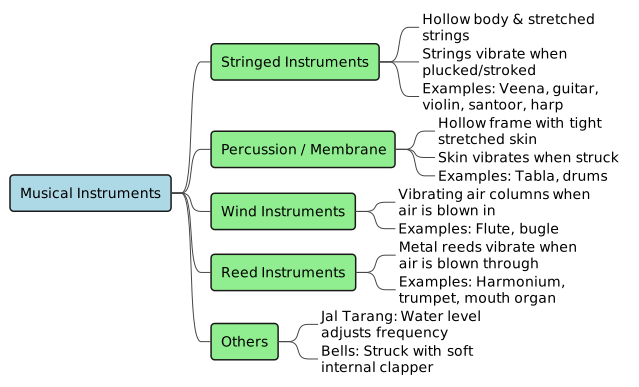
Structure: Consist of a hollow body and taut strings.Vibration Source: The stretched strings vibrate when plucked by fingers or stroked with a bow.Resonance: The hollow body contains trapped air (forming an air column) which enhances and amplifies the sound produced by the strings.Examples: Veena, santoor, guitar, harp, tanpura, violin.
Structure: Consist of a hollow frame with a skin or membrane stretched tightly across its openings.Vibration Source: The stretched skin produces vibrations when struck with hands or sticks.Examples: Tabla, drums.
Structure: Hollow tubes that trap columns of air.Vibration Source: Sound is produced due to the vibration of these air columns when a musician blows air into them.Examples: Flute, bugle.
Structure: Contain thin metal reeds inside.Vibration Source: Sound is produced when air is blown directly through these metal reeds, causing them to vibrate.Examples: Harmonium, trumpet, mouth organ.
Jal Tarang: Consists of several musical cups filled with varying levels of water. The frequency of each cup is adjusted by changing the amount of water inside, altering the vibrating medium.Bells: Usually made of metal, struck with a soft internal clapper to produce clear tones.Manjira and Ghatam: Mud pots (ghatam) and metallic cymbals (manjira) that produce musical sounds when struck against each other or with a stick.
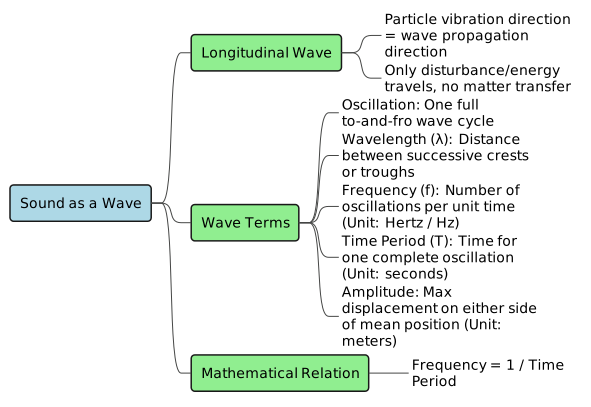
Propagation Mechanism: When an object vibrates, it sets adjacent particles in the surrounding air into vibration. These particles transfer their kinetic energy to neighboring particles, which in turn pass it along.Energy vs. Matter Transfer: When a sound wave moves, there is a transfer of energy, but no transfer of matter. For example, the sound of a ringing bell does not carry the actual air particles from the bell to our ears; only the physical disturbance (vibrational energy) travels through the air.Longitudinal Wave: A wave in which the particles of the medium vibrate back and forth in the same direction as that of the sound wave’s propagation.
Oscillation: The complete to-and-fro motion of a particle when one full wave cycle is completed. On a wave graph, a cycle starting from point A and reaching point C represents one full oscillation.Wavelength: The physical length of one complete wave cycle along the x-axis. It is the distance between two successive crests (peaks) or troughs (valleys) and is represented by the Greek letter lambda (λ).Frequency: The total number of oscillations made by a wave in a unit of time (typically one second).SI Unit: Hertz (Hz).Example: A tuning fork with a frequency of 384 Hz makes 384 oscillations per second when struck.Time Period: The time taken by a wave to complete one single oscillation. It is measured in seconds (s) and denoted by the letter T.Relationship between Frequency and Time Period: Frequency and Time Period are inversely proportional to each other.  Example: If a wave has a frequency of 1000 Hz, its time period is 1 / 1000 = 0.001 seconds.Amplitude: The maximum displacement of a vibrating particle of the wave on either side of its central mean (equilibrium) position. Its SI unit is the metre (m). Two waves can have the exact same frequency but completely different amplitudes.
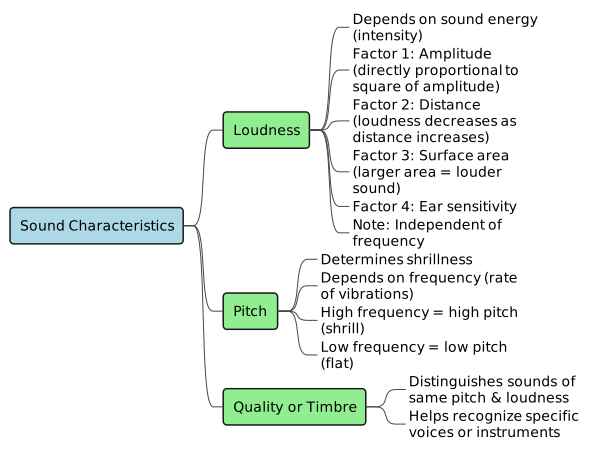
Factors Governing Loudness:Amplitude: Loudness is directly proportional to the square of the amplitude of vibration. If the amplitude of vibration is doubled, the loudness of the sound increases fourfold (2² = 4). Large-amplitude vibrations produce loud sounds, while small-amplitude vibrations produce soft sounds.Distance from the Source: As the physical distance between the listener and the sound source increases, the sound energy spreads out, and the perceived loudness decreases.Area of the Vibrating Body: Larger vibrating surfaces produce louder sounds because they move more air. A large drum produces a much louder sound than a miniature toy drum.Sensitivity of the Ear: Loudness also depends subjectively on how sensitive the listener’s ears are to the incoming sound frequency.Crucial Rule: Loudness does not depend on the frequency of the vibrating particle.
Relation to Frequency: Pitch depends entirely on the frequency (rate of vibrations).High-Pitched / Shrill Sound: Produced by objects vibrating at a high frequency (e.g., a whistling bird, a woman’s voice).Low-Pitched / Flat Sound: Produced by objects vibrating at a low frequency (e.g., a roaring lion, a deep male voice).
Definition: Quality is the characteristic of sound that enables us to distinguish between two sounds that have the same pitch and loudness but are produced by different sources.Application: It is timbre that helps us instantly recognize a friend’s voice over the phone or differentiate between a violin and a flute playing the exact same musical note at the same volume.
The Electric Bell Jar Experiment:Setup: An electric bell is suspended inside a glass bell jar connected to a vacuum pump. The bell is turned on, and its sound is heard clearly.Procedure: Gradually remove the air from the jar using the vacuum pump.Observation: As the air is pumped out, the sound of the bell becomes fainter and fainter, eventually becoming completely inaudible, even though the metal hammer is still seen striking the gong.Conclusion: Sound cannot travel through a vacuum; it requires air as a medium.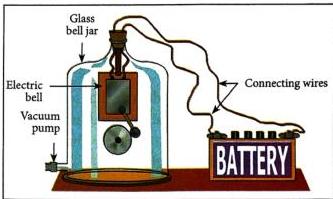
Fig. 6.13 Sound cannot travel through vacuum.The Tumbler and Phone Experiment:Setup: Place a mobile phone inside a glass tumbler. Ring it from another phone; the ring is heard clearly because air is present inside.Procedure: Cover the tumbler with a cardboard lid, insert a plastic straw tightly through a hole, and suck the air out of the tumbler while the phone is ringing.Observation: The ring volume decreases as the air is withdrawn. If all air could be sucked out, no sound would be heard.Conclusion: Sound propagation stops when the transmitting material medium (air) is absent.
Fig. 6.13 Sound cannot travel through vacuum.The Tumbler and Phone Experiment:Setup: Place a mobile phone inside a glass tumbler. Ring it from another phone; the ring is heard clearly because air is present inside.Procedure: Cover the tumbler with a cardboard lid, insert a plastic straw tightly through a hole, and suck the air out of the tumbler while the phone is ringing.Observation: The ring volume decreases as the air is withdrawn. If all air could be sucked out, no sound would be heard.Conclusion: Sound propagation stops when the transmitting material medium (air) is absent.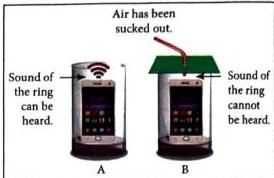
Fig. 6.14 Sound needs a medium to propagate.
Fig. 6.14 Sound needs a medium to propagate.
Propagation through Solids: Sound travels extremely well through solids.Proof: If you press your ear to one end of a wooden table and have a friend tap gently on the other end, you will hear the tapping sound loud and clear through the wood.Propagation through Liquids: Sound can travel easily through liquids.Proof: Place a squeaking toy wrapped in a waterproof plastic bag inside a bucket of water. Press your ear to the outer side of the bucket and squeeze the toy. The sound travels through the water and bucket wall to reach your ear.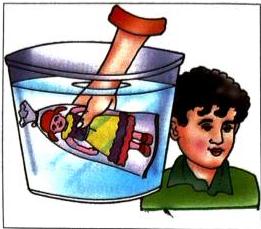
Fig. 6.15 Sound can travel through liquids.Propagation through Gases: Sound travels slowest through gases because the gas molecules are spread far apart.
Fig. 6.15 Sound can travel through liquids.Propagation through Gases: Sound travels slowest through gases because the gas molecules are spread far apart.
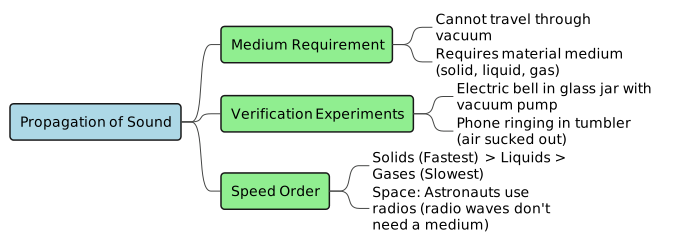
Astronauts in Space: Space is a near-perfect vacuum. Because of this, astronauts cannot speak directly to each other through the air. Instead, they use radios. Radio waves do not require a material medium to propagate and can travel through space. However, astronauts can see each other without radio because light can travel through vacuum.

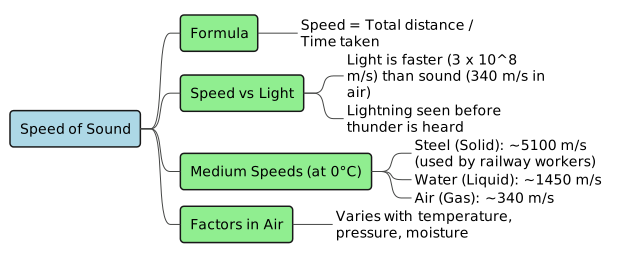
Observation: Light travels vastly faster than sound.Speed of Light in Air: 3 × 10⁸ m/s (approx. 300,000,000 m/s).Speed of Sound in Air: Approx. 340 m/s.Real-world Examples:During a thunderstorm, lightning and thunder occur at the exact same moment in the clouds. However, we see the flash of lightning instantly and hear the sound of thunder several seconds later.When watching a race start from a distance, we see the flash and smoke of the starter pistol before we hear the bang.
Temperature: Speed increases as temperature rises.Pressure: Can affect the density of the medium.Moisture (Humidity): Sound travels faster in humid air than in dry air.
Pierre Gassendi (17th Century): Made the earliest known scientific attempt to measure the speed of sound in air.Reverend William Derham (1709): Provided a highly accurate early measurement of the speed of sound as 1072 Parisian feet per second (the Parisian foot was equal to 325 mm, which is slightly longer than the modern international foot of 304.8 mm).
Railway maintenance workers utilize the high speed of sound in solids to check for oncoming trains. By placing an ear directly on the steel track, they can hear the acoustic vibrations of an approaching train much earlier than they could hear it through the air. This is because sound travels through steel at approximately 5100 m/s, compared to just 340 m/s in air.
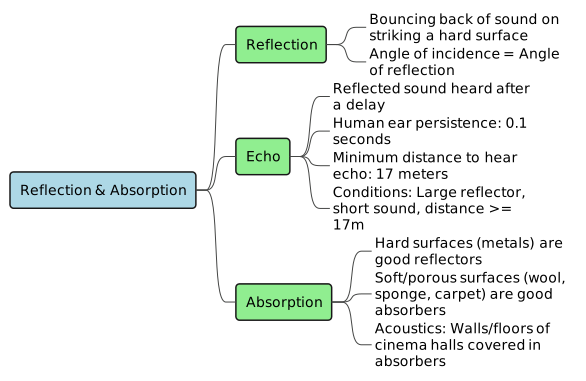
Definition: The process of bouncing back of sound waves when they strike a hard surface.Example: Singing in a small tiled bathroom sounds significantly louder and richer than singing in a large carpeted living room. This occurs because sound waves bounce off the hard, non-porous walls and rebound multiple times.Demonstration:Setup: Place a ticking clock inside an open-top glass container.Observation: You cannot hear the ticking clearly when looking over the side. However, if you hold a hard, flat glass lid tilted at a specific angle over the opening, the ticking sound becomes clear.Conclusion: Sound waves travel upward, hit the hard surface of the lid, and reflect directly toward your ear.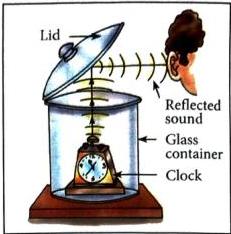
Fig. 6.16 Reflection of sound by the lid
Fig. 6.16 Reflection of sound by the lid
Definition: An echo is the distinct repetition of the original sound heard by an observer after reflection from a distant, rigid surface. Echoes occur naturally in large valleys, near high cliffs, or inside massive empty halls.Physiological Constraint (Persistence of Hearing): The human ear can distinguish two successive sounds as separate only if there is a minimum time interval of 1/10th of a second (0.1 seconds) between them. Any sound hitting our eardrums persists there for 0.1 s; sounds arriving quicker will overlap and blur.Calculating Minimum Distance for an Echo:Let  be the distance between the sound source (the observer) and the reflecting wall.The sound must travel to the wall and bounce back to the observer, making the total distance travelled equal to
  .
. 

 Result: The reflecting surface must be at least 17 metres away from the source of sound to produce a clear, distinguishable echo.Conditions Required to Hear a Clear Echo:The reflecting surface (reflector) must be large in size (e.g., a mountain side, a high-rise building wall).The original sound must be of very short duration (e.g., a single clap or shout) so it does not mix with the incoming echo.The distance of the rigid reflecting surface must be at least 17 m.
Good Reflectors: Rigid, dense, and hard surfaces such as metals, concrete, and polished glass are excellent reflectors of sound.Bad Reflectors (Good Absorbers): Materials with soft, fluffy, or highly porous surfaces absorb most of the sound waves that strike them instead of reflecting them. Examples include carpets, thick curtains, cork, paper, wool, wood, sponge, and thermocol.Acoustic Engineering of Buildings:In public spaces like auditoriums, theatres, lecture halls, and cinema halls, the walls, ceilings, and floors are coated with sound-absorbing materials (such as heavy carpeting, acoustic foam, and rough textures). This is intentionally done to prevent echoes, reduce reverberation, and stop sound from escaping into the surrounding environment.Using thick fabric curtains on residential windows is a practical way to block out unwanted external street noises.
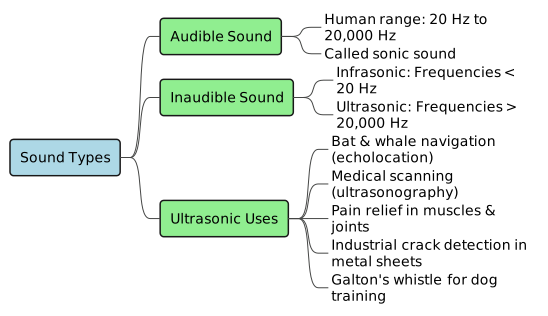
Audible Frequency Range (Sonic Sound): The human ear can perceive sounds only within the frequency range of 20 Hz to 20,000 Hz.Inaudible Sounds: Frequencies outside this 20 Hz – 20,000 Hz range cannot be heard by humans. They are classified into:Ultrasonic Sounds: Sounds with frequencies higher than 20,000 Hz.Infrasonic (Subsonic) Sounds: Sounds with frequencies lower than 20 Hz.
Animal Navigation (Echolocation): Bats emit ultrasonic sounds which bounce off surrounding structures and prey. By detecting the reflected waves, bats navigate flawlessly in pitch darkness. Whales and seals use a similar acoustic method to find their way underwater.Medical Diagnostic Imaging (Ultrasonography): High-frequency ultrasound waves can penetrate deep into tissue. By capturing and processing the reflected waves from different depths, medical machines create detailed live images (sonograms) of internal body organs, muscles, and joints. Because it does not use ionizing radiation, it is completely safe.Doppler Ultrasound: A specialized medical test used to estimate and track the flow of blood through blood vessels and heart chambers to identify cardiovascular abnormalities.Therapeutic Pain Relief: Used in physical therapy to relieve muscle spasms, joint stiffness, and deep tissue pain.Industrial Cleaning (Dishwashers): Ultrasonic vibrators agitate water and detergent at extreme frequencies, creating powerful micro-scrubbing actions that clean delicate utensils and remove grease or dirt.Non-Destructive Testing (Flaw Detection): High-frequency ultrasound waves are projected into massive metal blocks. If the block is flawless, the waves pass straight through to a detector. If there is an internal crack or air bubble, the ultrasound waves reflect back early, revealing the precise location and size of the defect.Galton’s Whistle: A specialized training whistle that produces sounds at frequencies higher than 20,000 Hz. Humans hear nothing when it is blown, but dogs can hear and respond to it.Dairy Processing: Ultrasonic vibrators are used to homogeneously mix milk powder with fat to reconstruct milk.Dentistry: Used for the precise, painless removal of tartar (calculus) from teeth.Commercial Fishing: Fishermen use sonar systems emitting ultrasound to locate and track dense shoals of fish deep in the ocean.
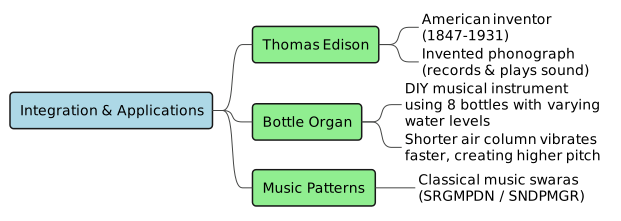
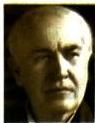
An iconic American inventor who greatly influenced modern life through his inventions.The Phonograph: One of his landmark acoustic inventions, which was the first machine capable of physically recording and playing back sound.
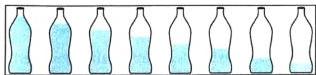
Materials: Eight identical glass bottles, a pencil, and water.Method:Line up the eight bottles.Fill the first bottle almost entirely with water.Fill each successive bottle with a slightly lower level of water than the previous one, so the eighth bottle has the least amount of water (and the longest empty space).Gently tap the bottles in succession using a pencil.Acoustic Principle: Striking the glass causes the column of air trapped inside the bottle to vibrate.High Pitch: The bottle filled with the most water has the shortest column of air above it. Shorter air columns vibrate faster, producing a higher-pitched sound.Low Pitch: The bottle with the least water has the longest column of air. Longer air columns vibrate slower, producing a lower-pitched sound.
Swaras: Indian classical music (Carnatic style) is built upon seven basic notes called swaras.Ascending Pattern (Arohanam): S - R - G - M - P - D - NDescending Pattern (Avarohanam): S - N - D - P - M - G - RVariations: By systematically altering and creating mathematical patterns out of these seven basic notes, musicians construct thousands of unique ragas and complex musical compositions.

Share
Explore
 Self Study
Prepared by: learnloophq@gmail.com
Chapter: 06. Sound
CHAPTER 6: SOUND - SELF-STUDY NOTES
1. Introduction to Sound and Vibratory Motion
Demonstrations of Vibrations
2. Sources of Sound
Sound is produced differently by living organisms and non-living laboratory instruments.
Tuning Fork
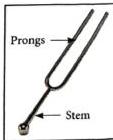
Fig. 6.3 Tuning fork
Fig. 6.3 Tuning fork
Sound Produced by Humans
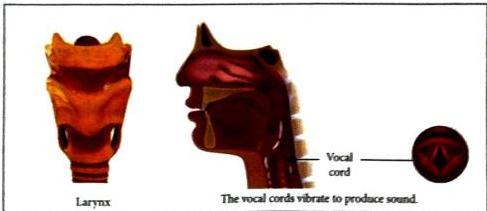
Fig. 6.4 Larynx and vocal cords
Fig. 6.4 Larynx and vocal cords
Sound Produced by Animals
3. Musical Instruments
Musical instruments produce melodic sounds through physical vibrations. They are classified into four main categories based on the specific part that vibrates:
Stringed Instruments
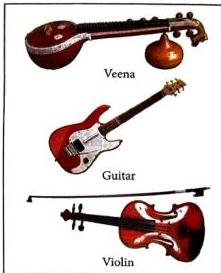
Fig. 6.5 Some stringed instruments
Fig. 6.5 Some stringed instruments
Percussion (Membrane) Instruments
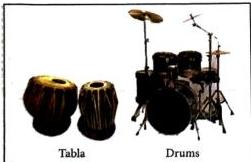
Fig. 6.6 Some percussion instruments
Fig. 6.6 Some percussion instruments
Wind Instruments
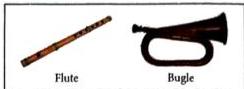
Fig. 6.7 Some wind instruments
Fig. 6.7 Some wind instruments
Reed Instruments
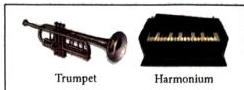
Fig. 6.8 Some reed instruments
Fig. 6.8 Some reed instruments
Other Musical Instruments
4. Sound as a Longitudinal Wave
Sound energy travels through matter in the form of waves.
Terms Related to Sound Waves
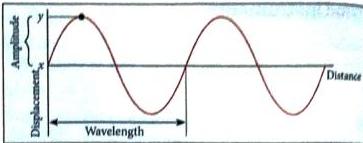
Fig. 6.9 A displacement-distance graph showing a sound wave
Fig. 6.9 A displacement-distance graph showing a sound wave
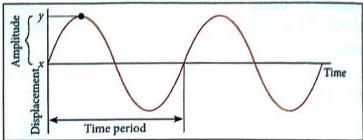
Fig 6.10 A displacement-time graph showing a sound wave
Fig 6.10 A displacement-time graph showing a sound wave
5. Characteristics of Sound
We distinguish between different sounds in our environment using three primary physical characteristics:
Loudness
Loudness is the physiological perception of how strong or soft a sound is, depending directly on the intensity (amount of energy) carried by the sound wave.
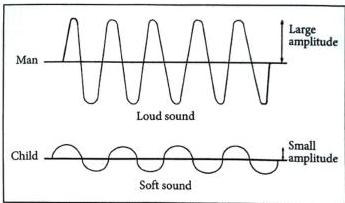
Fig. 6.11 Loudness depends on the amplitude of sound (frequency being constant).
Fig. 6.11 Loudness depends on the amplitude of sound (frequency being constant).
Pitch
Pitch is the characteristic of sound that determines its shrillness or flatness.
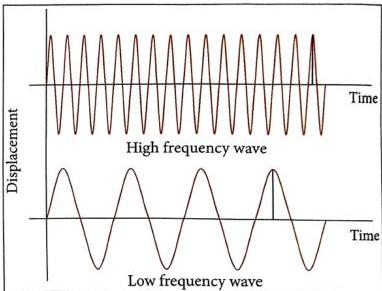
Fig 6.12 High frequency and low frequency sound waves
Fig 6.12 High frequency and low frequency sound waves
Quality (Timbre)
6. Sound Propagation and Mediums
Sound is a mechanical wave and absolutely requires a material medium to propagate. Sound cannot travel through a vacuum.
Experimental Verifications
Transmission Across Different States of Matter
Sound can travel through solids, liquids, and gases. It travels at different efficiencies depending on how closely packed the particles of the medium are:
Space Communication
7. Speed of Sound
The speed of sound represents how fast the vibrational disturbance travels through a medium.
Comparison: Speed of Light vs. Speed of Sound
Environmental Factors
The speed of sound in air is not constant; it changes based on atmospheric conditions such as:
Historical Context
Speed of Sound in Different Mediums (at 0°C)
In general, sound travels slowest in gases, faster in liquids, and fastest in solids due to the elasticity and density of molecular packing.
Solid
Speed of sound (m/s)
Liquid
Speed of sound (m/s)
Gas
Speed of sound (m/s)
Copper
3560
Alcohol
1210
Air
340
Steel
5100
Turpentine
1325
Carbon dioxide
260
Glass
5500
Water
1450
Hydrogen
1270
Practical Application: Railway Tracks
8. Reflection and Absorption of Sound
Like light, sound waves bounce off physical boundaries and follow the law where the angle of incidence equals the angle of reflection.
Reflection of Sound
Echo
Absorption of Sound
9. Audible and Inaudible Sounds
Sound vibrations span a wide range of frequencies, only a fraction of which can be detected by human ears.
Properties and Applications of Ultrasonic Sounds
Many animals can naturally produce and detect ultrasonic sounds (such as dogs, leopards, monkeys, deer, bats, whales, and seals). Humans have developed diverse technologies utilizing these high-frequency waves:
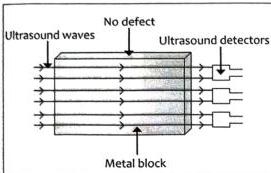
Fig. 6.18 Finding defects using ultrasound (no defect)
Fig. 6.18 Finding defects using ultrasound (no defect)
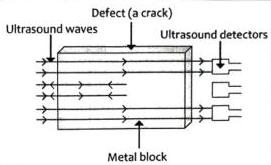
Fig. 6.18 Finding defects using ultrasound (crack defect)
Fig. 6.18 Finding defects using ultrasound (crack defect)
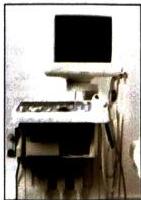
Fig. 6.17 Ultrasonography machine
Fig. 6.17 Ultrasonography machine
10. Science, History, and Cultural Integrations
Historical Spotlight: Thomas Alva Edison (1847–1931)
Learning by Doing: Making a Bottle Organ
You can easily construct a simple musical instrument to explore the physics of pitch and vibrating air columns:
Cross-Curricular Integration: Patterns in Music
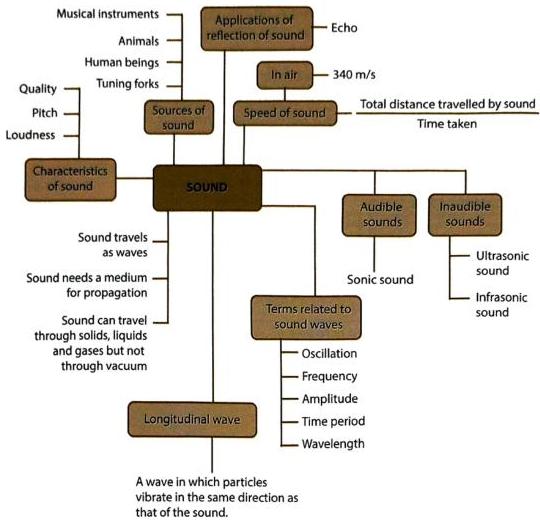
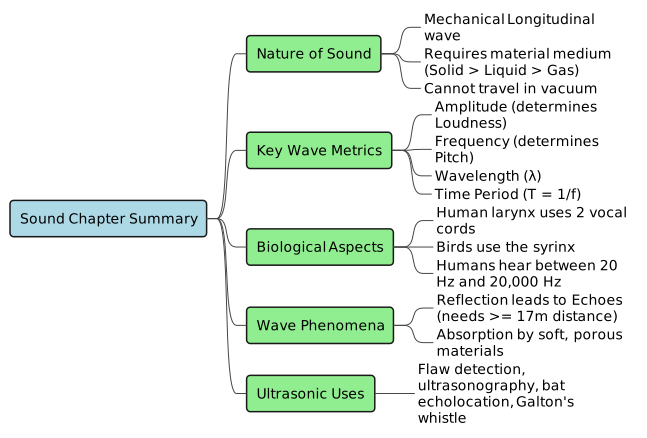
11. Comprehensive Sound Concept Map
This visual layout serves as a high-level summary of how the various components of the Sound chapter connect:
Want to print your doc?
This is not the way.
This is not the way.

Try clicking the ··· in the right corner or using a keyboard shortcut (
CtrlP
) instead.