Skip to content
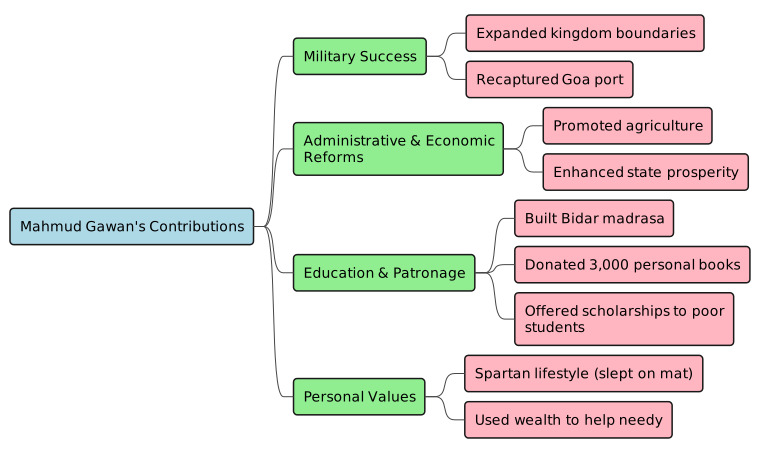
Mahmud Gawan was a highly capable wazir under Muhammad Shah III who successfully expanded the boundaries of the Bahmani Kingdom and recaptured the strategic port of Goa from Vijayanagar. As an administrator, he implemented reforms that promoted agriculture, which significantly enhanced the economic prosperity of the state. He was also a passionate patron of education, establishing a grand madrasa in the capital city of Bidar and donating his personal collection of 3,000 books to it. Despite his immense power, Gawan lived an incredibly spartan lifestyle, sleeping on a mat and dedicating his wealth to assisting the poor and needy.
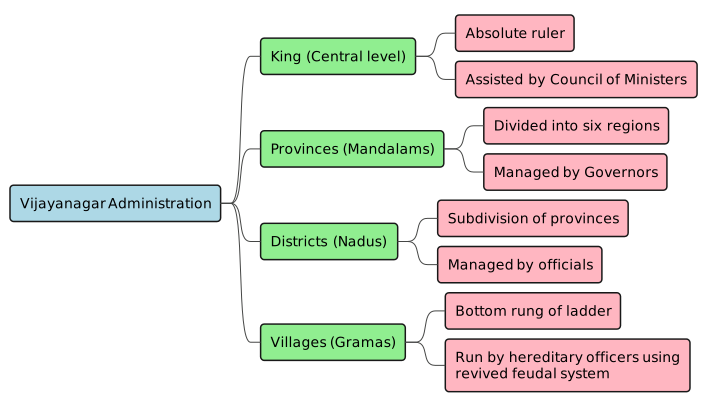
 The administrative setup of the Vijayanagar Kingdom was highly structured, with the king serving as the absolute, all-powerful ruler who was assisted by a chosen council of ministers. For efficient governance, the empire was divided into six main provinces, known as rajyas or mandalams, which were placed under the control of responsible governors. These provinces were further subdivided into districts, called nadus, which were managed by designated officials. At the bottom of the administrative hierarchy was the village, or grama, where the old feudal system was revived, and affairs were managed by hereditary officers.
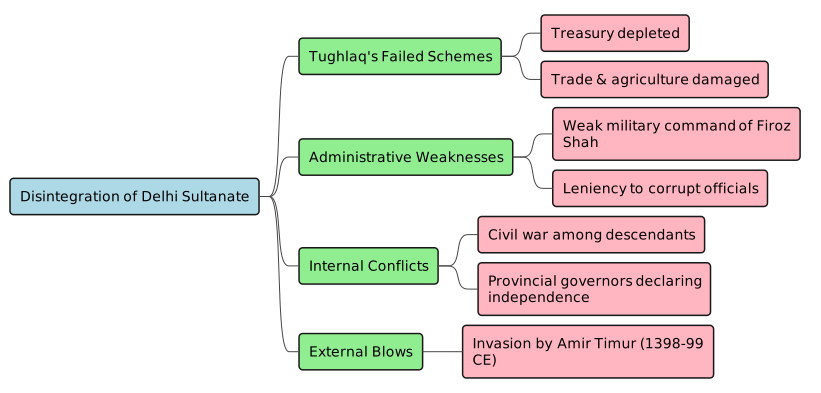
 The decline of the Delhi Sultanate was initiated by the failed visionary schemes of Muhammad bin Tughlaq, which severely depleted the state treasury and damaged agriculture and trade. This widespread economic hardship caused resentment among the public and weakened the military, leading to revolts across the empire. Additionally, Firoz Shah Tughlaq’s weak military leadership and leniency toward corrupt officials further undermined the administration. Following his death, a devastating civil war erupted among his descendants, and the final blow was dealt by Amir Timur’s destructive invasion in 1398–99 CE.
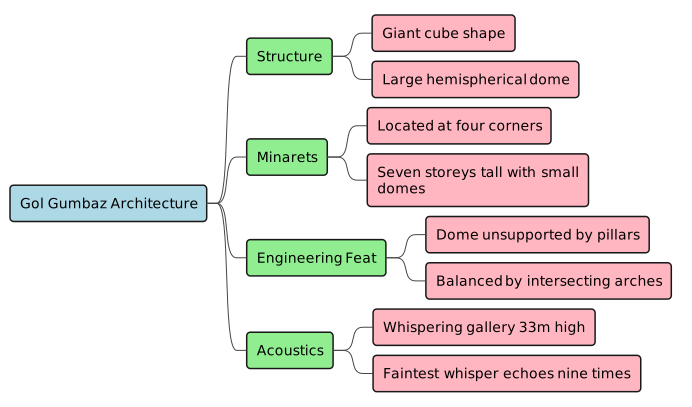
 The Gol Gumbaz is a simple yet magnificent tomb built for Adil Shah of Bijapur, featuring a massive hemispherical dome with an external diameter of 44 meters. This enormous whispering dome stands completely unsupported by pillars and is balanced structurally by intersecting arches and tall, tapering seven-storey minarets at each corner. The main body of the building is shaped like a giant cube, with a special gallery situated 33 meters above the pavement from which the dome rises. Architecturally, it is celebrated as a remarkable feat of engineering, where the unique acoustic system causes even the faintest whisper to echo nine times around the dome.
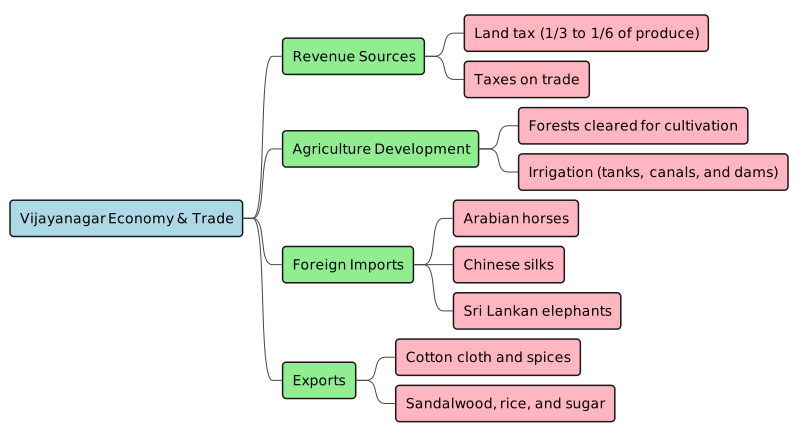
 The Vijayanagar Kingdom was highly prosperous, with its treasury enriched primarily through flourishing agriculture and extensive trade. Its two primary sources of revenue were taxes levied on land and trade, with land taxes ranging from one-third to one-sixth of the crop produce. To boost agricultural output, the rulers cleared vast forest areas and constructed irrigation facilities such as tanks, canals, and dams. The kingdom also engaged in thriving foreign trade, exporting items like cotton cloth, sandalwood, rice, sugar, and spices, while importing luxury goods like Arabian horses, Chinese silks, and Sri Lankan elephants.
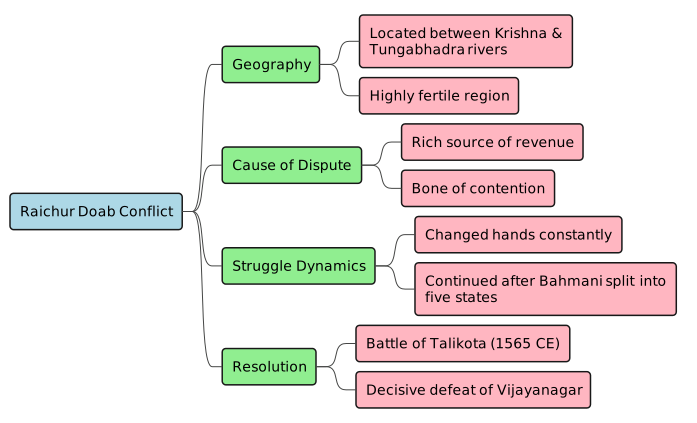
 The Raichur Doab was an exceptionally fertile region lying between the Krishna River in the south and the Tungabhadra River in the north. Because of its high agricultural productivity, it served as a rich source of revenue and became a perpetual bone of contention between the Vijayanagar and Bahmani Kingdoms. This strategically valuable territory changed hands constantly as both kingdoms engaged in a prolonged, centuries-long struggle to control it. The intense conflict persisted even after the Bahmani Kingdom fractured into five independent states, and it was only resolved with the decisive defeat of the Vijayanagar Kingdom at the Battle of Talikota in 1565 CE.

Share
Explore
 Answer key
Prepared by: learnloophq@gmail.com
Chapter: 07. Rise Of The Vijayanagar And Bahmani Kingdoms
Answer Key
Question 1: Evaluate the contributions of Mahmud Gawan to the Bahmani Kingdom.
Question 2: Describe the administrative system of the Vijayanagar Kingdom.
Question 3: Explain the factors that led to the disintegration of the Delhi Sultanate.
Question 4: Describe the architecture of the Gol Gumbaz in Bijapur.
Question 5: Discuss the economic conditions and trade activities in the Vijayanagar Kingdom.
Question 6: Analyze the historical conflict between the Vijayanagar and Bahmani Kingdoms over the Raichur Doab.
Want to print your doc?
This is not the way.
This is not the way.

Try clicking the ··· in the right corner or using a keyboard shortcut (
CtrlP
) instead.