Skip to content
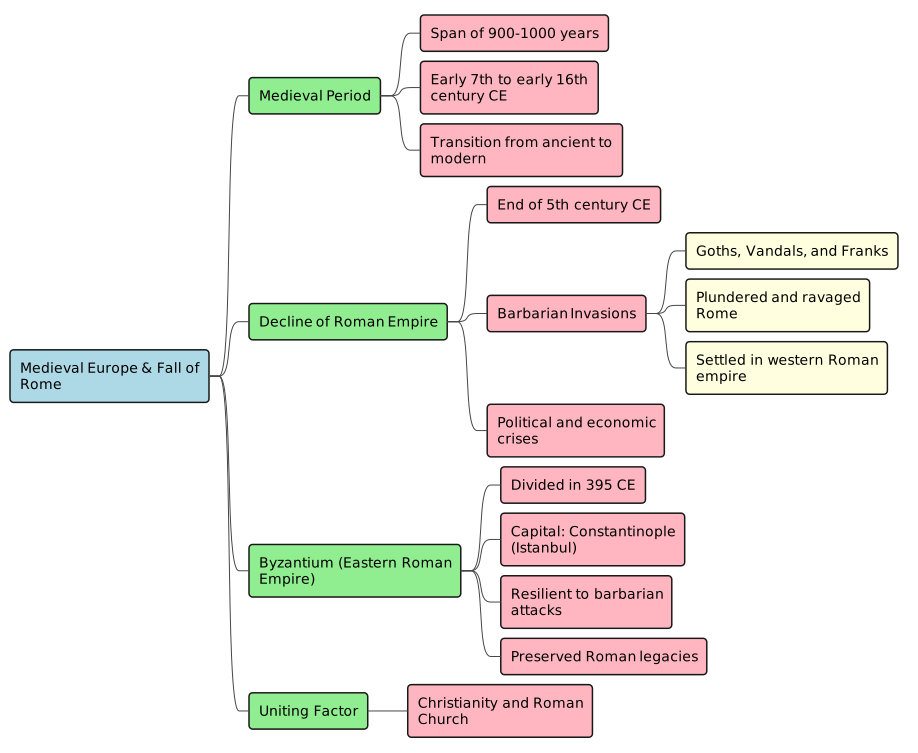
Time Span: It covered approximately 900 to 1,000 years, lasting from the early 7th century CE to the early 16th century CE.Varying Interpretations: This periodization is not universally accepted, as historians and scholars hold conflicting interpretations and opinions.
Peak Power and Global Connections: At the height of its power, the mighty Roman Empire had established important trade relations with India.The Downfall: By the end of the 5th century CE, the empire began to disintegrate.Key Causes of Decline:Barbarian Invasions: Repeated attacks by Germanic tribes, such as the Goths, the Vandals, and the Franks, dealt a devastating blow. These semi-civilized tribes plundered and ravaged Roman territory, including the magnificent city of Rome itself. They eventually settled down and took control of the western part of the Roman Empire.Internal Crises: Severe political and economic crises further destabilized and brought about the downfall of the empire.
The Division (395 CE): In 395 CE, the Roman Empire was divided into two distinct parts: the Western Roman Empire and the Eastern Roman Empire.The Eastern Empire (Byzantium):Its capital was Constantinople (known today as Istanbul).Unlike its western counterpart, the Byzantine Empire was resilient. Despite facing onslaughts from barbarian tribes, it successfully withstood the attacks and preserved the great legacies of the Roman Empire.Cultural Integration: The invading Germanic tribes had lived on the borders of the Roman Empire for more than a century. They were familiar with Roman culture and blended their own traditions and culture with Roman influences.
The Roman Church: As political unity in Western Europe fractured, new systems of government and power emerged. Christianity and the Roman Church became the primary unifying factors across the continent.
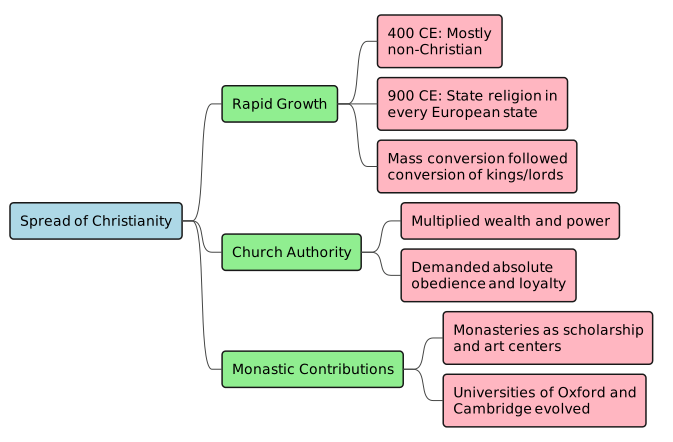
The Unharmed Church: The Germanic tribes that overran Italy left the Church of Rome intact, allowing it to retain spiritual power over all Christians.Rapid Expansion (400 CE – 900 CE):In 400 CE, the vast majority of people in Europe were non-Christians.Within 500 years (by about 900 CE), most Europeans had converted, and Christianity became the official state religion in every European state.The Role of Rulers: Mass conversions of subjects usually followed the personal conversion of a king or a feudal lord.Consolidation of Power: As Christianity spread, the wealth and power of the Church multiplied. This accumulation of power led the Church to become conservative and authoritarian, demanding absolute obedience, loyalty, and submission from every Christian.
Religious Orders: Fired by religious zeal, Christian monks organized themselves into religious orders.Monasteries as Centers of Excellence: These orders constructed large monasteries where monks resided and pursued religious missions. These sites developed into prime centers for scholarship, art, literature, and religious studies.Evolution of Universities: Majestic churches were built in cities and towns. From these monastic foundations, internationally renowned secular educational institutions, such as the University of Oxford and the University of Cambridge, eventually evolved.
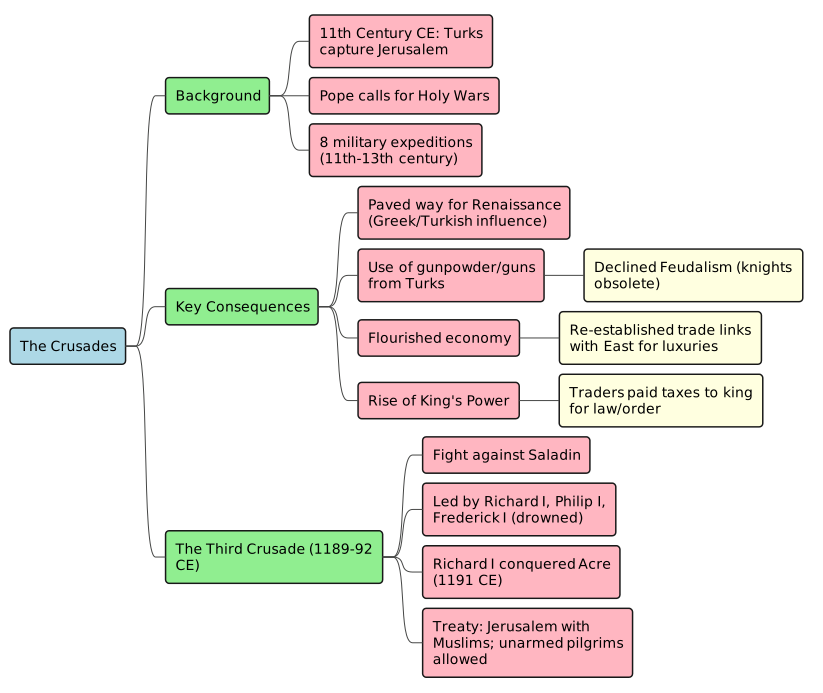
The Turkish Invasion: In the 11th century CE, Muslim Turks invaded the lands of the Christian Byzantine emperor of Constantinople and captured Jerusalem—the holy land of the Christians.The Pope’s Appeal: The Pope appealed to all Christians to launch holy wars (Crusades) to recover their sacred territory from the Turks.The Expeditions: Over two centuries, Christians launched eight major military expeditions against the Turks. While they failed to permanently secure their main objective, they radically transformed medieval Europe.
Cultural Revival and the Renaissance: While traveling to the holy land, Crusaders interacted with the highly advanced civilizations of the Greeks and the Turks. They assimilated elements of these cultures, reviving Western education and learning, which ultimately paved the way for the Renaissance.Decline of Feudalism:Crusaders learned the use of gunpowder and guns from the Turks. This technology rendered armored knights obsolete, leading to the decline of feudalism.The rise of new towns and cities allowed wealthy traders and manufacturers to demand better law and order. By paying taxes directly to the king, they helped him raise large standing armies, increasing royal authority and diminishing the power of feudal lords.Economic Prosperity: Direct trade routes with the rest of the world were re-established. Having experienced the luxurious lifestyles of the East, Europeans developed a high demand for Eastern luxury items. European merchants established prosperous trade links to satisfy this demand, causing the European economy to flourish.
Goal: An attempt by European leaders to reconquer the holy land (Jerusalem) from Saladin, the Sultan of Egypt and Syria, who had seized it from the Christians.Key Leaders:Richard I (Richard the Lionheart) of England and Philip I of France put aside their personal conflicts to lead the Crusade.Frederick I (Frederick Barbarossa), the Holy Roman Emperor, joined them but unfortunately drowned before reaching the holy land.Outcomes: Richard I successfully captured the walled Muslim city of Acre in 1191 CE (located in the Gulf of Haifa). He negotiated a treaty leaving Jerusalem under Muslim control, while securing safe, unarmed passage for Christian pilgrims to visit the holy city. The failure to fully capture Jerusalem prompted the call for a Fourth Crusade six years later.
Michelangelo was a legendary Italian sculptor, painter, architect, and poet of the Renaissance period.He is globally renowned for painting the ceiling of the Sistine Chapel, a monumental task that took him four years to complete.The masterpiece depicts over 300 individual figures and illustrates nine distinct episodes from the Book of Genesis.
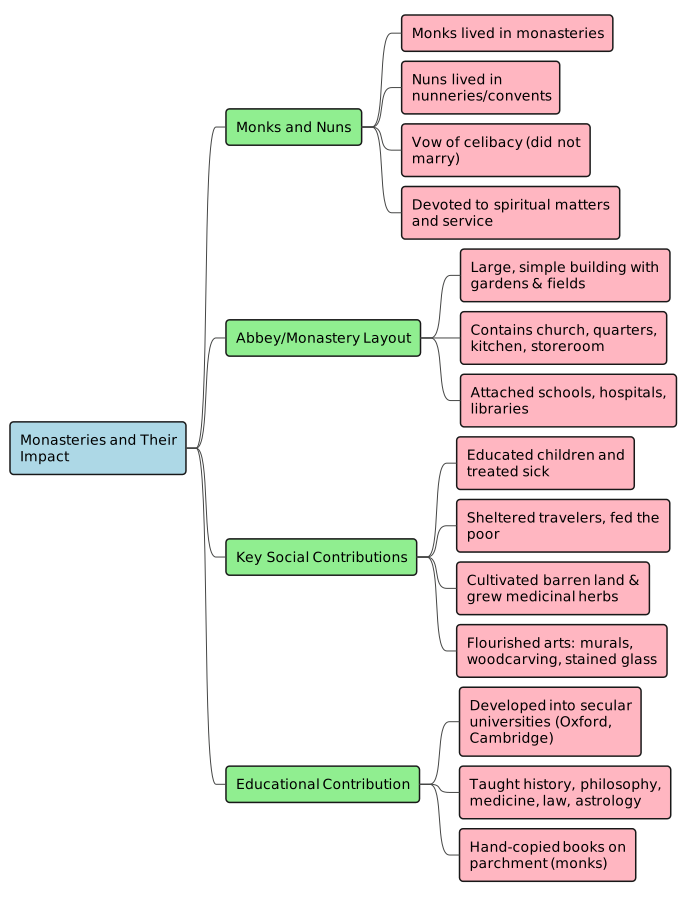
The Clergy/Priests: Their primary duties were preaching, performing religious rites, and assisting the poor and needy while living directly among the community.Monks: Pious priests who preferred remote, isolated lives lived as hermits in dedicated communities called monasteries. They did not marry and dedicated their entire lives to spiritual reflection and humanitarian service.Nuns: Women who chose a matching spiritual path. They lived in separate monasteries called nunneries or convents. They also took vows of celibacy (did not marry) and spent their lives in prayer and service to the poor, sick, and oppressed.
A central, small church.Living quarters for the monks and nuns.Kitchens and storerooms.Surrounding outdoor features: gardens, orchards, agricultural fields, and fish ponds.Associated facilities: hospitals, schools, and libraries.
Social Welfare: Monks and nuns educated local children, cared for the sick and wounded in their hospitals, sheltered travelers, and provided food and clothing to the poor.Agriculture: They brought barren lands surrounding their monasteries under cultivation, making them highly productive.Botany: By cultivating various medicinal herbs in their specialized gardens, the monasteries sparked a renewed interest in the study of botany.The Arts: Monasteries served as centers where fine arts—including architecture, mural painting, woodcarving, and stained glass painting—flourished.
Evolution of Secular Universities: The greatest long-term contribution of monasteries was in education. Monasteries laid the groundwork for prestigious secular universities like Oxford and Cambridge.Broad Curriculum: Alongside religious scriptures, these universities taught secular subjects, including history, philosophy, medicine, law, and astrology.Preservation of Literature: Because the printing press and paper had not yet been invented, monks meticulously hand-wrote books on parchment (animal skin). They made copies of the Bible, prayer books, and ancient Greek and Latin texts on secular subjects, saving vital knowledge of ancient civilizations for future generations.
Ancient Buddhist Learning Center: Taxila was a highly celebrated ancient university and Buddhist center of learning.Epic Origins: According to the Indian epic Ramayana, it was founded by Bharata, the younger brother of Rama.Historical References: Buddhist Jataka tales describe it as the capital of the Gandhara Kingdom and a globally famed center of scholarship.Modern Location: Following the partition of India, the historic ruins of Takshashila are located in modern-day Pakistan.
Germanic: Connected with or considered typical of Germany or its people.Goths, Vandals, and Franks: The major Germanic tribes that invaded the Roman and Greek empires during the Early Medieval Period.Crusades: The holy wars waged by Christians against the Turks to recover Constantinople and Jerusalem (the holy land of the Christians).Renaissance: A period in Europe (14th to 16th century CE) marked by a massive revival of interest in the classical ideas, art, and literature of ancient Greece and Rome.Feudalism: A system of government based on landholding, where kings granted land to lords in exchange for military support.Monks: Unmarried priests who lived in monasteries, dedicating their lives to God and the service of humanity.Nuns: Unmarried women who lived in convents/nunneries, dedicating their lives to prayer and helping the poor, sick, and oppressed.Abbey: A large church paired with a group of buildings where monks or nuns lived and worked.Secular: Matters or subjects that are strictly non-religious or non-spiritual.
395 CE: The Roman Empire is officially divided into eastern (Byzantium) and western parts.End of 5th Century CE: The Western Roman Empire disintegrates; Christian churches established in almost every town and city.400 CE: Most populations in Europe remain non-Christian.900 CE: Christianity becomes the official state religion in every European state.11th Century CE: Turks invade Byzantine territories and capture Jerusalem; the Pope calls for the first Holy War.11th – 13th Century CE: Christians lead eight Crusades (military expeditions) against the Turks.1189 – 1192 CE: The Third Crusade is fought under the leadership of Richard I, Philip I, and Frederick I.

Share
Explore
 Self Study
Prepared by: learnloophq@gmail.com
Chapter: 02. Spread Of Christianity
Theme 1: Medieval Europe—Rise and Spread of Christianity
Section 1: Medieval Europe and the Decline of the Roman Empire
The Medieval Period in Europe was a time of significant transition, marking the passage from the ancient to the modern world.
Chronology of the Medieval Period
The Disintegration of the Roman Empire
Byzantium: The Eastern Roman Empire
A Unifying Force
Section 2: The Spread of Christianity
The spread of Christianity stands as one of the most critical developments in early medieval Europe.
The Timeline of Mass Conversion
The Rise of Monasticism and Education
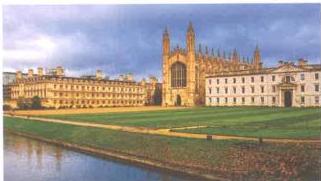
Cambridge University
Cambridge University
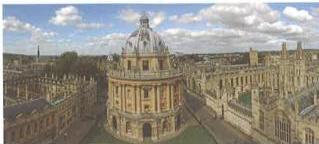
Oxford University
Oxford University
In ancient India, students were educated in a guru’s ashram. In medieval Europe, monasteries served as centres of education.
In ancient India, students were educated in a guru’s ashram. In medieval Europe, monasteries served as centres of education.
Section 3: The Crusades
Between the 11th and 13th centuries CE, the Christian world engaged in a series of holy wars known as the Crusades.
Background and Causes
Key Impacts of the Crusades
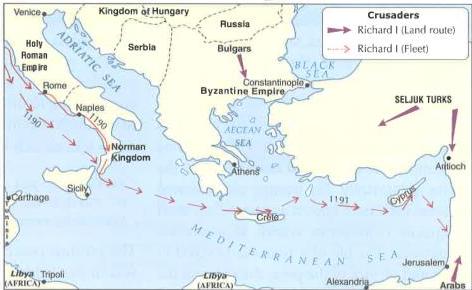
Routes Taken During the Third Crusade
Routes Taken During the Third Crusade
Did You Know? The Third Crusade (1189–1192 CE)
Biography: Michelangelo

Michelangelo
Michelangelo
Section 4: Monasteries and Their Impact
The Church of Rome fostered religious, social, and cultural unity across Western Europe during the Medieval Period. By the late 5th century CE, Christian churches were established in nearly every village, town, and city.
Priests, Monks, and Nuns
Structure of a Monastery (The Abbey)
Monasteries were simple, strong, and highly organized institutions. An abbey consisted of:
Contributions to Society and Science
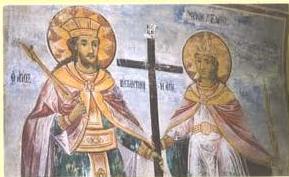
Murals in Bachkovo Monastery, Bulgaria, Europe—mural paintings flourished in the monasteries of medieval Europe.
Murals in Bachkovo Monastery, Bulgaria, Europe—mural paintings flourished in the monasteries of medieval Europe.
Contributions to Education and Knowledge
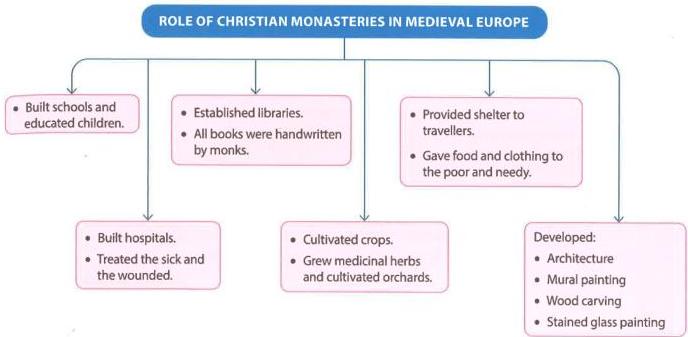
The Role of Christian Monasteries in Medieval Europe
The Role of Christian Monasteries in Medieval Europe
Knowledge of India: Taxila (Takshashila)
Section 5: Summary, Timeline, and Glossary
Important Words to Know
Historical Timeline
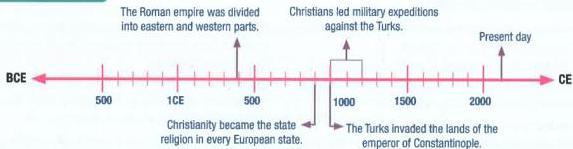
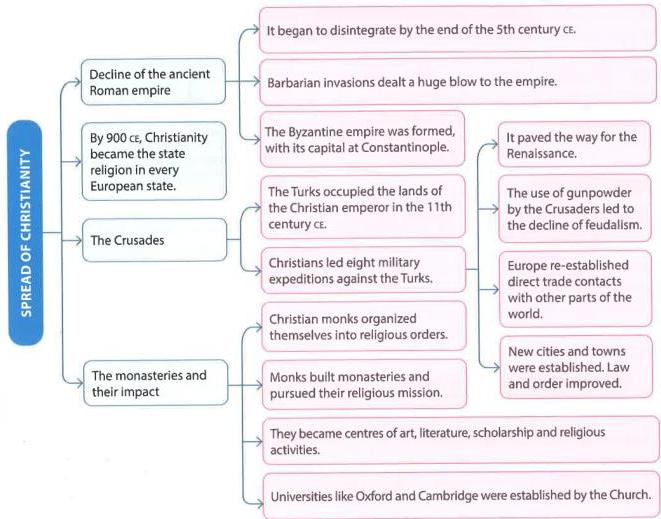
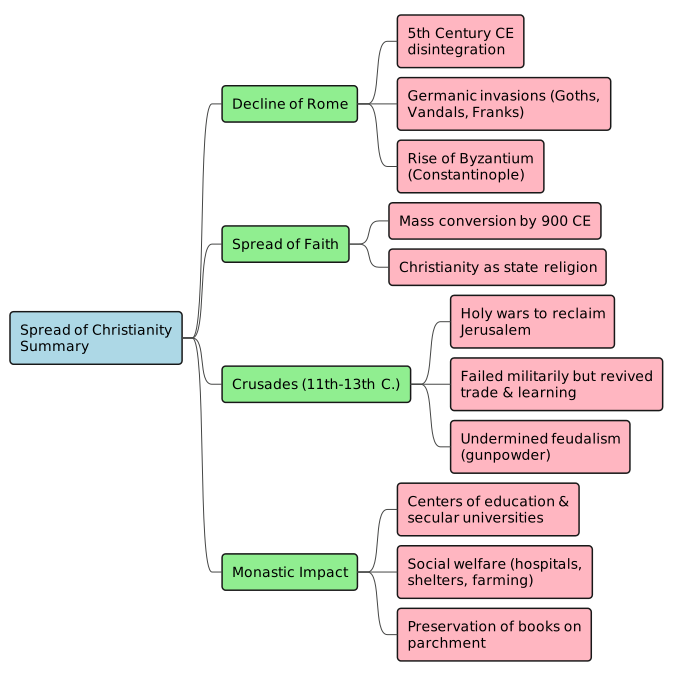
The Spread of Christianity Mind Map
The Spread of Christianity Mind Map
Want to print your doc?
This is not the way.
This is not the way.

Try clicking the ··· in the right corner or using a keyboard shortcut (
CtrlP
) instead.