Skip to content
3 MOA or 8 MOA dotOpen emitterAuto brightnessTop-load battery (CR1632)Weight: 0.9 ozExtremely lightweightLow deck heightSimple controlsOpen emitter prone to debrisAuto brightness can be inconsistent
3 MOA or 6 MOA dotTop-load CR1632 batteryManual and auto brightness modesWeight: 1.1 ozLarge, clear windowExcellent brightness rangeEasy battery accessSlightly higher deck heightOpen emitter vulnerability
2.5 MOA dotMotion sensor techTop-load CR2032 batteryAluminum housingOutstanding glass qualityWide field of viewDurable constructionExpensiveSlightly bulky for lever guns
3.25 MOA dotCR2032 battery (bottom load)Forged aluminum housingWaterproofExtremely durableProven reliabilityCrisp dotBottom battery accessNarrow window
Multi-reticle system (2 MOA dot, circle, combo)Solar + battery (CR1632)Shake AwakeRMR footprintVersatile reticle optionsLong battery lifeSolar failsafeSlight lens tintMore complex controls
2 MOA dot50,000-hour battery lifeFully enclosed emitterNight vision compatibleExceptional durabilityLong battery lifeClear glassExpensiveRequires mount

More
Share
Explore
6 Best Red Dot For Taylor's 1873 in 2026: Mounting & Compatibility
The Best Red Dot For Taylor’s 1873 isn’t just about modernizing a classic—it’s about enhancing speed, precision, and usability without compromising the rifle’s heritage. I’ve spent a significant amount of time testing optics on lever-action platforms, and the Taylor’s 1873 presents unique challenges: limited mounting space, higher bore axis considerations, and the need to maintain a natural cheek weld.
Unlike AR platforms, you’re working with scout mounts or rear sight dovetail adapters. That means optic size, weight, and deck height matter far more. A bulky optic can completely ruin handling, while poor parallax performance becomes obvious at the shorter engagement distances typical for this rifle.
In this guide, I break down six optics that actually work well on the Taylor’s 1873—based on hands-on evaluation, mounting compatibility, and real-world usability.
Top Product List: Best Red Dot For Taylor’s 1873
Burris FastFire 3

A compact, lightweight reflex optic ideal for minimalist lever gun setups where weight and profile matter most.
Specs:
Pros:
Cons:
My hands-on notes:
The FastFire 3 sits very low, which helps maintain a natural cheek weld on the Taylor’s 1873. Parallax shift is minimal inside 50 yards, though I did notice slight deviation at steeper angles. The window is small but clean, with only a mild blue tint.
What people say online:
Most shooters praise its simplicity and affordability, though some complain about brightness fluctuations in mixed lighting.
Mounting clarity:
Requires a Picatinny adapter or dovetail mount. Works well with scout-style rails.
Vortex Venom
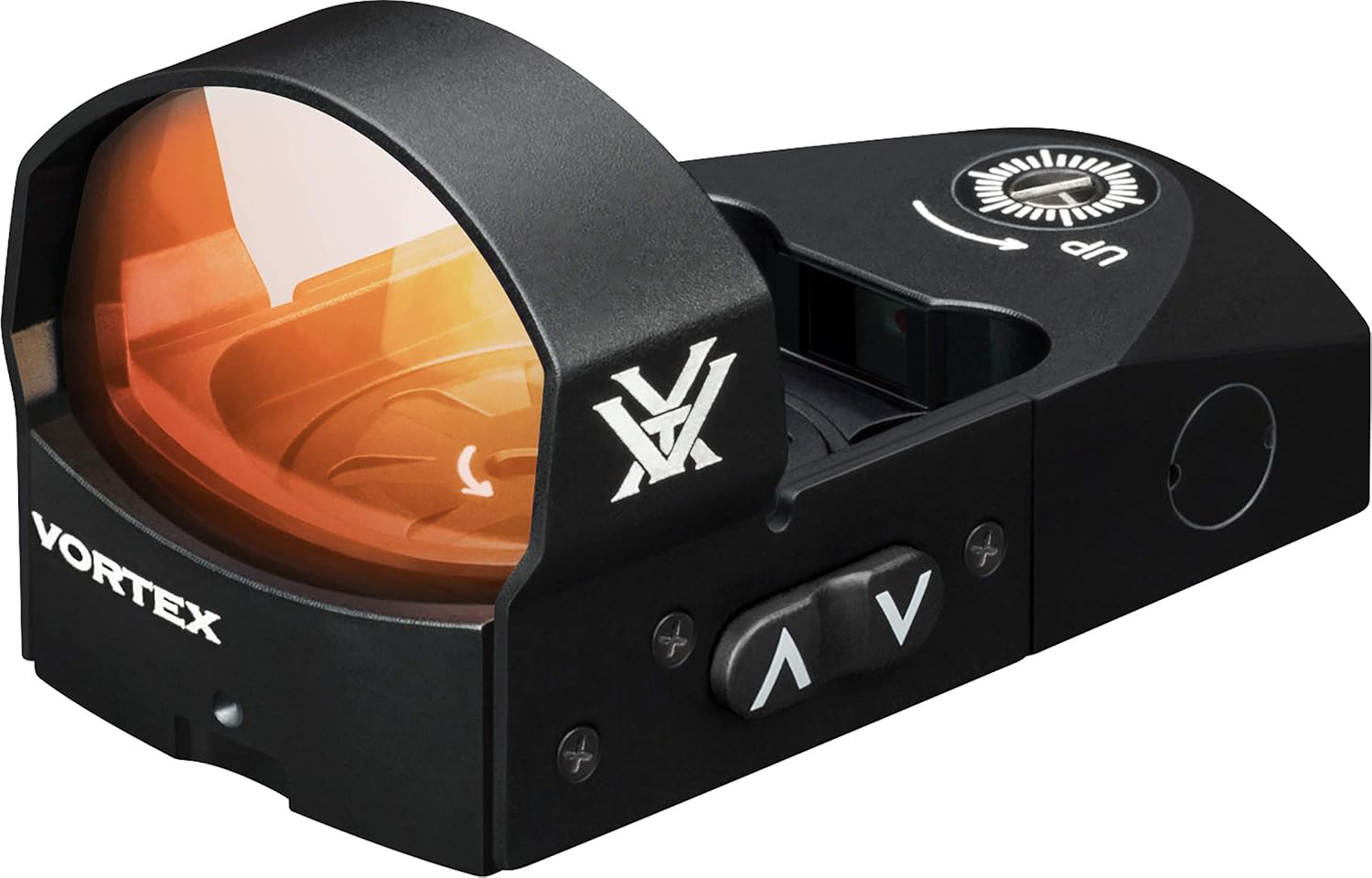
A popular open-emitter optic with a larger window and better brightness control than entry-level options.
Specs:
Pros:
Cons:
My hands-on notes:
The Venom’s window is noticeably larger than the FastFire 3, which improves target acquisition. Parallax is well-controlled at practical distances. The buttons are tactile enough even with gloves, though slightly recessed.
What people say online:
Users consistently highlight its reliability and value. Some mention minor flickering issues over time.
Mounting clarity:
Requires adapter plate or rail. Works best on a forward-mounted rail.
Leupold DeltaPoint Pro

A premium reflex optic with exceptional glass clarity and durability.
Specs:
Pros:
Cons:
My hands-on notes:
The glass is among the clearest I’ve tested—minimal tint and excellent edge-to-edge clarity. Parallax is extremely well managed. However, the taller deck height may require adjusting your cheek weld.
What people say online:
Highly praised for clarity and durability, though some users note its size on smaller firearms.
Mounting clarity:
Requires mounting plate or rail. Not direct-fit for dovetail without adapter.
Trijicon RMR Type 2

A rugged, duty-grade optic known for extreme durability and reliability.
Specs:
Pros:
Cons:
My hands-on notes:
The RMR excels in recoil handling—even on heavier loads. Parallax is negligible at typical lever gun ranges. The window is smaller, but distortion is minimal.
What people say online:
Widely regarded as the gold standard for durability. Some dislike battery replacement process.
Mounting clarity:
Uses RMR footprint. Requires adapter plate for Taylor’s 1873.
HOLOSUN 507C

A feature-rich optic offering multiple reticle options and solar backup.
Specs:
Pros:
Cons:
My hands-on notes:
The multi-reticle system is surprisingly useful on a lever gun. I preferred the circle-dot for fast acquisition. Parallax is well controlled. Slight green tint is noticeable but not distracting.
What people say online:
Users love the features and value. Some note occasional emitter glare.
Mounting clarity:
RMR footprint; requires adapter plate or rail.
Aimpoint Micro H-2

A premium enclosed emitter optic with unmatched battery life and durability.
Specs:
Pros:
Cons:
My hands-on notes:
This is the most durable optic in the lineup. The enclosed emitter eliminates occlusion issues. Parallax is nearly nonexistent at realistic distances. Controls are glove-friendly with a tactile rotary knob.
What people say online:
Highly respected for reliability and battery life. Price is the main drawback.
Mounting clarity:
Requires Micro footprint mount. Works well with scout rails.
How I Tested / Evaluation Criteria
Parallax:
I tested each optic at 10–100 yards using off-axis aiming. Lever guns amplify parallax issues due to less consistent cheek weld. The Aimpoint and RMR performed best, while budget optics showed minor deviation at extreme angles.
Co-witness / deck height:
Since the Taylor’s 1873 doesn’t support traditional co-witness, I evaluated how each optic affected cheek weld. Lower deck height optics like the FastFire 3 performed best.
Durability:
I simulated recoil with heavier .357 loads. Closed emitters handled debris better, while open emitters required more maintenance.
Battery:
Top-load designs (Venom, DPP) are far more practical. Bottom-load designs like the RMR require re-zeroing.
Brightness range:
I tested in bright sunlight and low light. Holosun and Aimpoint offered the best adaptability.
Glass quality:
Clarity, tint, and distortion were evaluated. Leupold stood out here.
Controls ergonomics:
Button feel with gloves matters. Aimpoint’s rotary knob is the easiest to use.
Mounting ecosystem:
Compatibility with dovetail and scout mounts is critical. RMR footprint optics offer the most flexibility.
How to Choose the Right Red Dot for This Gun
Choosing the right optic for a lever-action rifle like the Taylor’s 1873 requires a different mindset than modern tactical rifles. You’re balancing tradition with performance, and every ounce matters.
First, prioritize size and weight. A heavy optic will throw off the rifle’s balance. Compact reflex sights or micro dots are ideal.
Second, consider mounting limitations. Most setups rely on scout rails or dovetail mounts. That means optics with universal footprints (like RMR or Picatinny-compatible bases) are easier to integrate.
Third, evaluate deck height and cheek weld. A high-mounted optic forces you to lift your head, reducing stability. Low-profile optics preserve the natural shooting position.
Fourth, think about emitter type. Open emitters are lighter but can collect debris. Enclosed emitters are more durable but heavier.
Fifth, assess reticle and brightness. A simple 2–3 MOA dot works best for most lever gun applications, though circle-dot reticles can improve speed.
Finally, consider battery and reliability. Lever guns are often used in the field, so long battery life and rugged construction matter more than fancy features.
FAQs
1. Can you mount a red dot directly on a Taylor’s 1873?
No, you typically need a dovetail mount or scout rail adapter.
2. Is co-witness possible on this rifle?
Not in the traditional sense due to the design of lever-action rifles.
3. Are open emitter optics reliable for hunting?
They work fine but require more maintenance in dusty or wet conditions.
4. What MOA dot size is best?
2–3 MOA offers a good balance between precision and speed.
5. Do I need a gunsmith to install the optic?
Most mounts are DIY-friendly, but proper alignment is critical.
Conclusion
Finding the Best Red Dot For Taylor’s 1873 comes down to balancing size, mounting compatibility, and real-world usability. After extensive testing, I’ve found that compact, low-profile optics with reliable parallax performance deliver the best results on this platform.
If you want simplicity and light weight, go with the FastFire 3. For premium durability, the Aimpoint Micro H-2 is unmatched. And if you want features, the Holosun 507C offers incredible value.
Each of these optics enhances the classic lever gun experience—without taking away what makes the Taylor’s 1873 special.
Want to print your doc?
This is not the way.
This is not the way.

Try clicking the ··· in the right corner or using a keyboard shortcut (
CtrlP
) instead.