Skip to content
3.25 MOA / 6.5 MOA optionsForged aluminum housingCR2032 battery (bottom load)Adjustable LED brightnessExceptional recoil resistanceMinimal parallax shiftProven duty-grade reliabilityBottom battery requires re-zeroSlight blue lens tint
Multi-reticle system (2 MOA dot + circle)Solar + battery backupSide battery trayRMR footprintExcellent feature setEasy battery accessStrong housing for the priceSlight emitter occlusion in rainGlass has noticeable tint
2.5 MOA or 6 MOA dotMotion sensor technologyTop-load batteryAluminum housingMassive viewing windowClear glass with minimal tintEasy battery accessSlightly taller deck heightNot as impact-resistant as RMR
3.5 MOA dotFully enclosed emitter50,000-hour battery lifeWaterproof designNo emitter blockageOutstanding durabilityExcellent battery lifeHeavier than open emittersSmaller window
3 MOA / 8 MOA optionsTop-load batteryAutomatic brightnessLightweightAffordableSimple controlsLess durable than premium opticsAuto brightness can be inconsistent
3 MOA / 6 MOATop-load batteryAluminum housingClear glassEasy battery accessGreat warrantyNot ideal for extreme recoil long-termButtons are small with gloves

More
Share
Explore
6 Best Red Dot For Taurus Raging Hunter 460 in 2026: Mounting & Compatibility
The Best Red Dot For Taurus Raging Hunter 460 isn’t just about clarity or battery life—it’s about survival under brutal recoil, consistent zero retention, and a mounting system that won’t shake loose after a few cylinders of .460 S&W Magnum. I’ve spent serious time evaluating optics that can handle this kind of punishment, and most simply don’t make the cut.
The Taurus Raging Hunter 460 is not a typical handgun. It produces extreme recoil impulse, sharp muzzle rise, and violent slide/frame energy transfer that will quickly expose weak emitter housings, poor sealing, or flimsy battery contacts. Choosing the wrong optic here means losing zero—or worse, a dead optic—mid-session.
Below are the six optics I trust most for this platform.
Top Product List: Best Red Dot For Taurus Raging Hunter 460
Trijicon RMR Type 2

The RMR Type 2 is the gold standard for handgun durability. It’s built specifically to withstand violent recoil cycles, making it one of the safest picks for a .460 revolver.
Specs:
Pros:
Cons:
My hands-on notes:
Under heavy recoil, the RMR’s dual-spring design keeps internals stable. Parallax shift is negligible even at extended handgun distances. The window is smaller than modern optics, but distortion is minimal. Co-witness depends entirely on your rail mount height, but deck height is low enough for good alignment.
What people say online:
Most shooters agree the RMR is “boringly reliable.” On forums, it’s consistently recommended for magnum revolvers due to its durability track record.
Mounting clarity:
Requires a Picatinny rail mount or RMR-compatible plate—no direct mounting on the Taurus.
Holosun 507C

The Holosun 507C balances durability, features, and price. It’s one of the best value optics that can still handle high recoil environments.
Specs:
Pros:
Cons:
My hands-on notes:
The side battery tray is a huge advantage—no need to remove the optic. Parallax is well controlled, though slightly more noticeable than premium optics. Window clarity is good, but edge distortion appears at extreme angles. Co-witness depends on mount height but is predictable.
What people say online:
Users consistently praise its value and reliability, though some note it’s not quite as bombproof as the RMR.
Mounting clarity:
Uses RMR footprint—easy compatibility with most revolver rail mounts.
Leupold DeltaPoint Pro

The DeltaPoint Pro offers one of the largest windows in this category, making it ideal for fast target acquisition on a heavy recoiling revolver.
Specs:
Pros:
Cons:
My hands-on notes:
The large window dramatically improves tracking during recoil recovery. Parallax is well controlled, though not class-leading. The top battery design is convenient. Co-witness is higher due to deck height, which may affect your cheek/eye alignment depending on mount.
What people say online:
Shooters love the window size but debate long-term durability under extreme recoil.
Mounting clarity:
Requires DeltaPoint Pro-compatible mount or adapter plate.
Aimpoint ACRO P-2

The ACRO P-2 is a fully enclosed emitter optic designed for extreme conditions—perfect for harsh recoil and environmental exposure.
Specs:
Pros:
Cons:
My hands-on notes:
This optic shrugs off recoil. The enclosed emitter eliminates debris issues entirely. Parallax is extremely well controlled. The window is smaller, which can slow acquisition slightly, but it’s very clean with minimal distortion. Co-witness is higher due to its boxy design.
What people say online:
Widely praised as “indestructible,” especially for harsh environments and heavy calibers.
Mounting clarity:
Requires ACRO-specific plate or mount.
Burris FastFire 3

The FastFire 3 is a lightweight, budget-friendly option that still performs surprisingly well under moderate recoil.
Specs:
Pros:
Cons:
My hands-on notes:
It handles recoil decently but isn’t built for extreme abuse long-term. Parallax is noticeable at distance. The window is clear but smaller. Co-witness is manageable with proper mount selection.
What people say online:
Popular for hunting pistols, though some report durability limits with magnum calibers.
Mounting clarity:
Requires compatible mount or adapter.
Vortex Venom
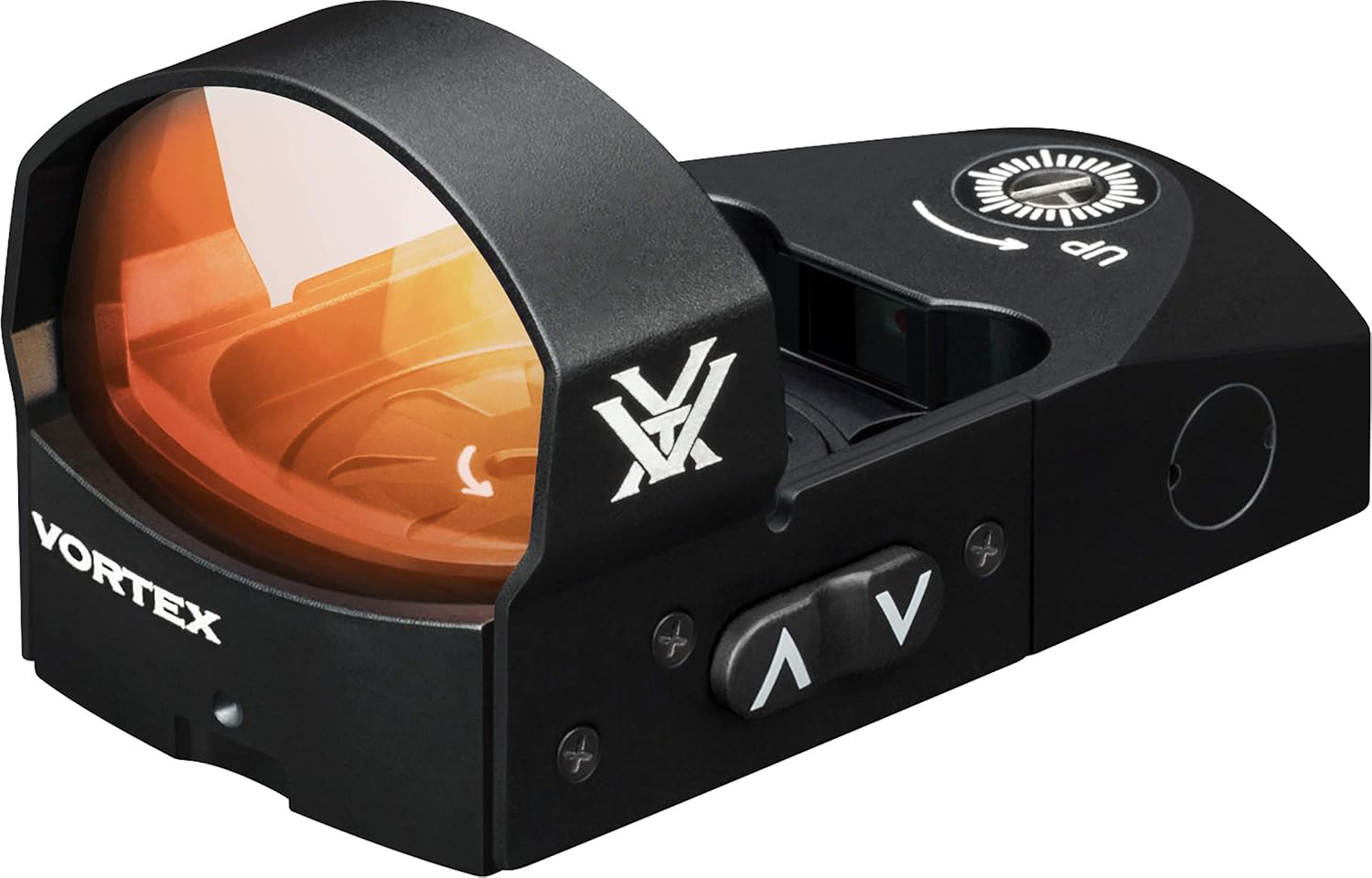
The Venom is another budget-friendly optic with solid performance and a strong warranty backing it.
Specs:
Pros:
Cons:
My hands-on notes:
The Venom performs well initially, but repeated heavy recoil can stress internal components. Parallax is acceptable. The glass is clean with minimal tint. Button tactility is weak when wearing gloves.
What people say online:
Highly rated for value, but most agree it’s better suited for lighter calibers.
Mounting clarity:
Requires mounting plate or rail system.
How I Tested / Evaluation Criteria
Parallax:
I evaluated parallax by shifting eye position at fixed distances. The best optics showed minimal reticle drift, especially important on a handgun platform where head position varies shot to shot.
Co-witness / deck height:
Deck height impacts how naturally the dot aligns with your eye. On revolvers with rails, lower deck height improves indexing and reduces “searching” for the dot under recoil recovery.
Durability:
This was the biggest factor. I looked at housing strength, emitter stability, and whether optics maintained zero after repeated high-energy recoil cycles.
Battery:
Battery life and accessibility matter. Side or top-loading batteries are preferred to avoid re-zeroing.
Brightness range:
I tested visibility in bright daylight and low light. Overly dim or overly bright dots both hurt usability.
Glass quality:
Clarity, tint, and distortion all matter. Poor coatings reduce contrast and slow target acquisition.
Controls ergonomics:
Button size and tactility were tested with gloves. Some optics become frustrating under field conditions.
Mounting ecosystem:
Compatibility with rail mounts and footprint standards determines how easily the optic integrates with the revolver.
How to Choose the Right Red Dot for This Gun
Choosing an optic for a .460 revolver is fundamentally different from choosing one for a 9mm pistol. The recoil impulse alone changes everything. You need to prioritize structural integrity over features.
First, focus on durability. The optic must survive repeated shock loads. Forged housings, reinforced emitter assemblies, and proven recoil ratings are essential. Lightweight optics often fail here.
Second, consider mounting. The Taurus Raging Hunter uses a Picatinny rail system, so you’ll be working with adapter plates or dedicated mounts. Stability is critical—loose mounts will destroy your zero quickly.
Third, window size matters more than usual. Heavy recoil causes significant muzzle rise, so a larger window helps reacquire the dot faster. However, larger windows sometimes come with reduced durability, so there’s a tradeoff.
Fourth, think about emitter type. Open emitters are lighter and offer larger windows, but they can be blocked by debris. Enclosed emitters like the ACRO P-2 eliminate that risk entirely.
Fifth, battery design is more important than you’d expect. Bottom-loading batteries force you to remove the optic, which is frustrating on a gun that requires careful zeroing.
Finally, consider ergonomics. Under recoil, you don’t want to fight tiny buttons or confusing controls. Simplicity wins here.
FAQs
Want to print your doc?
This is not the way.
This is not the way.

Try clicking the ··· in the right corner or using a keyboard shortcut (
CtrlP
) instead.