Skip to content
is characterized by sparse stands of towering with a dense and diverse understory of native wildflowers.

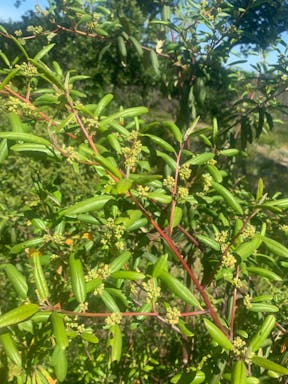
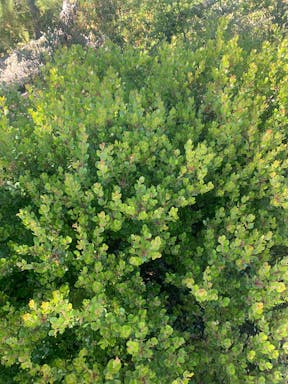
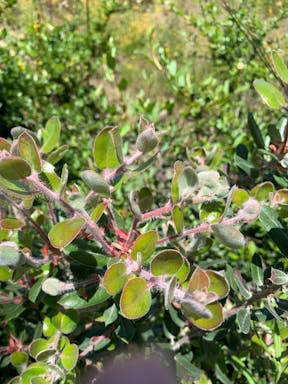

 Sand Hills
What are the Sand Hills?
The Santa Cruz Sandhills are a unique community of plants and animals found only on outcrops of Zayante sand soil in the , in central coastal California.
The are derived from sediment deposited over 15 million years ago when the region was under a vast sea. As evidence of their origins, the inland Sandhills contain a variety of marine fossils, including deep beds of sand dollars.
Due to their coarse texture, Zayante soils have low water and nutrient availability. As a result, they support two endemic which are very different from the moisture-loving coast redwood and mixed evergreen forests that dominate the region.
Due to their limited geographic range (Santa Cruz County) and narrow habitat specificity (Zayante Soils), the endemic communities and species of the Sandhills are naturally extraordinarily rare. Estimated to cover 6,000 acres originally, approximately 40% of Sandhills , primarily due to and. The remaining, is threatened by future development, while , , and degrade habitat even within Sandhills preserves.
Sand Chapparal
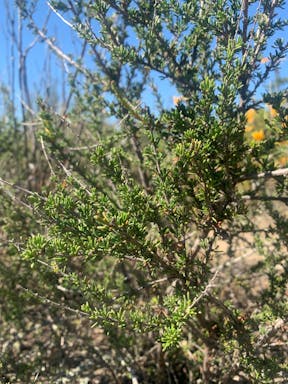
Sand chaparral is dominated by shrubs including Santa Cruz Mountains manzanita, buck brush, and , which is endemic to the Sandhills. Sand chaparral also contains scattered trees, including short-statured coast live oaks and two species of pine: knobcone and ponderosa. Within the gaps in the shrub and tree canopy, sand chaparral supports numerous herbaceous plants, including several species of Navarettia, everlasting nest-straw, , and the , which is also endemic to the Sandhills.
Sand chaparral is home to many animals, including pileated woodpeckers, brush rabbits, and two sandhills endemic animals: the and the .
Sand Parkland
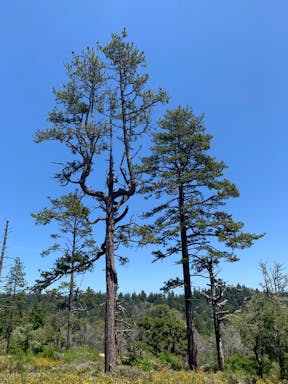
Located predominantly on steep ridges within the Santa Cruz Sandhills, sand parkland is characterized by a sparse canopy of ponderosa pines surrounded by a diverse assemblage of subshrubs and herbaceous plants. Sand parkland contains the highest diversity and abundance of rare and unique plant species, including the three herbs endemic to the Sandhills: the , , and .
Sand parkland is also home to the sandhills endemic insects: the and Zayante band-winged grasshopper. In addition, sand parkland contains populations of the and western whiptail lizard, which are far away from the next nearest populations.
Sand parkland is an extraordinarily rare community, occurring on fewer than 200 acres in the world.
Reference: www.santacruzsandhills.com
Plants in the Sandhills
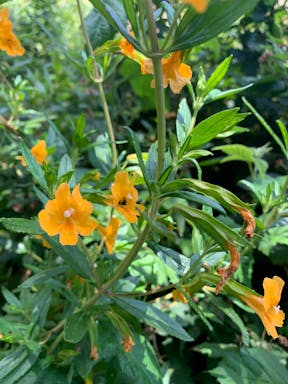
Orange-bush Monkey Flower
Distincitves
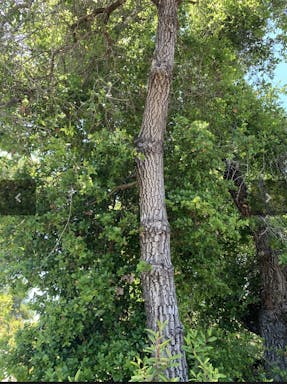
Orange flowers and underside of leaves are sticky to the touch. Interior Live Oak
Distincitves
Leaves are slightly smaller than the coast live oak and the plant can look far more shrub-like, also found commonly in the sandhill areas of Henry Cowell. Sandhills Poppy
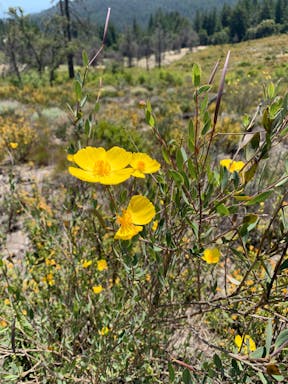
Distincitves
Singular four-petaled yellow flowers growing in the top high sun area of the sandhills. Silverbush Lupine
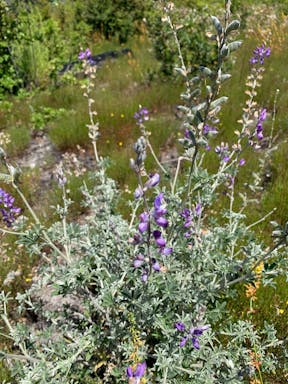
Distincitves
Small (12inch) stems with small purple flowers jutting out of a mint-green/silver bush. Yellow Yarrow
Distincitves
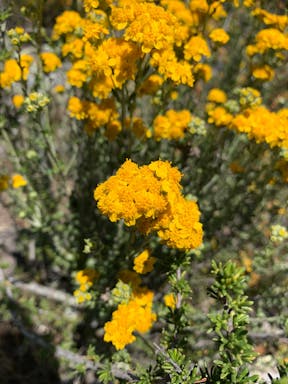
Large clump of very small yellow flowers with almost fuzzy looking center California Broom
Distincitves
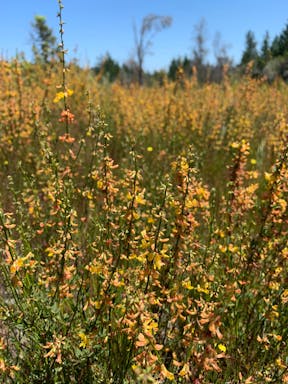
Small stems of yellowish flowers carpeting direct sun sandhill areas. Santa Cruz Mountain Manzanita
Distincitves
Reddish ghost looking fuzzy stems with green oval shaped leaves with red outlining and red vein.Ponderosa Pine
Distincitves
Pine tree with spread out cones. Golden Chinquapin
Distincitves
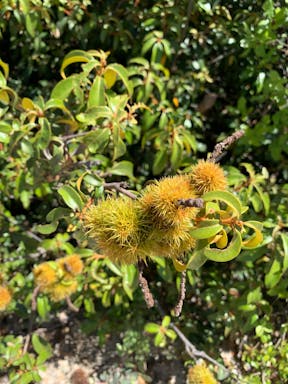
Spiny burrs growing on the end, longer oval shaped leaves that sometimes curl. California Goldenbush
Distincitves
When blooming, small yellow flowers at the end of each stalk, wide bush low to the ground. Chaparral Pea
Distincitves
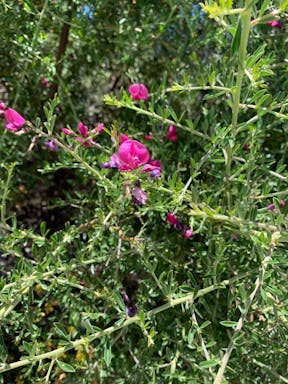
Unique shaped pink flowers, tall stems of a pale/mint green with small leafs jutting our opposite each other. Chamise
Distincitves
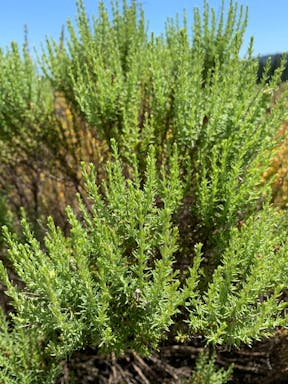
Stick like branches with small small leaves pointing upwards. Small white tubular flowers when in bloom. California Yerba Santa
Distincitves
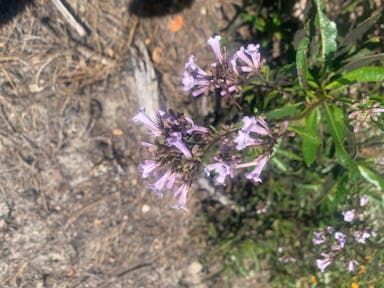
Leathery long leaves leading up to deep but small bell shaped purple flowers. Coffeeberry
Distincitves
Red stems with longer green downturned (in the shape of a U) leaves. Dark blue or purple berries when in bloom. Sensitive Manzanita
Manzanita (maybe brittle leaved)
Want to print your doc?
This is not the way.
This is not the way.

Try clicking the ··· in the right corner or using a keyboard shortcut (
CtrlP
) instead.